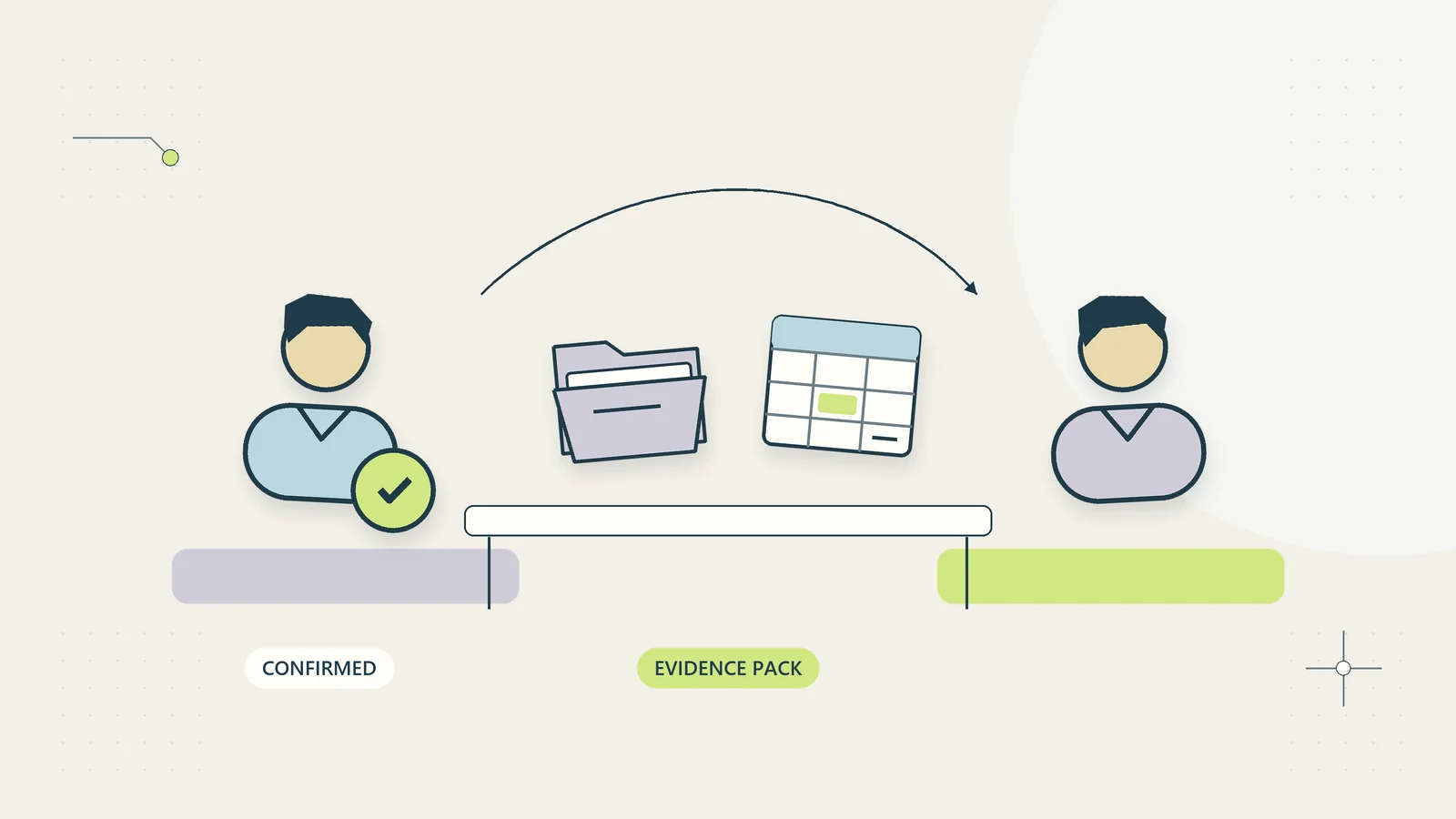
Build a cash-flow information routine with your bookkeeper
Build a shared cash-flow view from verified balances, expected receipts, upcoming commitments, and visible assumptions, with a worked weekly example.
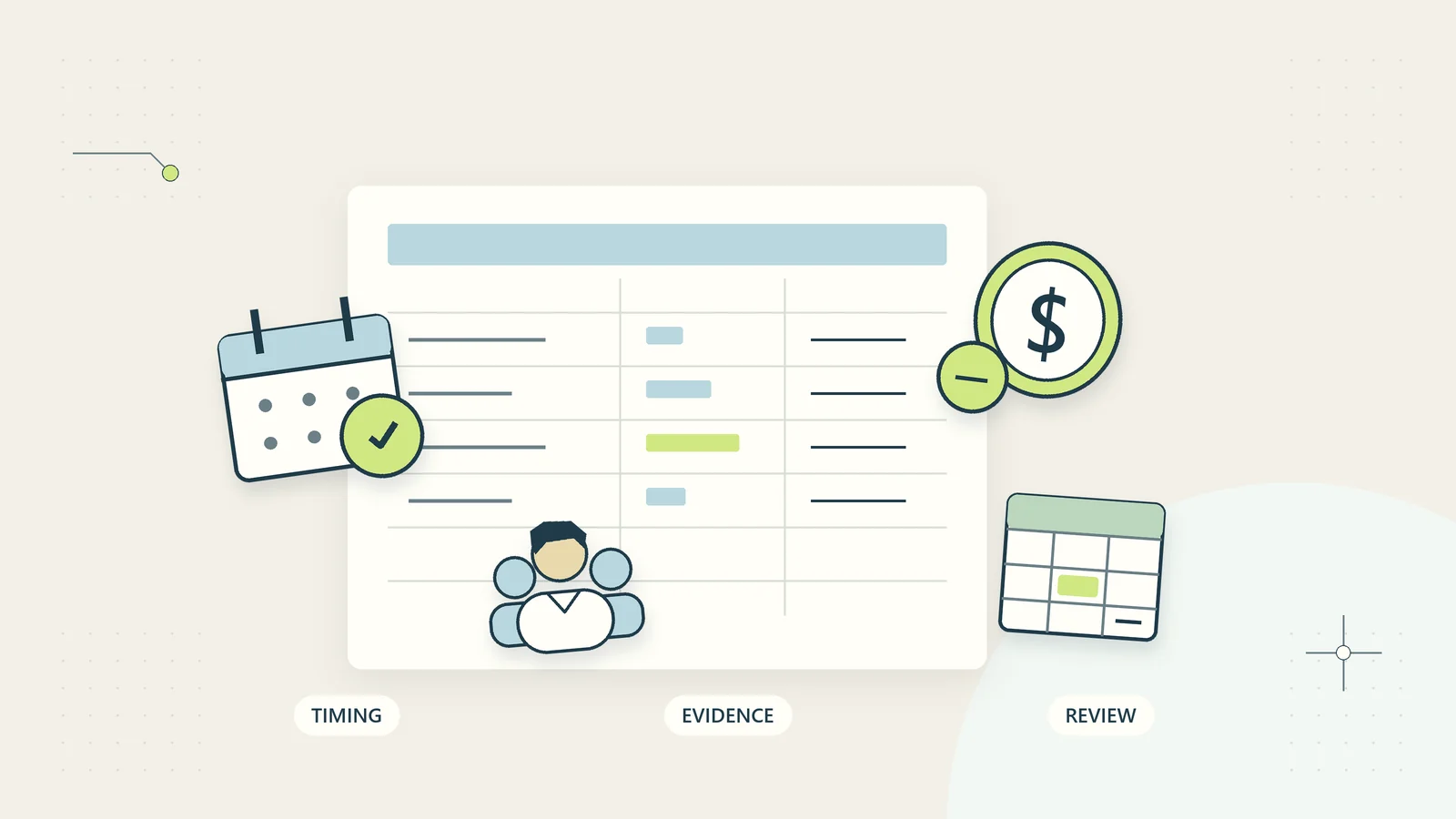
A cash-flow information routine helps a business owner and bookkeeper work from the same current facts: what cash is available, what payments are expected, which obligations are approaching, and which assumptions are uncertain. The routine is valuable before a forecast becomes sophisticated. Reliable inputs and visible changes matter more than an impressive chart built on stale information.
The owner usually knows about upcoming projects, supplier commitments, staffing changes, and customer conversations. The bookkeeper usually knows which records are complete, what balances need review, and where transactions do not yet match. A useful routine connects those perspectives without making either person reconstruct the other’s work.
This article describes an operational information handoff. It does not recommend borrowing, investments, tax positions, or a universal cash reserve. A qualified professional should help assess the business’s actual finances, obligations, and any signs of financial distress.
Agree which question the routine must answer
Start with a practical planning question, such as “Which known payments and plausible receipts could change our available cash over the next eight weeks?” That is more useful than asking a bookkeeper to produce a generic cash-flow report without defining the decision it should support.
The time horizon should fit the business. A retailer with frequent stock payments and daily sales may need a different view from a consultant with a few milestone invoices. Choose periods short enough to reveal payment pressure without creating unnecessary daily administration.
Define the meeting or asynchronous review outcome: confirmed inputs, a list of uncertainties, and decisions for the owner. The routine can be a short written review with assigned actions. It does not require a recurring discovery call or an additional vendor account.
Separate actuals, expectations, and decisions
Use separate columns or sections for actual money movements, expected future movements, and proposed actions. A customer invoice can be real while its expected collection date remains uncertain. A supplier quote can be useful planning information without being an approved commitment.
The Australian government’s budget guidance distinguishes a spending plan from a forecast informed by current information. Applied to this routine, the budget remains a reference while the near-term view changes when facts and assumptions change.
Do not label a desired receipt as confirmed because it is needed to make the forecast balance. “Client expected to pay Friday, based on email dated Tuesday” is an assumption with evidence. “Bank receipt posted Friday” is an actual event. Keeping both descriptions visible improves later review.
Establish a dependable starting point
Ask the bookkeeper which cash balances are verified and the date through which relevant accounts have been reconciled. Record the date and time of the balance information. A dashboard that refreshed this morning can still contain unreconciled or incomplete data.
List accounts included and excluded from the view. Restricted or otherwise unavailable funds should not be casually treated as freely spendable operating cash. Your accountant should explain the relevant distinctions for the business. Do not hide these limitations in a footnote that the decision maker never sees.
If there are several currencies, keep original amounts visible and document the conversion approach used for a consolidated view. A change in the display currency can alter the apparent position without changing the original obligation. Ask the professional responsible for the model to define how exchange-rate assumptions are maintained.
Create an incoming-cash evidence register
For each material expected receipt, capture the customer or source reference, amount and currency, expected date or date range, evidence, confidence description, owner, and latest update. Link to the invoice or agreement rather than copying every detail into a separate forecast file.
An invoice due date is useful but does not prove the payment will arrive that day. Operational information can improve the estimate: an approved milestone, a customer query holding payment, an agreed installment, or a recent remittance notice. Record the factual reason for a change.
| Receipt information | Suggested label | Useful follow-up |
|---|---|---|
| Bank receipt confirmed | Actual | Match to the correct invoice |
| Customer confirmed an intended date | Expected with dated evidence | Check whether funds arrive |
| Invoice issued, no further information | Estimated | Review collection history and current facts |
| Work proposed but not agreed | Potential | Keep separate from committed receipts |
Use the accounts receivable follow-up process to gather missing information without sending conflicting reminders to a customer who has already raised a question.
Collect outgoing commitments before they become surprises
The owner should share known commitments that have not yet appeared as ordinary accounting transactions. Examples include approved equipment purchases, upcoming annual renewals, accepted supplier work, and a planned launch expense. The bookkeeper can help distinguish committed payments from tentative plans.
Each item needs an amount or estimate, currency, likely payment timing, evidence, responsible person, and uncertainty note. Include a range when the amount is not yet fixed. “Repair estimate awaiting inspection” is more honest than inserting a precise invented total.
Separate recurring obligations from one-off changes. A monthly total can obscure a large annual payment concentrated in one week. The cash view should reflect when money is expected to move, not simply divide every annual expense by twelve.
Use the purchase request process to capture approved commitments early. A request that has not been approved should remain distinguishable from an order the business has already placed.
Give taxes and payroll a professional handoff
Ask the person responsible for payroll, tax, and other statutory obligations to provide the relevant payment dates and estimates. The forecast should identify who supplied them and when they were last updated. An operations assistant should not infer tax liabilities from a general online percentage.
Record whether the model’s figures include or exclude relevant taxes, and keep that basis consistent. Cross-border businesses may need several kinds of review. The goal is to prevent missing or double-counting an obligation, not to turn the cash worksheet into an unofficial tax calculation.
Keep sensitive payroll detail out of the general operational view. The owner may need the approved total and timing while individual records remain restricted. Access can be narrower for the supporting evidence than for the final planning summary.
When an estimate changes after professional review, preserve the earlier assumption and explain the difference. That helps the owner understand the movement without treating normal estimate updates as unexplained errors.
Use a rolling view with a change log
At each review, replace completed periods with actual information and extend the future horizon. Preserve a dated copy or controlled version so the team can compare what it expected with what happened. The exact tool can be a well-maintained spreadsheet.
The Australian government’s cash-flow statement guide describes opening balances, incoming and outgoing cash, and closing balances. The basic arithmetic is straightforward; the quality of the timing and completeness assumptions determines how useful the view becomes.
Keep a short change log containing only material movements: a receipt delayed, a new commitment accepted, an estimate revised, or a payment removed because it was duplicated. Explain the cause in ordinary language. A comparison showing only that the final balance fell gives the owner too little information to act.
Work through a hypothetical weekly update
Suppose a business begins a week with a verified 18,000 currency units of available operating cash in the scope of its model. It expects receipts of 7,000 and payments of 12,000. The illustrative closing balance is 13,000: 18,000 plus 7,000 minus 12,000.
The account owner learns that 4,000 of the expected receipts is delayed to the following week. The current week’s expected receipts become 3,000, so its expected closing balance becomes 9,000. The next week’s view must also change; the receipt is moved, not deleted or counted in both periods.
Separately, the owner approves a 2,000 equipment commitment payable this week. The view now shows expected payments of 14,000 and an expected closing balance of 7,000. Those are three different pieces of information: a starting actual balance, a revised timing assumption, and a new approved commitment.
The worksheet should show the evidence and owner for each change. It should not automatically decide whether to postpone a payment, take financing, or proceed with the purchase. Those decisions need the authorized person’s judgment and appropriate advice.
Review scenarios without disguising uncertainty
Create a base view and a small number of clearly described alternatives. One scenario might shift uncertain customer receipts later. Another might include an unconfirmed but plausible supplier expense. Keep the assumptions explicit instead of labeling scenarios “good” and “bad” without explanation.
Use the same opening basis and avoid changing several unrelated assumptions accidentally. A scenario becomes useful when the owner can identify which event causes the difference and what information would confirm or reject it.
| Assumption | Base view | Alternative to examine |
|---|---|---|
| Customer receipt | Expected next week | Arrives one period later |
| Equipment repair | Current quoted amount | Revised quote after inspection |
| Annual renewal | Current contract total | Confirmed price change at renewal |
Do not multiply uncertain sales probabilities into a precise-looking forecast without understanding the method. Sometimes a separate potential-sales list communicates uncertainty better than a blended number that looks like cash already on its way.
Turn the review into a few named actions
Each action should identify the person, question, evidence needed, and next check date. “Improve cash flow” is a business objective. “Confirm whether the customer approved milestone two and update the expected receipt date” is a task someone can complete.
Distinguish information gathering from financial authorization. A colleague may ask a customer for a payment status without authority to offer a discount or change contract terms. They may confirm a supplier’s planned delivery date without authority to renegotiate payment obligations.
When the view raises concern about meeting obligations, escalate promptly to the owner and relevant qualified adviser. Do not hide the concern until the next routine cycle. The escalation rule should identify a responsible contact and a fallback, not rely on somebody noticing a colored spreadsheet cell.
Use the owner and bookkeeper handoff guide to clarify which questions each person owns between reviews.
Keep the information current without oversharing
Assign a source owner for every recurring input: customer collections, supplier commitments, payroll totals, bank status, and planned one-off spending. Specify the update cutoff and what happens if the source is unavailable. Missing information should be visible, with its age and consequence.
Provide access suited to the task. A sales coordinator may supply a customer confirmation without seeing payroll details or the complete bank balance. A bookkeeper may need supporting documents through a secure records system rather than an attachment forwarded through several inboxes.
Automate reminders for missing inputs and highlight changed dates or amounts. Keep automatic payment actions outside the forecasting routine. Updating a planned supplier date in a worksheet should not issue a payment instruction.
Maintain a manual fallback for a delayed bank feed or unavailable reporting tool. Label the temporary source clearly and reconcile it later. An unavailable application should not force the team to invent a current cash position.
Measure forecast learning, not false precision
After several cycles, compare expected receipts and payments with actual movements. Classify differences: timing, amount, missing commitment, duplicate item, or incomplete source data. This identifies where a better handoff would improve the view.
Track the age of important inputs, unresolved assumptions, and actions completed before the next review. A model with a small arithmetic error needs correction; a model with perfect arithmetic and an unknown starting balance needs a different kind of repair.
Avoid setting a universal accuracy target before observing your business. A project business with uncertain milestones differs from a retailer with predictable daily receipts. Judge improvement against your own earlier assumptions and the decisions the routine needs to support.
The routine is working when the owner understands what changed, the bookkeeper can trace the evidence, and uncertainty becomes a specific follow-up rather than a vague worry. That foundation supports better planning without pretending the future is certain.
Prepare an absence and late-input fallback
The routine should remain usable when its usual coordinator is away. Keep a short operating note with the source list, cutoff, latest verified version, update steps, and the people who can answer each question. Store it where the authorized cover can access it, without embedding passwords or financial credentials.
Define how to handle a late input. If the payroll estimate has not been updated, show the last confirmed amount and its date with a visible limitation, or mark the item unavailable if using it would be misleading. Do not replace missing information with a blank that the spreadsheet interprets as zero.
Agree which uncertainties require the owner to review the view before it is circulated. A missing small discretionary expense is different from an unverified starting balance or an unknown statutory payment. The fallback should identify those distinctions in words that a covering colleague can understand.
When the missing input arrives, update the affected periods and record the change. Tell the decision maker if it materially changes a view they have already used. This prevents the team from acting on a superseded forecast while assuming the updated file means everyone has seen it.
Give each circulated version a clear date and label. If a recipient saves a copy locally, they should still be able to recognize that it has been superseded and locate the current approved view.
Sources and editorial method
Checked on October 15, 2026. The Australian government’s budget guide and cash-flow statement guide were consulted for budget, forecast, and cash-movement context. Their country-specific tax references are not worldwide requirements. The information routine, decision tables, scenarios, and hypothetical arithmetic are original planning examples. The article does not replace professional financial assessment or authorize changes to payment obligations.