Coordinate accounts receivable follow-up without confusion
Coordinate invoice follow-up using current balances, clear case states, payment investigation, dispute ownership, and accurate customer messages.
Accounts receivable follow-up becomes confusing when the sales team, delivery team, and bookkeeper work from different versions of the same customer situation. One person sends a reminder, another knows about a dispute, and a payment arrives without a reference. The customer experiences the business as disorganised even when each person is trying to help.
A useful follow-up routine starts with a current, reconciled view and a clear next action for every exception. This guide covers the administrative coordination of customer invoices, payment questions, and follow-up ownership. It does not prescribe credit policy, late fees, debt collection tactics, or accounting treatment. Those decisions require the business’s authorised process and appropriate local advice.
Agree which record is the source of truth
Choose the system or controlled record that establishes invoice status and balances. A shared follow-up queue can link to that source, but should not become an independently edited ledger. If staff maintain separate amounts in several spreadsheets, they will eventually disagree about what the customer owes.
Record when the financial information was last checked and by whom. A reminder based on yesterday’s export may be inappropriate after a payment or credit has been recorded. Define how recent the source check must be for the type of follow-up you intend to send, and what happens when the information is unavailable.
Xero’s accounts receivable process guide describes a cycle covering invoicing, tracking, follow-up, and dispute resolution. This article concentrates on the handoffs between those activities. It does not adopt the source’s example collection intervals or present them as requirements for businesses worldwide.
Distinguish balances from follow-up cases
The finance record answers what remains outstanding under the business’s accounting arrangements. The follow-up case answers what someone needs to do next. One customer may have several invoices and one shared question; one invoice may involve a partial payment and a separate dispute. A useful queue makes those relationships visible.
Use a stable case reference linked to the customer and relevant invoice identifiers. Keep the current amount and currency connected to the finance source rather than manually rewriting them in every note. Record the issue category, current owner, next action, next review date, and communication history.
Avoid a catch-all status such as “chasing.” It does not reveal whether an invoice was received, whether a payment is being matched, or whether the customer disputes the work. Better labels create better next actions and reduce duplicate messages from different parts of the team.
Check the invoice before contacting the customer
Confirm the customer identity, invoice version, recipient, stated due date, currency, and outstanding amount. Check whether a payment, credit, dispute, or agreed arrangement is already under review. A customer should not have to explain a known issue again because one staff member did not see the shared record.
Verify delivery evidence where it affects the discussion. The invoice may have gone to an outdated billing contact or lacked the purchase reference the customer requires. Fixing those administrative gaps can be more useful than sending stronger reminders. Do not assume that every delay reflects unwillingness to pay.
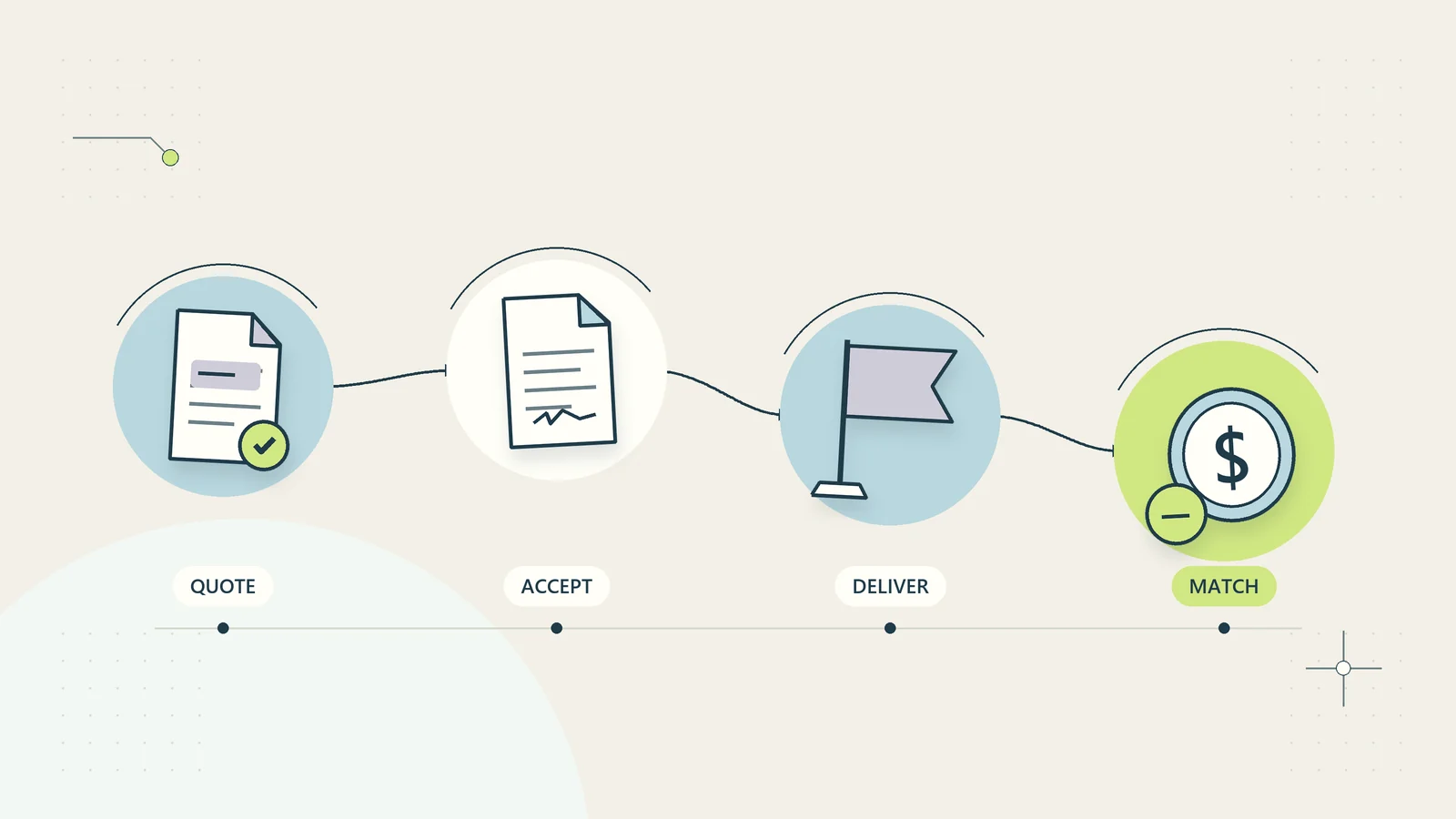
Use the quote-to-cash handoff guide to trace the earlier stages: agreed scope, delivery evidence, invoice preparation, and payment matching. Recurring follow-up problems often originate before the invoice reaches the queue. Keep those upstream causes visible instead of treating them as a collections team’s isolated problem.
Create a practical follow-up state table
Choose states that distinguish facts from assumptions. “Customer says paid” is not the same as “payment matched.” “Dispute acknowledged” is not the same as “credit approved.” Use a few clear states with defined owners and exit conditions.
| State | Meaning | Next action owner | Exit evidence |
|---|---|---|---|
| Ready for follow-up | Current status checked; no known hold | Finance coordinator | Message recorded or new issue identified |
| Receipt unconfirmed | Customer may not have the correct invoice | Billing administrator | Correct recipient and delivery confirmed |
| Payment reported | Customer says payment was sent | Reconciliation owner | Payment matched or discrepancy explained |
| Dispute open | Customer questions a specific charge or supply | Commercial owner | Authorised resolution and finance update |
| Arrangement under review | A proposed payment arrangement needs a decision | Authorised business owner | Approved terms recorded |
| Awaiting internal evidence | Business must answer a question | Named delivery or billing owner | Required evidence supplied |
| Resolved | Required updates and communication completed | Case owner | Current record supports closure |
Adapt the table to your actual business. A state should not promise a financial or legal outcome. Its purpose is to identify what is known, what remains unresolved, and who is responsible for moving the case forward.
Assign one communication owner
Give each case a single person or covered role responsible for coordinating customer communication. That owner can request input from sales, delivery, and finance without each team sending separate demands. The customer should receive a coherent response that reflects the latest shared information.
Define who can make commitments. A coordinator may confirm that a query is being investigated but may not approve a discount, waive a fee, vary payment terms, or threaten legal action. Those decisions belong to the business’s authorised people and applicable advice. Make the limits visible in the procedure.
Plan absence coverage before cases become overdue. The backup needs access to the case history and the current finance record. The out-of-office coverage guide provides a structure for transferring responsibility without relying on a private mailbox or an absent colleague’s memory.
Write follow-up messages around the next useful action
An ordinary administrative follow-up can identify the business, the relevant invoice, the current question, and how the customer can respond. Keep the tone factual and proportionate. Avoid implying a verified debt position when the underlying record is disputed or has not been checked.
For a hypothetical example, a coordinator might write: “We are checking the status of invoice INV-204. Our current record shows an outstanding balance. If payment has been sent, please provide its date and reference through our usual secure channel so we can investigate.” The exact wording should match the actual facts and your approved communication policy.
Do not include sensitive financial information in an unverified channel. If the customer requests changed payment instructions or reports an unfamiliar payment link, route the matter through your established verification process. A follow-up workflow should not become a shortcut around financial access and fraud controls.
Investigate reported payments before sending another reminder
When a customer says they have paid, record the statement separately from a matched payment. Obtain the minimum useful information through an appropriate channel, such as the payment date, reference, and relevant amount or currency. Avoid requesting full bank statements or unnecessary personal information as the default.
Assign the reconciliation owner to compare the report with the authoritative records. A payment may cover several invoices, arrive net of provider fees, use a different payer name, or remain pending. The administrator’s task is to organise the evidence and question, while the qualified finance process determines the appropriate record handling.
Use the payment reconciliation process guide for the operational handoff. Pause ordinary reminders for the affected case under your approved policy while the report is investigated. Record why it is paused and when it will be reviewed, so the hold does not become an unowned permanent state.
Handle disputes through a different route
A disputed invoice needs an answer to the issue, not simply a more frequent reminder. Record the particular question: scope, quantity, price, delivery, duplicate billing, identity, or an agreed adjustment. Assign a commercial owner who can review the supporting agreement and delivery evidence.
Keep agreed and disputed portions distinguishable where your process requires it. Do not have an administrator invent a credit, delete the invoice, or promise a settlement simply to clear the queue. Document the authorised resolution and let the finance owner apply the appropriate accounting treatment.
The client billing dispute process develops this route in more detail. When a dispute closes, verify that the finance record and customer communication reflect the actual decision before restarting any ordinary follow-up. A resolved conversation and an updated ledger are related but separate completion checks.
Work through a hypothetical partial-payment case
Imagine a small consulting business has issued two invoices to the same customer. The customer reports one combined payment, but the amount is lower than the total of the two invoices. Meanwhile, the project manager knows that a delivery question is being discussed on the second project.
The finance coordinator creates one follow-up case linked to both invoice identifiers. The case is marked payment reported, with reconciliation assigned to the bookkeeper. The project manager adds the specific delivery question and its evidence link. Ordinary reminders for this case pause under the business’s approved procedure while the two issues are separated.
The reconciliation review confirms which payment arrived, while the commercial owner determines whether the delivery discussion affects an invoice. No one labels the difference a fee, discount, or write-off without the authorised decision. The customer receives one coordinated update explaining what the business has confirmed and which question remains open.
After the financial records reflect the approved outcome, the coordinator verifies the next action and closes only the resolved parts. This hypothetical example shows why a payment amount alone does not explain the entire customer situation. It is not an accounting instruction or a report of an actual customer result.
Use aging reports with a clear reporting date
An aging report helps organise outstanding balances by time, but its date and settings matter. Staff comparing reports should know whether they use today’s position or a fixed reporting date, which customers and transactions are included, and whether the report has been updated after recent processing.
Intuit’s accounts receivable aging report documentation explains summary and detail views and distinguishes current-date from report-date aging methods in that product. Those features illustrate the need for a consistent reporting basis; they do not require your business to use QuickBooks.
Use age as one prioritisation factor alongside the case’s actual issue, materiality, customer situation, and authorised policy. Avoid automatically escalating every item in an age band to the same action. The report identifies where to investigate, while the case record explains what the team knows and what it may appropriately do next.
Automate reminders only after the states work
Start by automating internal coordination: assign cases, identify missing owners, flag review dates, and show cases awaiting reconciliation. These steps can improve visibility without automatically contacting customers. Use a controlled message template only after the team has defined eligibility and exclusion rules.
An outbound reminder should require a current source check and should stop when a relevant payment report, dispute, or authorised hold appears. Test that changing a case state actually prevents an already queued reminder from sending. A system that checks eligibility only when a message is first scheduled can act on stale information later.
Pilot using synthetic cases and draft messages. Include a payment recorded just before send time, a partial payment, a wrong recipient, a customer dispute, an absent owner, and a technical interruption. Verify that retries cannot send the same reminder repeatedly. Keep recovery and human review available before increasing volume.
Make promises and internal holds visible
A customer may give an expected payment date, while your business may agree to investigate an issue before further contact. Record these as distinct statements. A reported intention is not a confirmed receipt, and an internal hold is not a change to the underlying invoice terms unless the authorised process establishes that change.
For each promise or hold, record the source, date, owner, scope, and next review point. Identify which invoices are affected. If a customer has several projects, an unresolved question about one should not silently apply to all records. Equally, staff should not contact the customer about the affected invoice as though no discussion exists.
Use a hypothetical case to test this distinction. The customer says payment is scheduled for Friday, and the coordinator records that statement. On Monday, the next step is to check the current finance source, not automatically accuse the customer of missing a promise. The payment may have arrived under a different reference or remain pending. The owner investigates the actual position before choosing an approved communication.
Review holds that lack a next action. “Waiting for customer” can conceal a question that was never sent, an outdated contact, or evidence your own team owes. Ask what specific event will move the case and who is responsible for checking it. This keeps exceptions active without substituting repeated reminders for a useful resolution process.
Review the routine using cause-based measures
Track cases with missing billing details, unconfirmed invoice receipt, reported payments awaiting investigation, unresolved disputes, and overdue internal actions. Also review duplicate messages and corrections to earlier communication. These measures reveal administrative problems that a total outstanding balance alone cannot explain.
Have the business owner and bookkeeper review recurring causes together. Repeated purchase-reference problems may require a better onboarding question. Frequent unmatched payments may require clearer invoice references or a reconciliation change. Avoid attributing every improvement in cash collection to reminders when invoice timing, customer mix, and other factors also changed.
Begin with one customer segment or invoice type and make the case states reliable. Give every exception an owner, make the next action visible, and verify the financial record before communication. The resulting routine supports a more coherent customer experience and gives the business better evidence for its authorised financial decisions.
Sources and editorial method
Primary sources checked on October 15, 2026: Xero: accounts receivable process and Intuit: accounts receivable aging reports. The case states, hypothetical examples, coordination measures, and pilot are original operational analysis. This guide does not prescribe debt collection intervals, fees, accounting entries, or legal remedies, and it contains no affiliate promotion or tested integration claims.