A clearer handoff between business owner and bookkeeper
Connect financial source records, business explanations, question ownership, and monthly review through a practical owner-to-bookkeeper handoff.
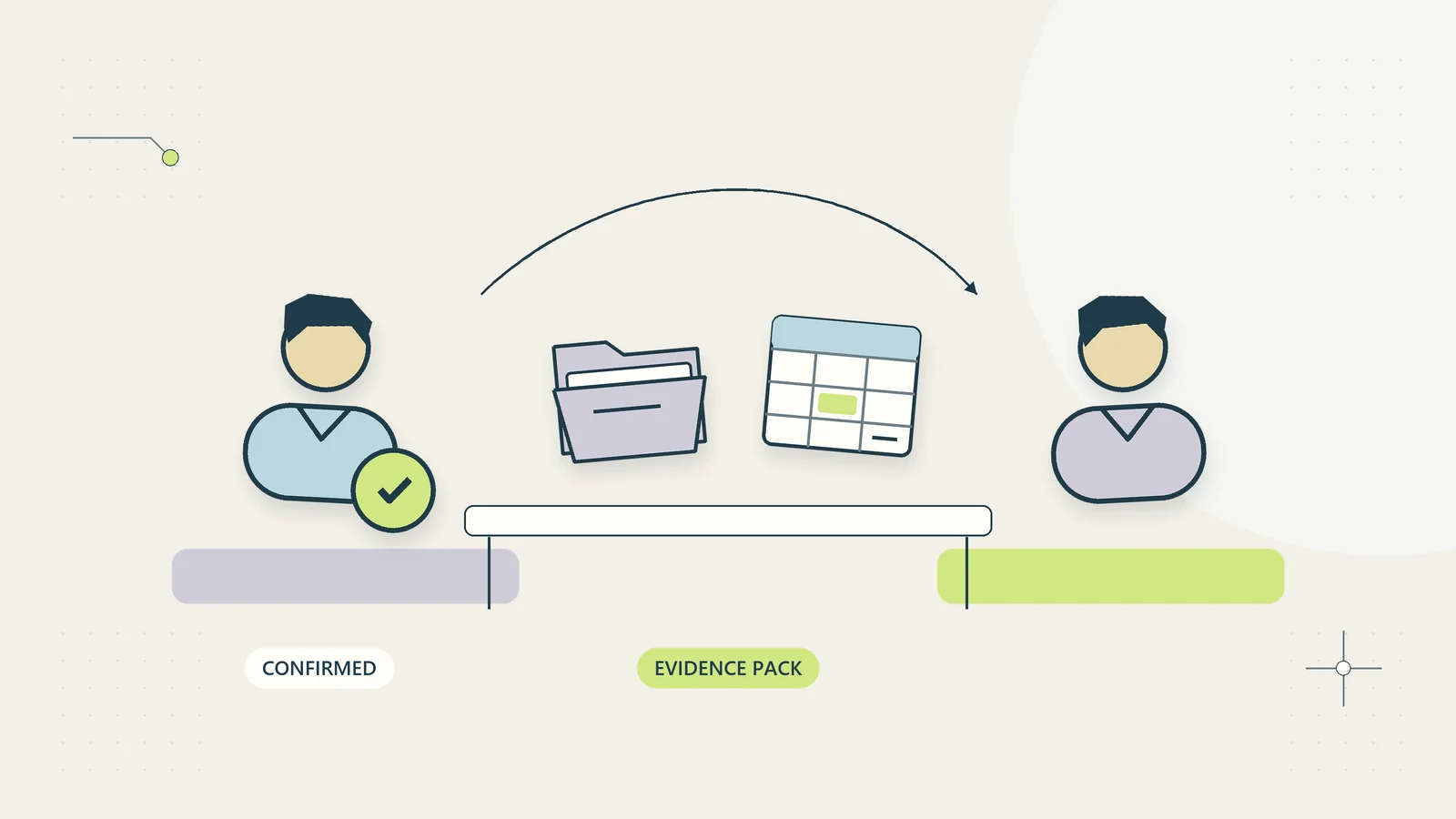
A clearer handoff between a business owner and bookkeeper starts with a simple agreement: what information will arrive, when it will arrive, who will explain exceptions, and what the owner will receive in return. Sending a folder of receipts is only one part of that exchange. The bookkeeper also needs the context that makes a transaction understandable, while the owner needs to know which records remain uncertain.
This guide focuses on coordinating information and decisions. It does not choose accounting treatments, determine tax eligibility, or replace the scope agreed with your accountant or bookkeeper. The administrative design can work across countries, but deadlines, records, reporting requirements, and professional responsibilities must reflect the business’s actual circumstances.
Agree the service boundary in plain language
Write down what the engagement includes. Some bookkeepers collect evidence and reconcile transactions; others also prepare management reports, handle specified payroll administration, or coordinate with an accountant. Do not infer that a task is included because it appears in an accounting application.
Describe exclusions and decision ownership. The owner may need to explain the purpose of an expense, approve a payment, confirm a stock adjustment, or provide a signed agreement. The bookkeeper should know who can answer each question and when specialist accounting or tax advice is needed.
Record how either side raises work outside scope. If the business opens another sales channel or hires its first employee, the original information routine may no longer fit. A short written change request is more useful than letting unagreed work accumulate until an invoice or deadline creates tension.
Create a source register before designing a folder tree
List where financial information originates. Include business bank and card accounts, payment providers, sales channels, invoicing records, expenses, payroll information, loans, inventory records, and relevant contracts. Record the account owner, reporting currency, statement period, and access or export method.
The register exposes omissions that a neat folder structure cannot. A second payment account may process only a few transactions but still need reconciliation. A platform may deduct fees before paying out, meaning a bank deposit alone does not explain the underlying sales and charges.
Give each source a clear status: active, being closed, dormant but still relevant, or awaiting confirmation. Ask the bookkeeper which evidence is needed rather than assuming every available export is useful. The payment reconciliation process explains why a payout, sale, fee, and refund should retain their relationships.
Distinguish evidence from explanation
Evidence records what happened: an invoice, receipt, statement, agreement, or transaction report. Explanation describes business context that may not appear in the document: why the purchase was made, which project it relates to, whether a charge was personal, or who can confirm the delivery.
Do not alter the original document to make it fit an explanation. Keep the source intact and attach a separate note where appropriate. A bookkeeper can then assess the information without losing the original record.
The IRS recordkeeping overview, written for the United States, connects business transactions with supporting documents. Australia’s business.gov.au record-keeping guide also discusses organizing and protecting business records. These are jurisdiction-specific references, not a single worldwide retention rule. Agree the applicable requirements with a suitably qualified adviser.
Define a minimum handoff record
A useful handoff record links the transaction to its evidence and owner without making the owner re-enter the entire accounting ledger. Choose fields that answer recurring questions.
| Field | Why it helps | Avoid |
|---|---|---|
| Evidence reference | Connects a question to the correct document | A vague message saying “the receipt” |
| Date and amount as shown | Helps identify a transaction | Converting currencies without explanation |
| Business purpose | Supplies missing operational context | Guessing a tax category |
| Project or customer reference if relevant | Supports agreed reporting | Adding unrelated customer personal data |
| Question owner | Gives the bookkeeper a response route | Assuming the founder knows every purchase |
| Status and next action | Shows what remains unresolved | A checkbox that hides an unanswered question |
Keep sensitive information in an appropriately restricted location. Broadly sharing a transaction list does not mean everyone needs access to payroll details, full financial credentials, or personal identity documents.
Set a calendar that reflects how work arrives
Separate collection, clarification, review, and final reporting. An owner may submit routine evidence weekly, answer a consolidated question list before the monthly review, and confirm important business changes as they happen. The right schedule depends on volume, reporting needs, and the engagement.
State times and time zones when the owner and bookkeeper work in different locations. “By Friday” can create an avoidable delay if one person expects the start of their day and the other expects the end of theirs. Include local public holidays and planned absences in coverage arrangements.
Use the month-end close checklist to connect the calendar to actual readiness. A reporting deadline is not the same as an evidence collection deadline. Leaving room for questions makes the reporting date more meaningful.
Use one question queue with named respondents
Collect unresolved items in a queue rather than across email replies, chat messages, and handwritten notes. Each item should identify the transaction, the exact question, the information needed, the owner, and the next review date. Keep the question narrow enough to answer.
“What is this payment?” is less helpful than “Please confirm whether this payment relates to project P-118 and attach the supplier invoice if available.” The second question gives the owner a practical next step while allowing them to correct the assumption.
Distinguish awaiting evidence, awaiting business explanation, awaiting professional judgment, and resolved. Those states reveal different obstacles. Repeatedly reminding the owner cannot solve an accounting judgment that belongs with an adviser. Similarly, a technical adviser cannot explain why a staff member made an undocumented purchase without operational context.
Decide how incomplete records will be reported
Missing information should remain visible. Agree how the bookkeeper flags incomplete items, whether a report is preliminary, and which decisions should wait for clarification. Avoid pressuring someone to invent a confident answer merely to turn every status green.
Record material uncertainties in language the owner can use. Explain the affected period, the missing source, the questions outstanding, and who must act. Keep any proposed accounting treatment within the professional engagement rather than letting an administrative workflow decide it automatically.
An owner should also tell the bookkeeper when a document cannot be obtained. An explicit answer allows the appropriate professional to advise on next steps. Silence leaves the same question circulating and makes it difficult to distinguish a lost record from a record that has simply not been requested yet.
Protect access without sharing personal logins
Agree an access method for each information source. Where suitable role-based access exists, use a named account with the permissions needed for the engagement. Where access is unsuitable, agree a controlled export process and an accountable person who supplies the files.
Keep a record of who owns the underlying business account. The business should not lose access to its own records when a staff member or external provider leaves. Include access removal, export availability, and record handover in the engagement’s exit procedure.
Test the ordinary route with a non-sensitive sample before a deadline. Check that the recipient can open the file, read the content, and identify its period. A folder invitation that was sent successfully does not establish that a complete bank statement can actually be retrieved and used.
Work through a hypothetical month-end handoff
Imagine a small consulting business with two bank accounts, one business card, and a payment provider. The owner and bookkeeper agree that the source register will list all four, including who exports each statement. Routine receipts are linked during the month. A question queue is reviewed before the monthly reporting date.
One payment-provider payout is smaller than expected. The owner initially assumes a customer underpaid. The bookkeeper requests the provider settlement report, which shows a fee and a separate refund. The owner supplies the refund authorization and the customer reference. The records now describe the business events without treating the net bank deposit as the entire sale.
A card purchase remains unexplained because the project lead is away. The queue assigns the question to the project lead’s covering colleague and shows that the report remains subject to that unresolved item. No one invents an expense purpose to finish the checklist. This is an illustrative workflow, not a statement about a particular accounting treatment or a measured customer result.
Make the owner review a decision handoff
Ask the bookkeeper to distinguish completed information from decisions the owner must make. An owner reviewing a report may need to investigate overdue invoices, approve a supplier correction, confirm a business change, or ask the accountant about a technical issue. The review should identify the person and date for each action.
Do not assume that sending a report means the owner has reviewed it. Agree a lightweight acknowledgement or review record for the information that requires attention. Where there are no actions, record that outcome plainly without manufacturing a meeting.
For a business operating asynchronously, a short written summary can work well: period covered, sources received, unresolved items, important movements requiring explanation, and requested decisions. The owner can respond to precise items at a convenient time while urgent exceptions follow the separately agreed escalation route.
Prevent duplicated corrections and stale versions
When a source document or explanation changes, notify the person handling it rather than silently uploading a replacement. Identify what changed and whether a previous answer should be disregarded. Preserve enough history to explain why the record was corrected.
The document version control guide is useful when reports or working documents move between people. Give the reviewed version a stable reference. A comment attached to an old report should not be mistaken for approval of a later one.
Avoid parallel spreadsheets that both claim to be the current question list. If a working copy must be exported, identify it as a dated snapshot and point replies back to the active record. The purpose is to reduce contradictory updates, not to prevent people from working offline when necessary.
Plan coverage and exit before they become urgent
Name a backup contact on both sides. Explain which tasks can wait during an absence and which need timely attention. The covering person should know where the source register and current question queue are stored, with appropriate access already arranged.
For a change of bookkeeper, agree a handover inventory: source register, current reporting status, unresolved questions, relevant working records, access list, and the location of business-owned documents. Confirm which files the engagement provides and how any specialist or statutory responsibilities continue.
Do not delete records or remove necessary access before a controlled transition is complete. Equally, do not leave obsolete permissions active indefinitely. Sequence the transfer, verify that the new arrangement works, and then remove permissions that are no longer justified under the agreed plan.
Prepare for business changes before the next reporting cycle
Give the owner a short list of changes to flag promptly. Examples include opening or closing a payment account, borrowing money, purchasing a major asset, starting another sales channel, changing a supplier arrangement, or moving into a new market. The list should be tailored with the bookkeeper and accountant so it reflects the engagement without pretending every commercial change has the same accounting effect.
For each change, provide its effective date, responsible person, relevant agreement, and any new information source. A new online store, for example, may introduce separate records for orders, charges, fees, refunds, and settlement deposits. Telling the bookkeeper only that sales have increased leaves them to discover the new source during reconciliation.
Keep a business-change log beside the source register. At the next review, confirm that new records have an owner and that discontinued sources have supplied their final statements. Ask whether the reporting routine or professional scope needs updating. This creates a controlled transition between the old operating model and the new one, while leaving accounting judgments with the appropriate professional. It also avoids treating an unexplained transaction as a one-off exception when it is actually the first sign of a permanent business change.
Measure whether the handoff is improving
For an initial pilot, track how many evidence items arrive on time, how many require clarification, how long questions wait for a respondent, and how many corrections result from an earlier misunderstanding. Separate active handling time from waiting time. A long queue may reflect one absent decision owner rather than slow bookkeeping.
Review recurring questions for process improvements. If every expense needs its business purpose clarified, add that context at purchase time. If one payment source is repeatedly missing, fix the export ownership. If reports are complete but never used, reconsider the review format and the decisions the business needs to make.
Keep the routine small enough to maintain. A source register, a clear calendar, a single question queue, and a useful owner review can establish a strong working relationship. Add fields or checkpoints when they resolve an observed problem, and remove steps that collect information without supporting a decision.
Sources and editorial method
Checked October 15, 2026. Primary references: IRS: recordkeeping and business.gov.au: record keeping. Their legal and tax context is specific to their respective countries. The handoff design, question queue, and consulting example are original operational guidance, not accounting or tax determinations.