Track project profitability across delivery handoffs
Connect agreed scope, work estimates, actual costs, commitments, and cost to finish so project profitability reviews lead to clear operating decisions.

Project profitability is difficult to understand when sales, delivery, purchasing, and finance each hold a different version of the job. The estimate may describe the original scope while the team delivers several additions. Contractor costs may arrive after the project is marked complete. Time may be recorded against a client but never connected to the actual project.
The remedy begins with better handoffs. Each team should pass the next team a defined set of facts, assumptions, and open questions using the same project identity. A dashboard becomes more useful once those records agree about what was sold, what remains to be delivered, and what has already been consumed.
This article builds a management-information process. Your accountant should determine revenue recognition, cost treatment, taxes, and formal financial reporting. A project’s operational contribution estimate is not automatically the business’s final accounting profit or its available cash.
Define which profitability view you need
Give the measure a clear name and basis. A simple operational view might compare the agreed project revenue with estimated direct delivery costs. Another view may include allocated overhead. Both can be useful, but they answer different questions.
State what is included and excluded: internal labor, contractors, travel, materials, shared software, management time, tax, and overhead. Keep that basis consistent when comparing projects. A job with detailed time records should not appear less profitable simply because another job’s coordination time was never recorded.
Xero’s project tracking overview describes bringing project time, costs, and income together. The administrative lesson is to connect those inputs before relying on a project comparison. This guide does not require a particular application or claim that a connected integration has been tested.
Give the project a stable commercial identity
Assign one project identifier at the point the work becomes an agreed job. Carry it into task records, purchase requests, contractor instructions, time entries, invoices, and change decisions. Keep the customer identity separate because one customer may have several projects.
The commercial record should contain the accepted scope version, price and currency, billing milestones, included revision boundaries, and the person authorized to discuss changes. Link to the agreement rather than repeatedly copying terms into separate spreadsheets.
If a project is split into phases, decide how phase identifiers relate to the overall job. Record which costs and revenue belong to each phase. Avoid creating a new project simply to move an overrun away from the original estimate.
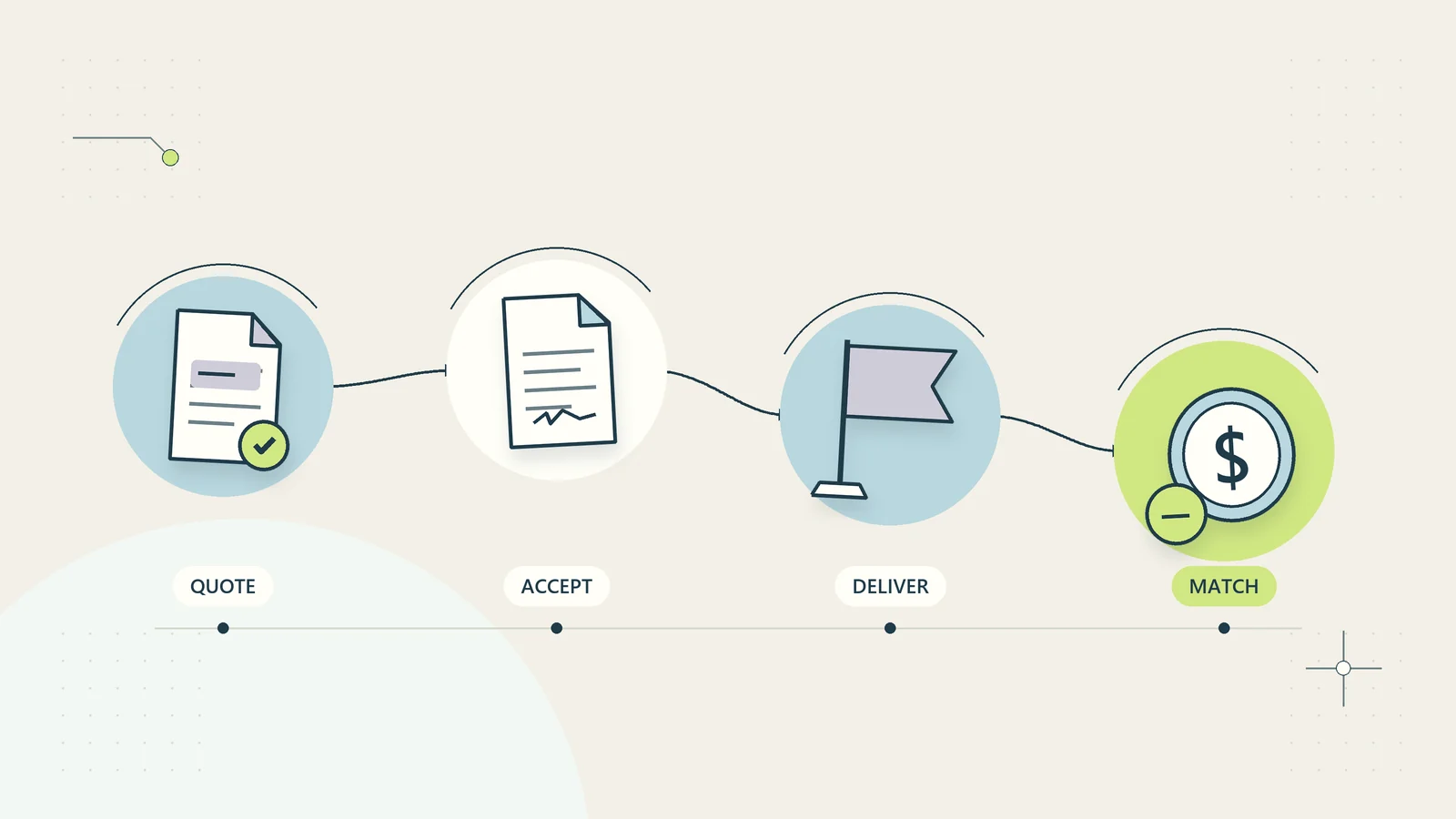
Use the quote-to-cash handoff map to connect the commercial identity with delivery and billing records from the start.
Transfer the estimate into delivery without losing assumptions
Sales should hand over more than a price and deadline. Include the estimated work by activity or role, external cost assumptions, customer inputs expected, dependencies, and the items that were explicitly excluded. Name the owner of each unresolved question.
A delivery lead should review whether the available information supports the planned approach. If the estimate assumes clean data, customer-provided artwork, or a single decision maker, check whether those conditions exist. Raise a gap before the team commits to a schedule that depends on it.
| Handoff item | Question for the receiving team | Evidence to link |
|---|---|---|
| Scope version | What exactly are we delivering? | Accepted proposal or statement of work |
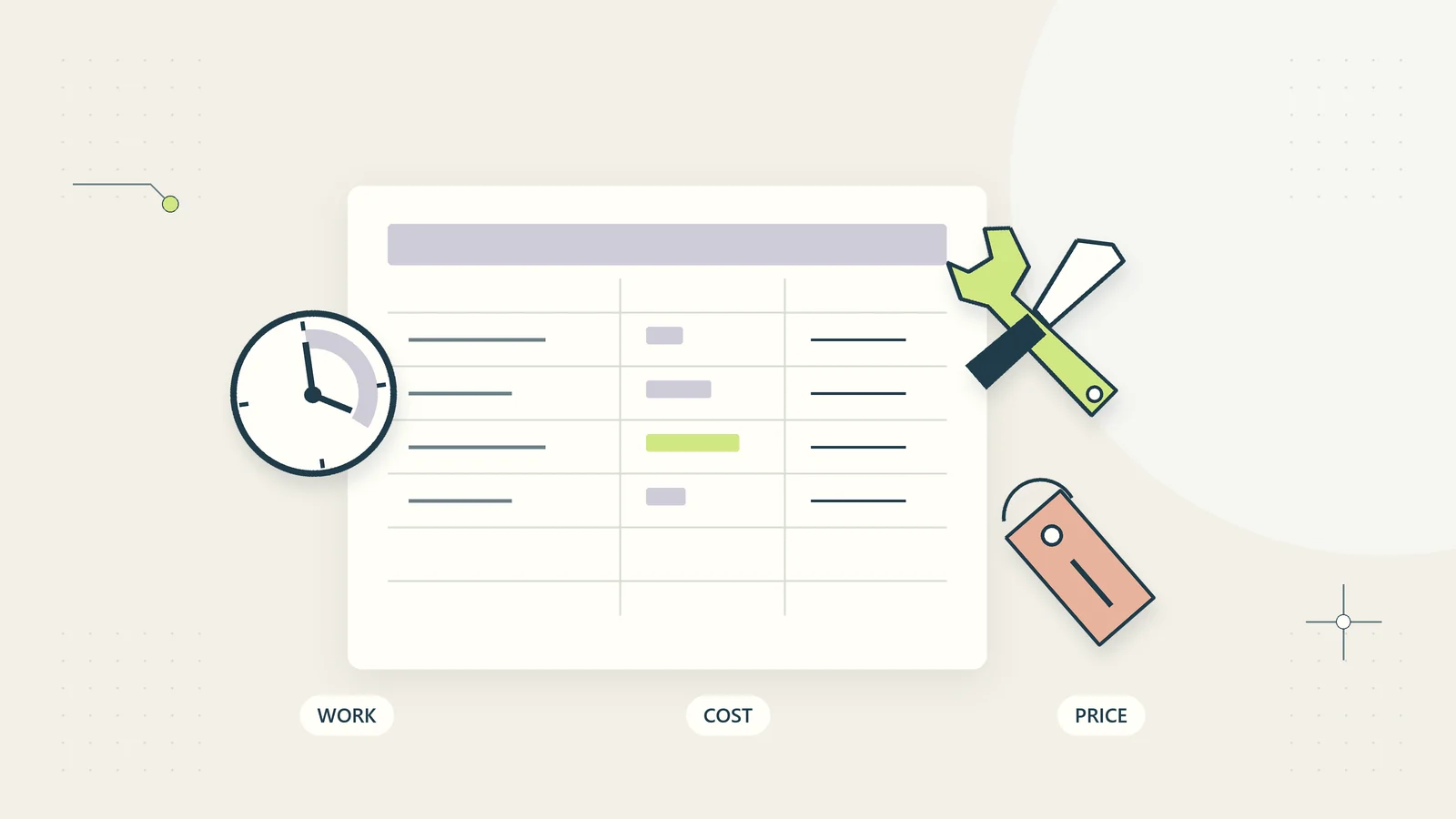
| Work estimate | Which activities and roles are included? | Cost worksheet and assumptions |
| Customer inputs | What must arrive before work starts? | Intake and readiness checklist |
| External costs | Which purchases are already committed? | Supplier quotes and approvals |
| Commercial limits | Who may approve a change? | Authority and change process |
Record the handoff acceptance and any reservations. “Project received” should not conceal a missing input that will later require substantial extra work.
Capture actual work at a useful level
Choose a few activity categories that explain cost: preparation, core delivery, review, revisions, coordination, and handover. Excessive detail can discourage recording, while one undifferentiated total cannot explain why a job exceeded its estimate.
Ask staff to record work while it is still reasonably fresh. Provide a route to correct mistakes and identify estimated entries. Time records should support planning and costing, not encourage people to hide rework to keep a dashboard green.
Record internal labor using a documented management cost basis. The service pricing worksheet explains how to keep labor-cost assumptions distinct from selling rates and overhead. An unbilled hour still consumes capacity, even if it does not create a new cash payment.
When one activity serves several projects, use a consistent allocation method and label it. Do not create precise-looking project costs by dividing shared time arbitrarily without explaining the assumption.
Include committed costs before invoices arrive
Actual supplier invoices are only part of the current picture. A contractor may have accepted work whose invoice will arrive later. An approved purchase may already create a commitment. The project forecast should show these expected costs without counting them again when the invoice arrives.
Use separate fields for estimated, committed, invoiced, and paid amounts where they matter. Link the records so a cost progresses through stages rather than appearing as several independent costs. The bookkeeper should define how these management stages relate to the accounting records.
Ask suppliers or internal owners to identify the project on relevant records. If an invoice covers several jobs, record the allocation and its basis. A missing project reference should create a focused question, not a default assignment to whichever project looks able to absorb it.
Use the purchase request process to make commitments visible when they are approved, rather than waiting for the bank transaction.
Forecast the cost to finish
At each review, ask the delivery lead what work remains and what it will likely consume. Combine actual cost to date with a current estimate to complete. Keep the original budget alongside that forecast so the team can see what changed.
Avoid estimating completion as a percentage based only on time elapsed. A project halfway through its calendar may still have the most difficult review stage ahead. Identify remaining deliverables, unresolved customer decisions, and external dependencies.
Useful questions include: Which work is accepted? Which work requires revision? Which assumptions are no longer true? What committed costs have not reached the ledger? What evidence would reduce the uncertainty in the remaining estimate?
Capture a range if the remaining effort is uncertain. A clear range with a reason is more useful than a single invented number. Name the person who will obtain the missing information and when the forecast will be updated.
Separate scope changes from delivery problems
Not every extra hour is a customer change. Classify differences so the business can respond appropriately: agreed scope addition, incomplete intake, internal rework, supplier issue, inaccurate estimate, or customer decision delay. Several causes can occur on the same project.
A change record should describe the requested addition, effect on work and timing, commercial proposal if applicable, and the authorized decision. Link it to the specific project version. Do not assume a friendly message from any customer contact authorizes new charges.
If the business caused the rework, the operational forecast still needs the cost even when it cannot be billed. Hiding that cost prevents learning. If the customer requested an addition, the team needs a decision before treating it as accepted scope.
The agency approval and change-control guide offers a practical version-specific decision trail that also suits many other service businesses.
Use a hypothetical forecast bridge
Suppose a project has an agreed price of 8,000 currency units. Its original modeled direct delivery cost is 5,000, leaving an estimated contribution of 3,000 before costs outside that model. At review, recorded direct cost to date is 3,200 and the delivery lead estimates another 2,300 to complete.
The current forecast direct cost is 5,500: 3,200 plus 2,300. The forecast contribution on this stated basis is 2,500, a reduction of 500 from the original estimate. That difference needs an explanation, not just a red indicator.
The team identifies 200 of internal rework and 300 of additional effort required by poor input quality. Separately, the customer has requested an optional addition quoted at 1,000 with an estimated direct cost of 600. Until it is accepted, keep that option separate from the agreed project forecast.
If the addition is later authorized, agreed project revenue becomes 9,000 and the forecast direct cost becomes 6,100, producing a modeled contribution of 2,900. The change improves that contribution by 400, but it does not erase the original 500 overrun. Both facts should remain visible.
Keep profitability, billing, and cash separate
A project can look profitable under its cost model while the customer has not paid. It can also receive an advance before most delivery work occurs. Billing, cash collection, and revenue recognition are related but different concepts; professional accounting review determines formal treatment.
Show agreed commercial value, invoices issued, payments matched, and the operational cost forecast as separate fields. This helps the owner ask the right question. An overdue invoice is a collection issue; an expanding cost to finish is a delivery issue. Either can affect the business, but their next actions differ.
Coordinate with the cash-flow information routine when payment timing changes. Do not assume that an accepted change request produces immediate usable cash.
For cross-currency projects, retain original currency values and disclose the conversion basis used for management comparison. A changing exchange rate can alter the displayed result even when project scope is unchanged.
Make review handoffs short and specific
The delivery lead supplies completed work, remaining work, new risks, and the revised effort estimate. Purchasing supplies commitments and supplier exceptions. Finance supplies recorded costs, billing status, and unresolved allocation questions. The owner receives a summary of changes and decisions needed.
Use a predictable cutoff so everyone knows which data version they are reviewing. A report can identify late inputs without silently mixing last week’s costs with today’s delivery estimate. Where a number is incomplete, show its limitation.
Each action should have an owner and an expected result: obtain a contractor estimate, clarify a scope decision, correct a project reference, or confirm a customer’s acceptance. “Watch margin” is not a sufficient action.
Limit the routine to information that supports decisions. A small team may need a written weekly update during active delivery and a fuller review at completion. The cadence should reflect project complexity and change, not an arbitrary reporting burden.
Close the project without closing the evidence too early
Create a completion checklist for accepted deliverables, unresolved revisions, outstanding supplier invoices, final billing, and any agreed support period. Delivery completion and financial completion can occur at different times. Use separate statuses so late costs do not disappear after the work is marked complete.
Ask the bookkeeper to identify any incomplete costs or treatment questions. Preserve a current estimate for outstanding items, clearly distinguished from recorded amounts. Revisit the project once the relevant evidence arrives.
Compare the original estimate with the final management view using consistent categories. Document a few causes that would improve future decisions: better intake, clearer revision limits, a more realistic review allowance, or earlier supplier confirmation.
Do not treat every overrun as a staff-performance problem. The commercial definition, available inputs, and estimation method may be responsible. The review should improve the system that produced the result.
Pilot with a small set of comparable projects
Choose a handful of projects with similar service units. Test whether the team can trace each major cost, explain the forecast to finish, and distinguish changes from rework. Use a manageable category set and refine it after real examples.
Measure missing project references, late cost discoveries, forecast revisions, unapproved scope work, and time spent reconstructing evidence. These measures reveal whether the handoffs are improving before you trust a league table of project margins.
The Australian government’s budget guide encourages comparison of plans and actual results. Apply that principle with curiosity: identify what changed and what the next estimate should do differently. The useful outcome is a project history another colleague can understand, with a current forecast and clear decisions still to be made.
Check the handoff when a project changes owner
A change of project manager can introduce a hidden information break. The outgoing owner should identify the current scope version, customer commitments, latest forecast, unrecorded costs, pending approvals, and unresolved risks. The incoming owner should acknowledge what they have received and list anything still missing.
Review customer promises made in conversations as well as the formal task list. A planned complimentary revision or a postponed milestone can affect remaining work even if it has not changed the headline project value. Record those facts without assuming every informal conversation creates an enforceable obligation.
Use a dated handover snapshot. Preserve the forecast that existed at transfer and record later changes as new information. This makes the project history understandable without suggesting that the new owner caused costs already incurred or risks already known.
The incoming owner should trace one supplier commitment, one time entry, and one customer change back to their evidence. This small check tests whether the record is usable rather than merely complete-looking. Any gaps become named actions with a review date. The goal is continued visibility of the work, so the business can make decisions while the transition is happening rather than discover the missing history at final billing.
Sources and editorial method
Checked on October 15, 2026. Xero’s project tracking overview was consulted for project time, cost, and income context, and the Australian government’s budget guide for comparing plans with actual results. The handoff structure, forecast bridge, and hypothetical project arithmetic are original management examples. They do not establish formal accounting profit, revenue recognition, tax treatment, or a tested integration.