An ecommerce returns process that keeps support and finance aligned
Connect return requests, item inspection, inventory disposition, and confirmed refunds in one practical process, with a worked partial-return example.
A return is not finished when a parcel reaches the warehouse. Support still needs an accurate answer for the customer, inventory needs a disposition, and finance needs the actual refund or exchange result. When those records disagree, a small retailer can promise a refund twice or put an unsuitable item back into available stock.
Build an ecommerce returns process around one case that connects the customer request, order line, physical item, decision, and financial outcome. Keep those events distinct while making their relationship visible. The following approach works as a planning framework for a small online retailer; it does not require a particular returns application.
Give every return a case and an item reference
Create one return case identifier and connect it to the original order. Within the case, identify the particular order lines and quantities involved. A customer who bought two sizes may return one unit, exchange another, and keep the remaining items. An order-level label called “returned” cannot describe that situation accurately.
Capture the request date, customer contact reference, requested resolution, and a concise reason. Ask only for information necessary to handle the case. An existing order reference may already provide the product and payment details, so the customer should not have to retype everything from a receipt.
Keep physical arrival, policy decision, and financial resolution in separate fields. A parcel arrival is evidence that something arrived; it does not establish that the item matches the request or that money has been returned. The refund tracking guide examines the financial part in more detail.
Make policy visible before automating decisions
Write a plain-language policy that matches the products, selling markets, and applicable consumer obligations. Eligibility, return routes, fees, exchanges, damaged goods, and exceptions may require different treatment. Avoid copying a return window from another retailer and presenting it as a worldwide rule.
Have the appropriate person review local requirements and the relationship between your published policy and customer rights. The operational team then needs a usable decision reference, including a way to escalate uncertain cases. A timer alone should not decide a disputed request involving an alleged defect or an exception you have not evaluated.
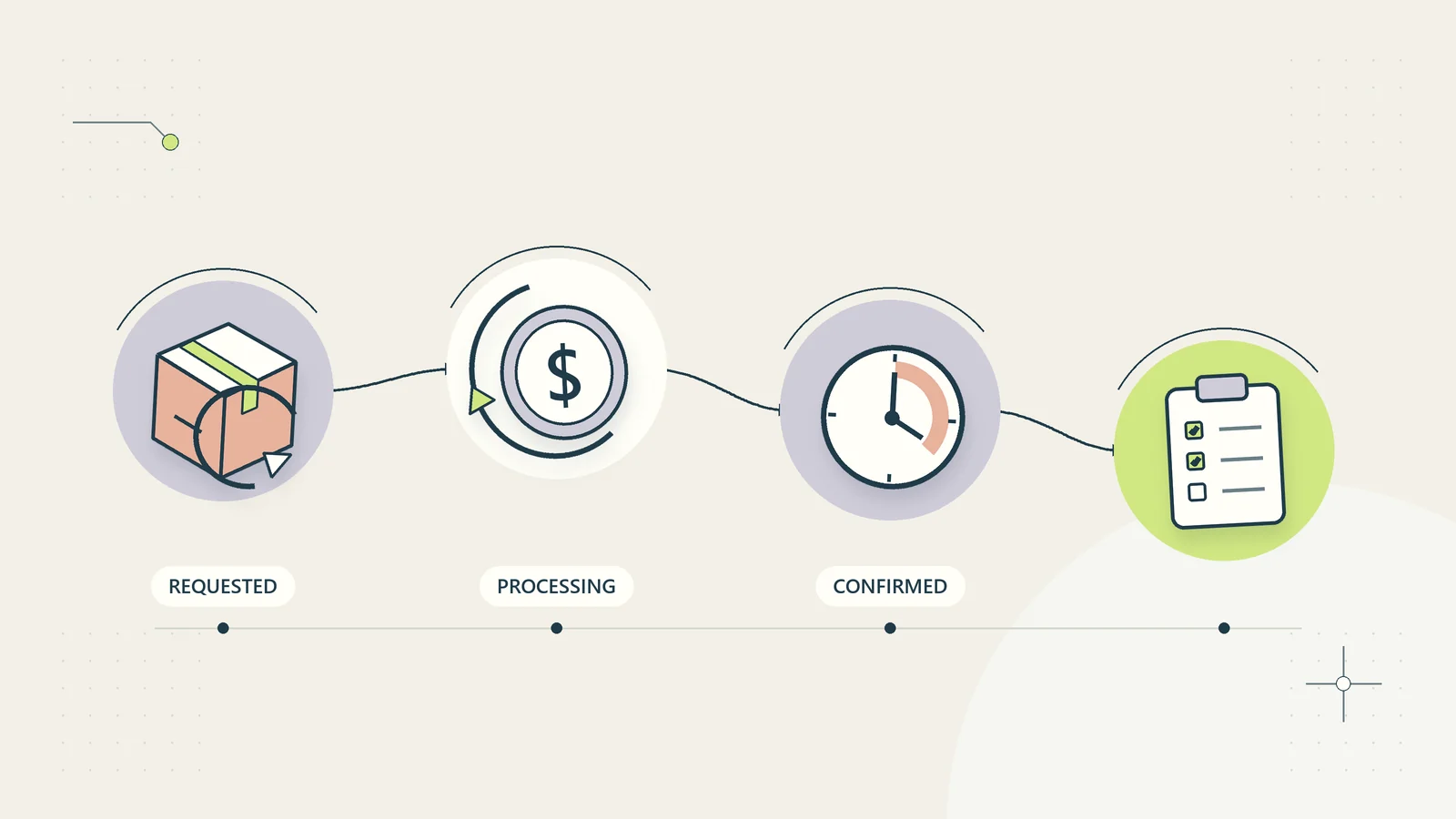
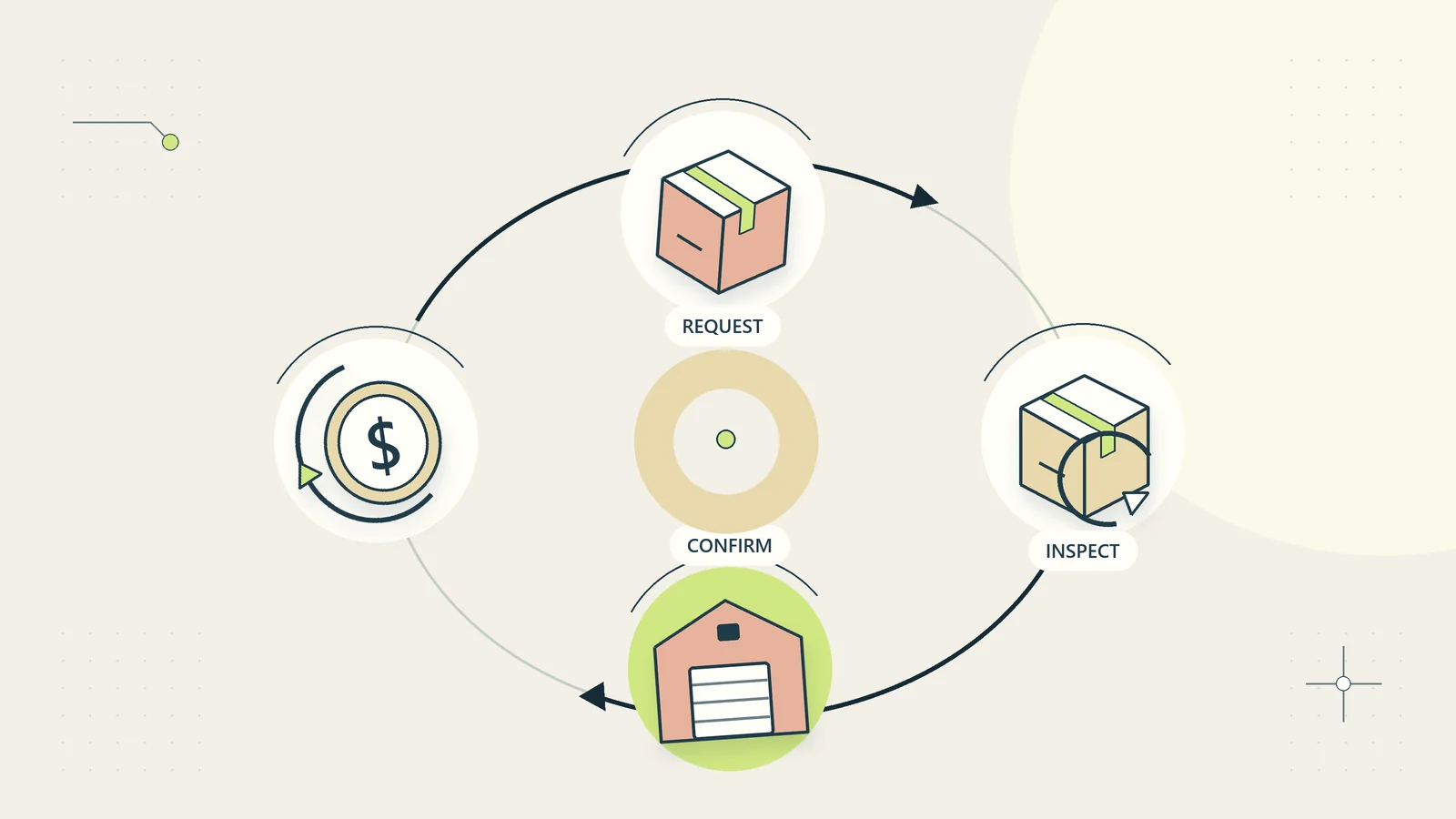
Shopify’s ecommerce returns overview describes returns as a sequence involving requests, assessment, inbound goods, inspection, disposition, and resolution. That distinction is useful even when you run a first-party register and customer help page rather than a vendor-specific system.
Version the policy reference used for a decision. If the policy changes, retain enough context to understand an older case. Do not silently apply a new internal rule to an already reviewed request without checking which terms and obligations govern it.
Design the customer request around useful evidence
Let the customer select the affected item and explain the issue in ordinary language. Product-specific questions can reduce follow-up: a sizing issue and a missing component need different evidence. Provide an accessible alternative where someone cannot use the normal request route.
Explain what happens after submission and what the customer should avoid doing. For example, a request acknowledgment can say that instructions will follow after review. It should not sound like an approved refund if the case has only entered a queue. Use reference numbers that help support locate the case without exposing unnecessary personal data.
Where photographs are useful, explain their purpose and avoid requesting unrelated identification documents. Some products or situations may require a different handling route, including safety concerns or hazardous goods. The ordinary return process should point these cases to a responsible person rather than issue generic shipping instructions automatically.
Our client intake question guide is relevant beyond service firms: every question should help someone make a decision, perform a task, or provide a clear update.
Use states that distinguish waiting from completion
A compact case register can use the following states. Adapt the labels to your actual policy and physical operation rather than treating this table as a legal decision tree.
| State | Evidence needed | Responsible next step |
|---|---|---|
| Request received | Customer request linked to an order line | Review the request |
| Awaiting information | Specific unanswered question | Contact the customer once clearly |
| Return instructed | Approved route and instructions recorded | Monitor the agreed inbound step |
| Item received | Arrival and case match recorded | Inspect or route to specialist handling |
| Resolution authorized | Decision and amount or exchange recorded | Execute the approved resolution |
| Financial result pending | Submission reference exists | Check provider confirmation |
| Closed | Customer update and required records agree | Retain according to the records policy |
An exchange may branch into a new shipment, with a clear relationship to the original case. A refund without a physical return may skip inbound stages but still requires an authorized decision and a financial result. Do not invent a parcel receipt to make the software’s standard path look complete.
Prepare the warehouse handoff
Warehouse staff need a recognizable case reference, expected items, quantities, and an approved handling instruction. They usually do not need the customer’s entire support conversation. Place detailed access behind the appropriate permissions while making the receiving task easy to perform.
Record what actually arrived. If the parcel contains a different product, an unexplained extra unit, or no usable case reference, keep it in an exception location while the mismatch is investigated. Automatically adding every returned barcode to sellable stock can create a second customer problem.
Agree inspection criteria for the relevant product category. Record a concise condition result, supporting evidence where appropriate, inspector, and date. Decide who can authorize a write-off, refurbishment, exchange, or return to stock. These are operational and commercial decisions that may require different authority.
Separate quantity physically present from quantity available to promise. An item awaiting inspection should not become immediately available to customers merely because someone scanned it. The inventory discrepancy process helps manage cases where stock records and observed items differ.
Connect authorization to the financial result
The refund decision should specify the affected order lines, currency, amount, any relevant shipping or fee treatment, and the person or rule authorizing it. Finance should not reconstruct the amount from a vague support note that says “refund this one.”
Before submitting a refund, check for prior refunds, payment disputes, partial resolutions, and earlier attempts with uncertain outcomes. If a request times out, the absence of a response does not prove that no refund occurred. Check the authoritative payment record before retrying through the approved process.
Record submission and confirmation separately. A customer message should distinguish an approved refund from a confirmed action and avoid guaranteeing the date money reaches their account unless that information is supported. Payment routes can differ, and your internal closure date may not equal the customer’s receipt date.
An exchange also needs a financial explanation. If there is a price difference or an additional payment, record how it is handled. Keep the original return case connected to the replacement order so support can answer questions without guessing from two disconnected order histories.
A hypothetical partial return from request to closure
Imagine an online retailer receives a request for one jacket from a three-item order. The customer selected the wrong size and asks for an exchange. The retailer creates case RET-142, linked to the jacket’s order line and a quantity of one. The other two products remain unaffected.
Support reviews the applicable policy and confirms the exchange route. The requested replacement size is not available, so the customer chooses a refund instead. The record retains that changed preference and the response confirming it. Warehouse instructions now describe the original jacket rather than a generic “three-item order.”
On arrival, staff match the parcel to RET-142, record the product and condition, and route it for the required inspection. The authorized resolution names the jacket and the correct refund amount. The financial action returns a pending result, so the case stays open while finance checks confirmation.
Only after confirmation does support send the final refund update. Inventory receives the inspection disposition separately. If the jacket needs repackaging, it remains unavailable for sale until that work is complete. This illustrative sequence shows how one customer resolution can have two different completion times without conflicting records.
Handle exceptions before they become repeated promises
Create explicit routes for unidentified parcels, missing tracking updates, damaged returns, unavailable replacement stock, disputed eligibility, and uncertain refund attempts. Each exception needs an owner, next action, and review date. A generic “problem” label is not a work plan.
Support should be able to explain the current blocker accurately. If an inspection is waiting for a specialist, say what has happened and when an update will be provided. Avoid repeatedly requesting evidence the customer has already supplied. Link the evidence once in the case and make its availability clear to the next team.
Risk signals may justify review, but should not become automatic accusations. A repeated return could reflect a sizing problem or faulty product information. Give trained staff the necessary context and authority to decide the case according to the relevant obligations and policy. Preserve a clear route for the customer to challenge a mistake.
For cross-border cases, confirm the actual shipping, customs, and financial requirements with the responsible specialists. Do not assume a domestic label and standard refund script will work for every market simply because the store sells worldwide.
Build self-service around status and next actions
A useful customer status page answers three things: what the retailer has recorded, what happens next, and whether the customer needs to do anything. Avoid displaying internal terms such as “RMA disposition pending” without explanation.
Provide a clear way to correct a wrong item selection or ask for help. Self-service should reduce unnecessary exchanges of messages, rather than make a customer repeat the same failed form. If a case is already open, attach a new question to that case instead of creating another refund instruction.
Shopify’s guide to returns management software discusses customer return portals and operational tracking. Use these as capabilities to assess against your own needs. A first-party help page and a reliable case register can be an appropriate starting point when they support the volume and complexity involved.
Keep support, warehouse, and finance handoffs visible in your service design. A customer-facing status cannot be more reliable than the records that feed it.
Measure the whole return, with separate clocks
Measure request-to-first-useful-response, instructed-to-arrived time, arrival-to-inspection time, and authorization-to-confirmation time. These intervals locate different kinds of waiting. One total average can hide a warehouse queue behind quick support acknowledgments.
Track unresolved cases by age and reason. Also review reopened cases, duplicate financial actions prevented, missing case matches, and items waiting to return to available stock. Use actual observations before setting performance targets, and separate unusual cases rather than quietly deleting them from the picture.
Review return reasons with product and content teams. Repeated sizing confusion may need clearer product information; repeated damage may need packaging or supplier investigation. Closing the individual case matters, but preventing the same avoidable confusion is also useful operational work.
Avoid treating every retained sale as a process success. An unwanted exchange or obstructive refund journey can leave an unhappy customer even if revenue initially remains. Review sample customer conversations alongside financial and warehouse measures.
Design a closure check that catches mismatched records
Before closing the case, compare the requested resolution with the authorized resolution and the confirmed outcome. A customer may originally request an exchange but later agree to a refund. The final record should make that transition understandable, without leaving the first request visible as an unfulfilled instruction.
Check quantities at the order-line level. If one of two identical units was returned, closure should not imply that both units were received or refunded. Preserve the remaining quantity and any separate open case. Where several parcels belong to one return, explain whether the financial resolution depends on all of them or follows another approved route.
Review customer communication last. Does the most recent update reflect the actual financial and physical status? If the refund is confirmed but an inventory exception remains, the customer-facing case may need a different completion view from the warehouse task. Connect those records rather than making the customer wait for an unrelated internal stock correction.
Finally, confirm that pending reminders or actions are canceled where their purpose has ended. Closing support should not leave a scheduled message asking the customer to send a parcel already received. The closure check is a small reconciliation of the case’s promises and evidence, not simply a requirement to fill every field with a green status.
Pilot with synthetic cases, then a bounded release
Before using the process with customers, test one partial return, one exchange, one unidentified parcel, a canceled request, a duplicate notification, and an uncertain refund result. Use synthetic orders and the appropriate non-production financial test route where available; a written walkthrough alone does not prove that a live payment action works.
Confirm that no completed financial action can be triggered again simply by reopening a support case. Verify that an inspection correction does not silently change a previously communicated refund amount. Check permissions and the customer view separately from staff views.
Start with a product category whose normal route is well understood. Assign responsibility for exceptions and keep a manual recovery procedure. Expand when actual cases remain understandable from request through stock and financial resolution, rather than when the system can display an attractive “closed” badge.
Sources and editorial method
Research checked October 15, 2026. Sources are Shopify’s ecommerce returns overview and its returns management software guide. Brief contextual references support the distinction between customer requests, physical handling, and resolution. The register, safeguards, and hypothetical jacket case are original operational analysis. This article does not prescribe a universal returns policy, certify compliance, or claim a tested integration.