Connect ecommerce support with warehouse and finance
Connect customer enquiries to warehouse evidence and finance decisions with clear order references, conversation ownership, and completion checks.

Ecommerce support works better when an answer reflects the same facts the warehouse and finance teams are using. A customer asking where an order is may need a dispatch check, a stock investigation, a payment clarification, or a refund update. Passing the message to another inbox without defining the requested decision usually adds waiting and creates opportunities for conflicting promises.
This guide explains how a small retailer can connect those teams through order references, specific action requests, and completion evidence. The process can begin with business-owned records and written handoff templates. It does not require a new helpdesk subscription, a discovery call, or an automated agent authorized to make financial decisions.
Map the customer question to the operational decision
Begin with the question the customer needs answered. “Where is my parcel?” may require checking whether the warehouse dispatched the order, whether a carrier accepted it, and whether tracking is current. Those are separate facts. A shipping label alone may not establish physical handover to the carrier.
Translate the question into a bounded internal request. Instead of forwarding the whole conversation with “please advise,” ask the warehouse to confirm whether the specified order and parcel left the site, with the relevant event reference. If the answer depends on a carrier investigation, identify who owns that next step.
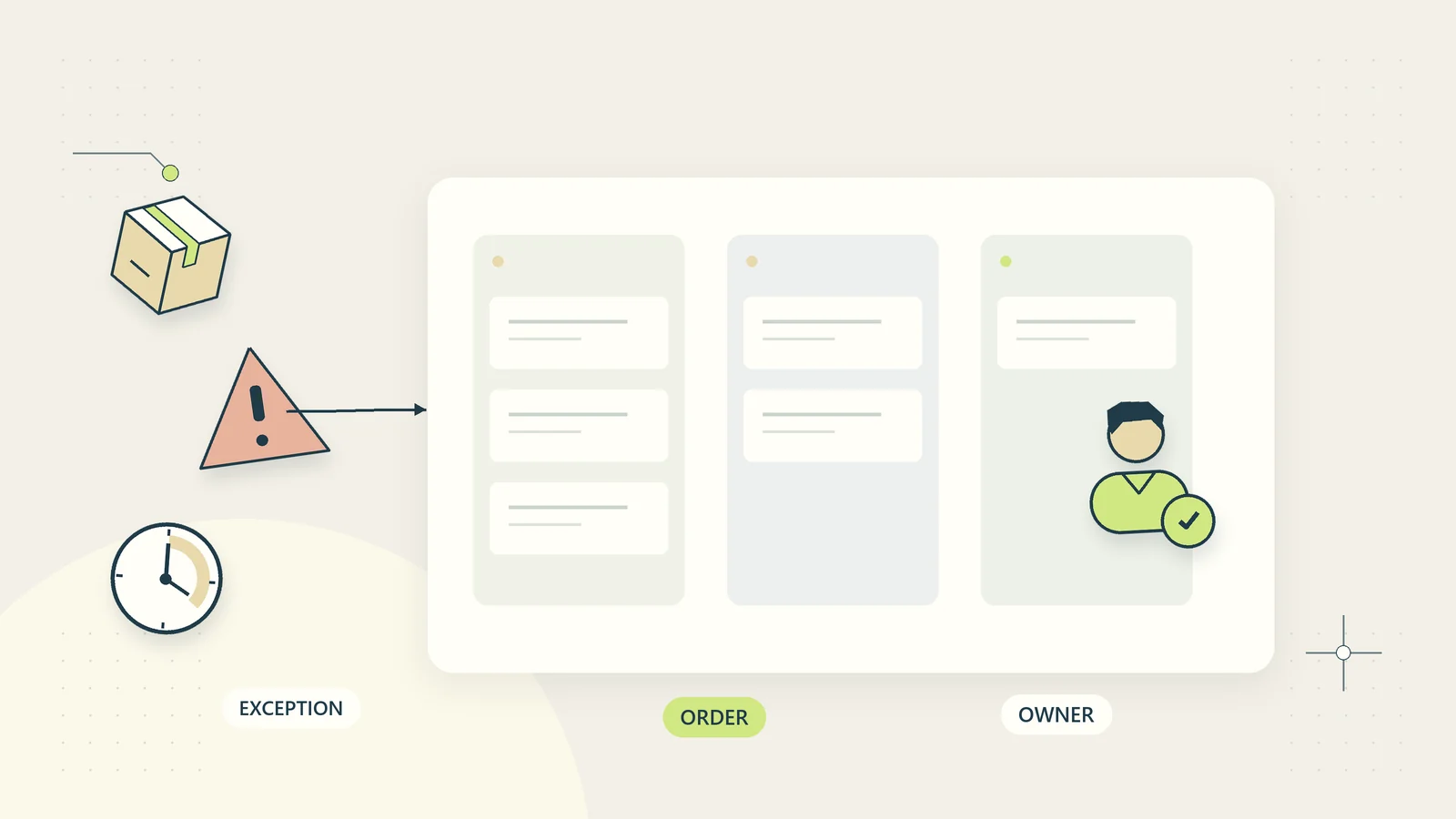
Keep the customer’s requested outcome visible. Someone asking to cancel before dispatch needs a different decision from someone asking for a delivery update. The ecommerce order exception queue helps coordinate orders whose normal path is blocked.
Separate facts, interpretations, and commitments
Facts are observations with evidence: an order contains two items, a parcel was scanned, a refund request has a provider reference. Interpretations explain what those facts may mean. Commitments state what the business promises to do next. A handoff should make the distinction clear.
For example, “warehouse check scheduled this afternoon” is an internal plan. “We will dispatch today” is a customer commitment that requires additional authority and evidence. Do not let a team member’s tentative comment turn into a promise through repeated forwarding.
Record the source and time of facts likely to change. Inventory availability, cancellation eligibility within your operating process, and payment status can change while a case is waiting. The person taking a consequential action should check current information rather than relying only on the original support message.
Establish one order reference across teams
Use the commerce order ID and any relevant line-item, fulfilment, parcel, or payment reference. Customer names alone are not reliable because one person can place several orders, and separate customers can share a name. Product names are also insufficient when variants differ.
Make the order reference visible in internal subjects and queue entries. If the customer contacts the business through several channels, link related conversations to the same case. Preserve the original messages in an appropriate restricted location rather than copying every personal detail into a broad operations channel.
Where several orders share one shipment or one order has several shipments, record those relationships explicitly. A single “shipped” label can hide the fact that only one part of the customer’s purchase has moved.
Design a handoff note someone can act on
A useful note is short enough to read and complete enough to avoid reconstructing the conversation. Use a consistent structure.
| Element | What to record |
|---|---|
| Reference | Order, affected items, and case ID |
| Customer question | The outcome or information requested |
| Verified facts | Current observations with source and time |
| Requested decision | One specific question for the receiving team |
| Restrictions | Actions that must wait or promises already made |
| Current owner | Person coordinating the customer case |
| Needed-by time | Reasonable time linked to the customer update plan |
| Response evidence | What will prove the requested work is complete |
The business handoff checklist expands this structure for other cross-team work. Keep optional detail optional; a template that demands irrelevant fields encourages people to bypass it.
Make support the conversation owner
One person should own the next customer update, even while warehouse or finance investigates. That person does not need authority to decide every remedy. They do need to know where the case sits, who is acting, and what the customer has already been told.
When the conversation owner changes, the next person acknowledges the transfer and receives the current question, approved options, promised update time, and unresolved dependencies. Avoid assigning a case to a team name without confirming who is covering it.
Allow a route for urgent specialist issues. Product safety concerns, possible account compromise, and consequential payment disputes should follow the appropriate controlled procedure. The support handoff should preserve facts and escalate promptly, rather than asking an administrator to make technical or legal judgments outside their role.
Give the warehouse a precise evidence request
Warehouse requests should identify what must be checked physically or in fulfilment records. Examples include confirming a picked variant, locating an uncollected parcel, verifying a packing discrepancy, or establishing whether a cancellation instruction arrived before handover.
Specify the affected items and quantity. “Check order 218” is ambiguous when only the larger size is missing. Ask for a factual response: what was found, when it was checked, where the relevant stock or parcel is, and which options are operationally possible.
Keep the response within the warehouse’s authority. The warehouse may confirm that a replacement unit exists, but that does not automatically authorize a free replacement, a delivery promise, or a refund. Support can use the fact to seek the relevant decision without presenting it as an approved customer remedy.
Give finance a complete transaction question
Finance needs payment and refund references, amounts, currency, relevant dates, and the exact status question. “Customer says money missing” leaves several possibilities unresolved: an authorization, a captured payment, a pending refund, a failed refund, or a settlement timing issue.
Do not ask customers to send complete card numbers, passwords, or unnecessary bank details through an ordinary support message. Use the approved verification and payment-support routes. Share only the information needed for the authorized finance person to identify the transaction.
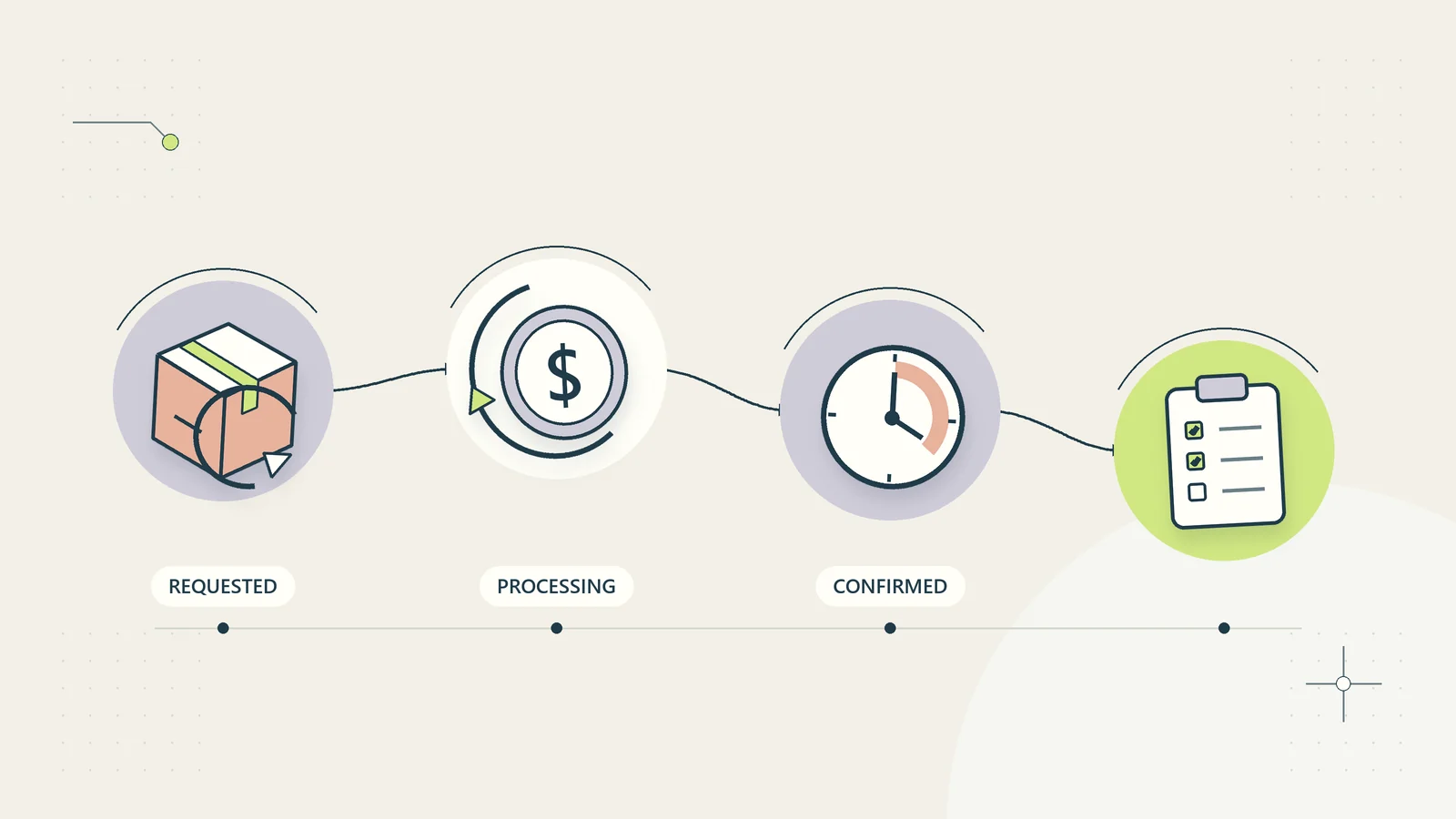
Connect to the ecommerce refund tracking guide when a refund is involved. Approval to refund, submission to a provider, provider processing, and the customer’s receipt of funds are different events. Support should communicate the verified event rather than collapsing them into one reassuring but inaccurate status.
Keep internal notes distinct from customer messages
An internal note can contain uncertainty, instructions, or restricted evidence that should not be copied directly into an email. Mark the intended audience and record the approved customer-facing explanation separately when needed.
Shopify’s Timeline documentation states that its notes and comments are internal rather than visible to customers. This illustrates a general operating point: recording something internally does not mean the customer has been notified.
Track the actual customer communication event, including delivery or failure information where available. A prepared draft or a note saying “tell customer” is not a sent update. Keep a recovery route for failed messages and customers who cannot access the usual channel.
Use self-service for verified information
An order-status page can answer routine questions when it reflects current, properly scoped information. It should show understandable states and offer a route for questions it cannot resolve. A self-service page that confidently displays stale or partial information can create more support work.
Shopify’s order-status page guide describes customer access to order and shipping information. For any implementation, protect order details with an appropriate access mechanism. A guessable order number alone should not expose another customer’s personal information.
Keep general help content separate from private order data. A public delivery guide can explain what a tracking status means, while the private order view shows the customer’s actual shipment. Link both to the same definitions so the wording does not conflict.
Work through a hypothetical missing-item enquiry
Imagine a customer reporting that a parcel contains one bowl instead of the two ordered. Support verifies the order reference and affected line, acknowledges the question, and assigns a warehouse check. The note asks for the recorded packed quantity and whether the second bowl was placed in another parcel.
The warehouse finds that the order was intentionally split because one bowl was unavailable at the first dispatch. The second shipment has not yet been released. Support now has a verified fact, but still needs the fulfilment owner to confirm realistic next steps. An old internal target date is not treated as a current promise.
The authorized owner confirms the available options. Support sends the approved explanation and records the customer’s choice. If the customer chooses a refund for the remaining item, finance receives the order line, authorized amount, and decision reference. This hypothetical example demonstrates decision handoffs; it is not a reported customer result or a universal returns policy.
Prevent two teams from resolving the same issue twice
Before a replacement, cancellation, refund, or inventory change, check whether another team has already acted. Use current source records and a clear action owner. A busy day can otherwise produce both a replacement shipment and a full refund for the same unresolved message.
Record action intent before execution where the process supports it, then capture the confirmed result. If an action fails or times out, investigate its actual state before retrying. An uncertain response does not prove nothing happened.
For ordinary manual work, a visible “finance reviewing refund request” state can prevent a second person from starting the same task. For automation, stable event identities and duplicate protection are necessary, but they still depend on clear business rules about what the action is allowed to do.
Define waiting states and escalation triggers
Distinguish waiting for a customer answer, warehouse evidence, finance confirmation, supplier information, and an authorized decision. Each state should have an owner and a next check. A generic “pending” category hides which dependency actually needs attention.
Escalation should identify the blocked decision and consequence of delay. “Please prioritize” is less useful than “customer update due tomorrow; replacement availability remains unconfirmed; fulfilment lead decision required.” Keep times explicit across time zones and operating hours.
Do not automatically escalate every old case to the founder. Some delays need a different evidence request, while others require a specialist. The client escalation process offers a broader approach to matching the issue with a person who can resolve it.
Close the case only when the outcome is evidenced
Define closure for each case type. A tracking enquiry may close after a verified answer and customer update, while a replacement issue may remain open until the agreed dispatch evidence exists. A refund request may need a separate follow-up when provider confirmation is still pending.
Record the outcome, source references, communication, and any remaining linked work. Closing the customer conversation should not erase an inventory discrepancy or provider investigation. Link the continuing task to its own owner and make the boundary explicit.
Allow reopening without blaming the person who closed the case. New evidence, failed delivery, or a rejected payment action may legitimately change the situation. Use reopened cases to improve the closure definition when the same gap recurs.
Maintain a small library of approved explanations
Keep reusable explanations for common verified states, such as a warehouse check in progress, a split shipment, or a refund submitted to its provider. Each explanation should identify the facts needed before it can be used and the fields that must be filled from the current order. A template should never turn an unknown date into a confident promise.
Give the library an owner and review examples when processes change. If your fulfilment cutoff or customer options change, update the explanation and remove obsolete versions from easy access. Check translations and local-market wording with appropriate reviewers where needed. Retain a free-text route for unusual situations; forcing every case into a familiar template can hide the very fact the customer needs explained. The library supports consistent communication while the source records continue to control what is true for an individual order.
Pilot the handoff routine with real questions
Choose one frequent question type and a small operating period. Measure handoffs per case, requests returned for missing information, time waiting on each team, conflicting customer promises, duplicate actions, and cases reopened. Record the sample size and product circumstances so the results remain interpretable.
Review a few cases end to end. Could another authorized colleague understand what the customer asked, what each team verified, who approved the outcome, and what was actually communicated? If not, fix the missing connection rather than adding a longer script.
The goal is an explainable service chain. Customers receive accurate updates, specialists answer bounded questions, and the conversation owner can move the case forward without reconstructing its history from several inboxes.
Sources and editorial method
Checked October 15, 2026. Primary references: Shopify: Timeline and Shopify: order-status page. The handoff table, responsibility model, and missing-item scenario are original operating guidance. Platform examples do not require a vendor account, imply a partnership, or establish a tested integration.