Build an ecommerce order exception queue
Give blocked ecommerce orders a clear owner, next action, customer update, and release condition with an exception queue your small team can maintain.
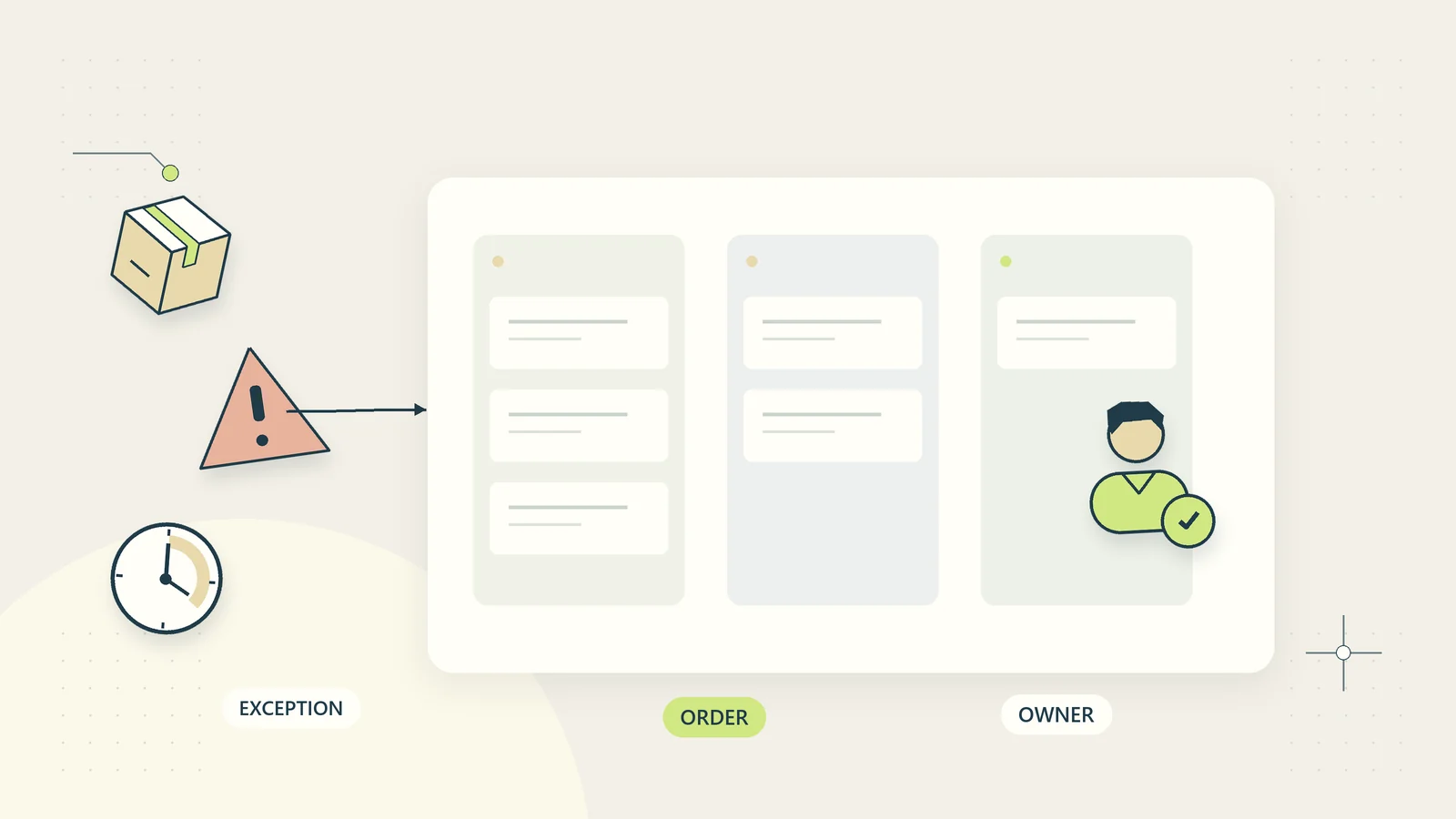
An ecommerce order exception queue is a controlled list of orders that cannot follow the normal fulfilment path. Its purpose is to make the next decision visible: what is blocked, who can resolve it, which actions must wait, and when the customer needs an update. It should help your team work through problems without turning every unusual order into an inbox investigation.
Start with the order records and tools your business already controls. You can design the queue in a simple internal table before considering software changes. The important features are stable references, clear ownership, meaningful states, and a release check that prevents an unresolved problem from being shipped or refunded by mistake.
Separate an exception from ordinary work
Write down the normal path for an order: accepted, ready for fulfilment, picked, packed, dispatched, and completed according to your operating definitions. Payment, inventory, and customer communication have related but separate states. An order can be paid while its fulfilment remains blocked.
An exception exists when a known condition prevents the next authorized step. Examples include unavailable stock, an address needing customer confirmation, a damaged item found during picking, conflicting order instructions, or an unresolved payment review. A customer adding a gift message may be an ordinary supported request rather than an exception.
Use the work intake process if every message currently becomes an urgent task. A queue works best when ordinary work continues through its normal path and exceptions receive the additional attention their specific obstacle requires.
Choose a small set of actionable exception types
Use categories that point toward a resolver. “Problem order” is too broad. “Address confirmation required” suggests a customer contact; “physical stock differs from available quantity” suggests an inventory investigation. Keep a short description for each category so two people classify the same situation consistently.
| Exception type | Likely next owner | Action that should wait |
|---|---|---|
| Address needs confirmation | Customer support | Dispatch to an unconfirmed destination |
| Stock unavailable at assigned location | Inventory or fulfilment lead | Promise of immediate shipment |
| Item fails packing inspection | Warehouse lead | Packing the affected unit |
| Payment requires authorized review | Authorized payment reviewer | Actions prohibited by the review status |
| Customer asks to change an order | Support with fulfilment confirmation | Conflicting edits or shipments |
Do not create dozens of categories on day one. Record uncommon issues in a temporary category with a precise explanation, then decide whether they recur enough to justify a named route.
Build a queue record that explains the next action
Include the order ID, affected line items, exception type, discovery time, current owner, blocking reason, next action, next review time, customer update status, and evidence reference. A partial-order issue should identify the affected quantity rather than implying every item is blocked.
Avoid placing complete customer addresses, payment credentials, or private correspondence in a broadly shared queue. Link to the restricted source record where the authorized person can verify details. The queue should coordinate work without becoming a duplicate customer database.
Keep the source order and the exception record connected through stable IDs. Product names and customer names are insufficient identifiers because names can change and customers can have multiple open orders. If an order has several independent obstacles, either use linked exception items or record each blocker separately under a clear parent reference.
Distinguish detection, assignment, resolution, and release
A useful state sequence is detected, assigned, awaiting evidence or decision, resolution ready, released, and closed. Define what evidence permits each transition. “Awaiting customer” should include the question sent and the follow-up plan; otherwise it becomes a holding area nobody checks.
Release deserves a separate check. Resolving an address question does not resolve missing stock. A team member should verify that every active blocker relevant to the action has cleared before fulfilment resumes. A single positive reply should not automatically cancel unrelated holds.
Shopify’s fulfilment-hold documentation illustrates that one fulfilment can have multiple holds. The underlying design lesson is useful across systems: show the complete set of active blockers and release only the ones the authorized decision actually resolves.
Assign one current owner and preserve specialist decisions
The current owner is responsible for moving the exception forward, even when another person supplies evidence. That does not give the owner unrestricted authority over payment, safety, inventory adjustments, or customer remedies. Keep decision limits explicit.
For a small team, the owner might be the same person who handles support that day. Record a covering person for absences and a route for cases beyond their authority. A queue assigned to “warehouse” can remain untouched when everyone assumes another colleague is handling it.
Use a handoff acknowledgement when ownership changes. The receiving person confirms the requested action and any deadline. The business handoff checklist provides a broader structure for making this transfer clear without requiring another meeting.
Prioritize by consequence and time sensitivity
Order value is only one consideration. A low-value order may contain a time-sensitive customer commitment. A high-value order may have a straightforward question with no immediate deadline. Rank work using the effect of delay, the promised date, customer circumstances disclosed appropriately, and the action needed.
Keep a separate flag for issues requiring urgent expert attention, such as a potential safety problem or suspected account compromise. Do not bury these among routine address questions. Use the relevant incident or safety procedure rather than asking queue administrators to improvise technical judgments.
Track the age of the exception and the age of the current unanswered action. Those measures answer different questions. An old exception may be progressing through a known long-term resolution, while a new one may already have missed a critical customer update.
Give customers updates that match the known facts
An update should explain the relevant problem, what is being checked, what the customer can do if anything, and when the next meaningful update will arrive. Avoid promising a dispatch date before the person responsible for fulfilment has confirmed it.
Separate an internal target from a customer commitment. Your team might aim to inspect stock this afternoon, but that does not establish when a replacement can arrive. Say which information remains uncertain rather than converting the target into a guarantee.
Connect the queue to the ecommerce support handoff process so support, warehouse, and finance use the same approved facts. A well-written email cannot compensate for three teams working from different order states.
Work through a hypothetical partial-order case
Imagine an order containing two mugs and one serving tray. During packing, the warehouse finds that the tray is damaged. The exception record identifies the tray line, quantity one, the inspection note, and the warehouse lead as the initial owner. The mugs remain physically available, but the team does not assume partial shipment is authorized.
Support checks the retailer’s applicable policy and available customer options. The warehouse confirms that another tray may arrive in a forthcoming shipment but cannot yet verify a dispatch date. Support offers only options the business can actually provide, with any required customer choice recorded against the order.
The customer chooses to receive the mugs first and wait for the tray under the agreed arrangement. The queue records that decision, the responsible fulfilment person, and the next update point. The first shipment does not close the remaining tray exception. This hypothetical example demonstrates line-level ownership and state changes, not a universal remedy or a reported operational result.
Prevent duplicate work when several channels report one issue
A customer can submit a contact form, reply to an order email, and send another message before seeing a response. Link these contacts to the same order exception where they describe the same problem. Preserve the communication history without opening three unrelated resolution tasks.
Use an acknowledgement that identifies the existing case reference. Before issuing a refund, replacement, or other commitment, the authorized person checks whether another colleague has already acted. A status read from yesterday’s exported list is not enough for an irreversible action today.
For automated detection, give each incoming event a stable identity and check whether it has already been processed. The business rule should tolerate a repeated notification without creating another refund request or warehouse instruction. Test this with harmless sample events before enabling any consequential action.
Keep the queue aligned with the source order
Decide which record controls each fact. The commerce system may control order lines and fulfilment status, the payment provider may control payment state, and the exception queue may control internal investigation ownership. Do not let the queue overwrite authoritative facts merely because someone types a convenient status.
The Shopify order-management overview describes order handling across payment, fulfilment, changes, returns, and refunds. Your queue should point to those underlying records rather than collapsing everything into a single “done” label.
Schedule a reconciliation check between open exceptions and source orders. Find closed orders with unresolved queue items, open orders whose exceptions disappeared, and queue entries referencing an obsolete order version. Investigate discrepancies before treating either record as complete.
Automate reminders and routing before consequential decisions
Early automation can assign a known category, calculate an internal review date, group related events, or alert a covering owner. These actions reduce coordination work while leaving business decisions visible. Use rules that can be explained from the record.
Automatic release, cancellation, replacement, or refund needs stronger controls because an incorrect action can create additional loss or customer harm. Confirm authority, current source status, duplicate protection, and a recovery route. A vague label generated from customer text should not be enough to authorize a financial action.
Keep a failure queue for automation itself. If assignment fails or a source record cannot be retrieved, show the item as requiring attention. Silent failure produces the appearance of an empty queue while unresolved orders remain elsewhere.
Plan the daily queue review around decisions
Give the review a short, repeatable order. First inspect exceptions with a customer commitment or required action due soon. Then inspect items without an owner, items whose next action is overdue, and cases that have changed in the source system since the last review. This is more useful than reading the entire list aloud in creation order.
For each reviewed item, make one of four outcomes explicit: take an action, request specific evidence, transfer accepted ownership, or retain the current plan with a justified next review time. “Still pending” should not be the automatic outcome when nobody has checked the source record. Record what was checked so the next reviewer does not repeat the same investigation.
Prepare the review for days when order volume spikes. Name the covering person, define which routine checks can be grouped, and preserve the controls on consequential actions. A rush period is a reason to make priorities clearer, not to release every hold in bulk. Keep the queue view readable by filtering to work a particular owner can act on, while retaining a complete operational view for the person coordinating coverage. When the queue is empty, verify that detection is still working before concluding that all orders are proceeding normally.
Review causes without blaming the latest handler
Use recurring exception patterns to identify upstream improvements. Repeated address questions may point to unclear checkout instructions. Stock discrepancies may point to receiving or counting practices. Repeated change requests after picking may indicate that customers cannot find the order amendment deadline.
Keep the distinction between cause and response. The person who discovers a damaged item did not necessarily cause the damage. A useful record states what was observed and where evidence exists rather than assigning blame prematurely.
Select one repeated cause to address and compare a suitable before-and-after sample. If you change several processes at once, it becomes harder to understand which change helped. Record order volume and product mix so a quieter week is not mistaken for a process improvement.
Pilot the queue with completion checks
Start with one exception type and a limited set of orders. Measure new cases, open cases, oldest unanswered actions, time to first meaningful update, resolution time, duplicate actions prevented, and reopened cases. Separate customer waiting time from internal waiting time where the records permit it.
Inspect closed cases as well as the open queue. Check whether the source order reflects the agreed outcome, the customer received the correct update, and any remaining line items have an owner. A quickly closed queue entry is not a success if another team must rediscover the same problem.
At the end of the pilot, refine categories, release conditions, and message templates. Keep the minimum structure that reliably answers four questions: what is blocked, who acts next, what evidence changes the state, and what the customer currently knows.
Sources and editorial method
Checked October 15, 2026. Primary references: Shopify: holding fulfilments and Shopify: managing orders. The queue structure, prioritization method, tables, and partial-order scenario are original operational examples. Platform features are illustrative; the process does not require a Shopify account or represent a tested integration.