A practical continuous improvement routine for small teams
Run a manageable continuous improvement routine with a problem register, testable changes, balancing measures, and clear adoption decisions.
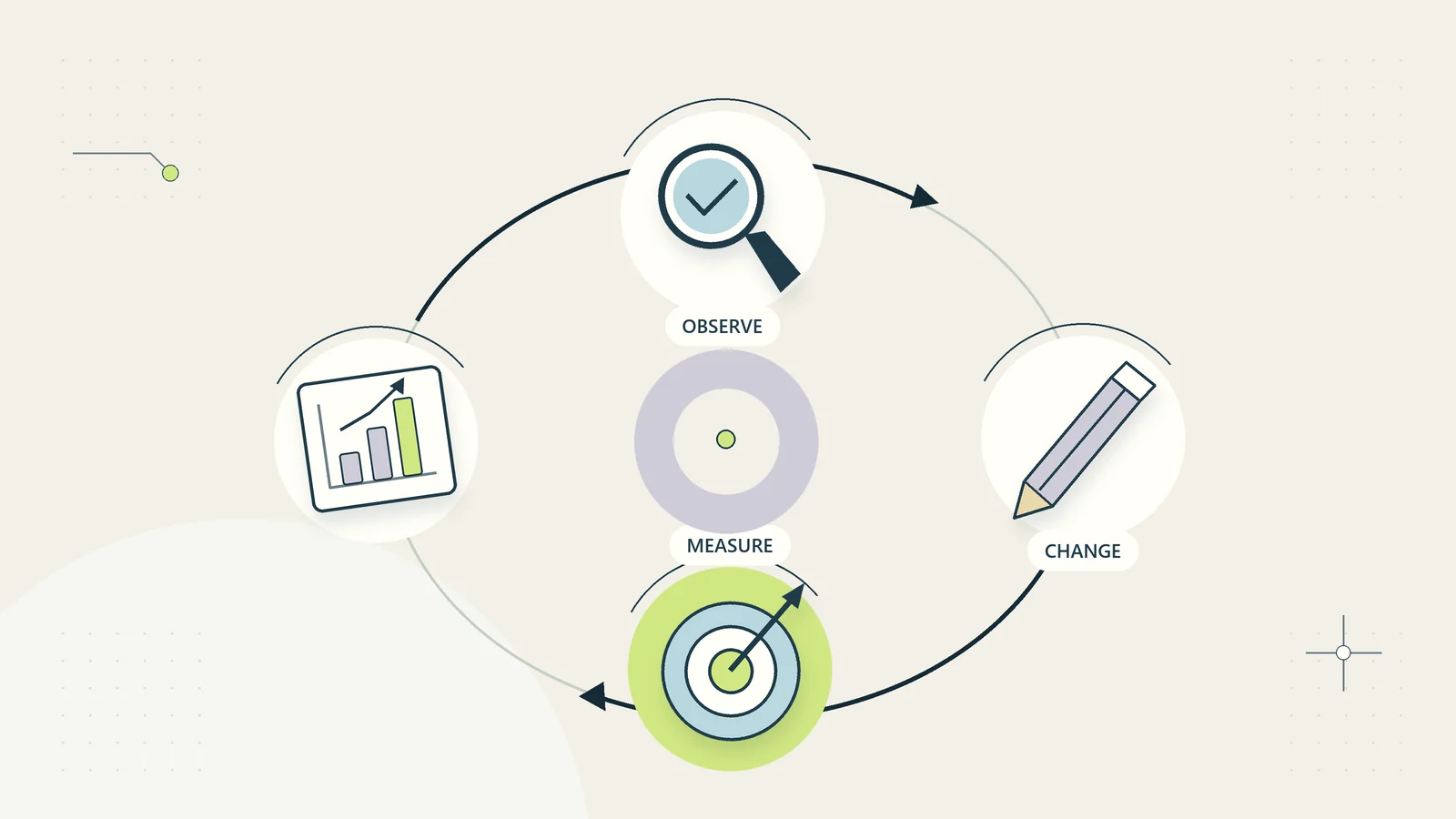
A small team does not need an endless stream of improvement projects. It needs a dependable way to notice a recurring problem, test a proportionate response, and keep the change only when the evidence supports it. Without that routine, the same frustration can return every week while new suggestions accumulate in a document nobody owns.
Continuous improvement works best when it fits inside the operating capacity of the business. The experiment should be small enough to understand, reversible where practical, and clear about whose work might become harder. Faster completion at one desk is not a useful improvement if it creates more correction work for the next person.
This guide provides an original routine for service businesses and other small teams. It combines a problem register, a short experiment record, a review method, and an illustrative example. It does not promise a particular productivity gain or require a specific platform.
Give recurring problems a place to land
Create a simple register for problems people actually encounter. Capture the date, process, observable event, consequence, and a link to a suitable example. Use neutral descriptions such as “three submissions arrived without a project identifier” rather than judgments such as “people never follow instructions.”
Keep suggestions separate from evidence. “Buy another app” is a proposed response, not a problem definition. Record the underlying difficulty: requests are being copied from private messages and two records sometimes describe the same work. The distinction makes alternatives visible.
Do not require a formal business case to report a problem. A frontline colleague should be able to add a brief observation while the context is fresh. The process owner can clarify it later. At the same time, avoid filling the register with confidential customer content when a reference and anonymized description are enough.
Review the register at a predictable interval. Choose a cadence the team can sustain, such as a short weekly review during an existing operating check. A register that nobody reviews becomes another form of lost feedback.
Describe one problem in observable terms
Before changing a process, agree what is happening and where its boundary lies. Define the event, the affected population, and the period you will observe. “Onboarding is slow” is too broad for a small experiment. “Accepted projects wait for missing access details before setup can finish” is more useful.
Look at several real instances rather than the most memorable complaint. Check whether they share a cause. A late customer submission, an unavailable reviewer, and a broken file link may all appear as delayed onboarding while requiring different responses.
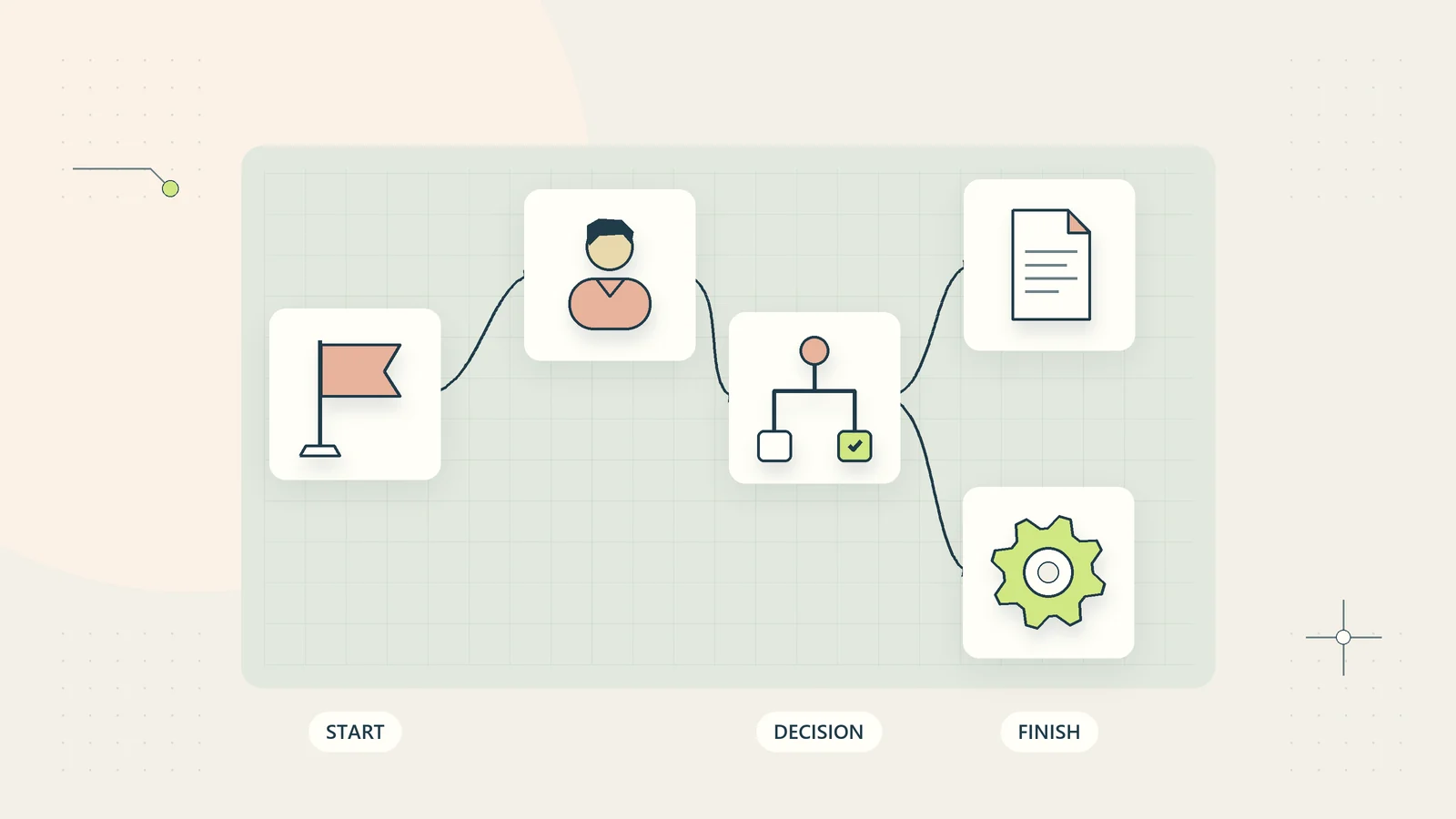
Use the process mapping guide to locate the handoff where the problem occurs. Draw the current path first. If team members describe incompatible paths, aligning the process definition may be the first improvement to test.
Write a concise problem statement: “For this type of work, this event occurs at this step and creates this consequence.” Leave the preferred solution out of that sentence. A good statement should remain valid even if the team rejects the first proposed fix.
Choose the next experiment deliberately
Small teams cannot investigate every friction point at once. Compare candidate problems using consequence, recurrence, confidence in the evidence, and effort required to test a response. Keep a separate immediate route for urgent safety, security, or customer issues that cannot wait for the routine review.
An attractive experiment has a bounded scope, a clear owner, and an observable result. It does not depend on changing the entire organization. A revised request instruction may be a better initial test than replacing every tool used by the team.
| Selection question | Why it matters |
|---|---|
| Who experiences the problem? | Prevents optimizing only the manager’s view |
| How often does it appear? | Distinguishes a pattern from a one-off event |
| What evidence exists? | Reduces reliance on a confident explanation |
| Can the response be tested safely? | Keeps the experiment proportionate |
| What other work will it displace? | Makes the capacity cost explicit |
| Who can decide whether to keep it? | Prevents an inconclusive pilot from drifting |
If the evidence is weak, choose an observation period rather than a solution. Learning that a suspected problem is uncommon can save the business from an unnecessary change.
Use a short improvement cycle
ASQ describes continuous improvement as ongoing work on products, services, and processes. Its plan-do-check-act cycle provides a simple structure: plan a change, test it on a small scale, study the result, and act on what was learned. That structure is useful without adopting an elaborate improvement program.
Translate it into a short record in your own language. State the problem, proposed mechanism, test boundary, success measures, and decision date. Name the person who can stop the experiment if an unwanted consequence appears.
The mechanism is the explanation for why you expect the change to help. “Adding a required project identifier will reduce manual matching because the receiving team can locate the source record directly” is more testable than “a better form will improve efficiency.”
Keep that record visible to the people doing the work. They should know which instruction applies during the pilot, which cases are included, and how to report a problem. An experiment conducted through informal exceptions can be impossible to interpret afterward.
Measure the baseline before changing the work
Choose a few measures connected to the problem. For missing intake information, count the proportion of eligible requests needing clarification, the handling effort required, and the time until the record becomes usable. Include the customer’s effort if the proposed solution asks them to do more.
Use the same definitions before and during the test. Changing what counts as a completed request can make the figures appear better without changing the work. Record the number of observations and any excluded cases.
Observe enough of the normal operating cycle to understand ordinary variation. A busy week, a holiday period, or a changed service mix can distort a small sample. You do not need to claim statistical proof to learn from a small pilot, but you should state what the sample cannot establish.
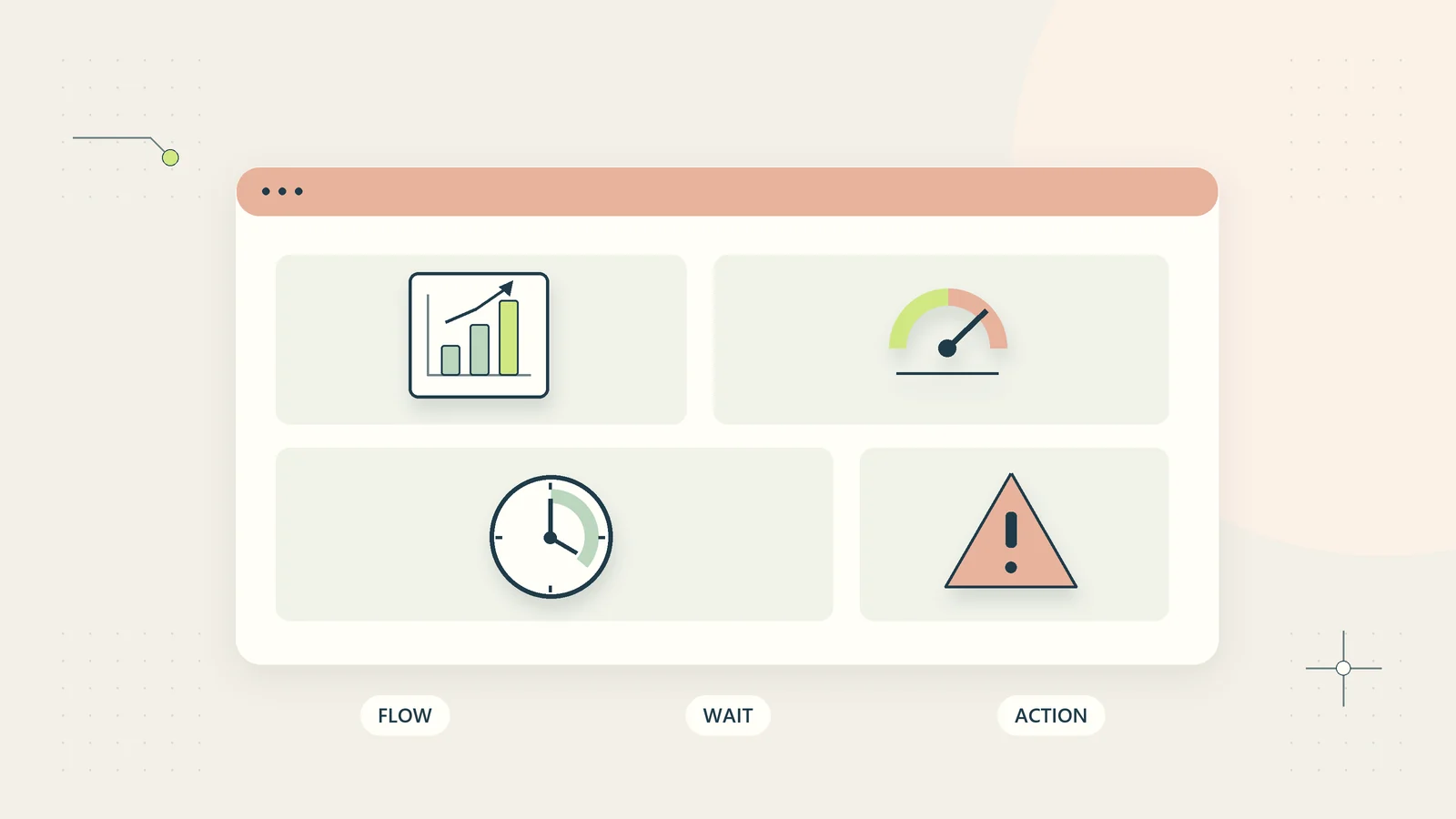
The operations dashboard guide explains how to make definitions and data freshness visible. For the experiment itself, a short case log may be sufficient. Collect only information you can reasonably review and use.
Protect the rest of the process
Add at least one balancing measure that could reveal a transferred burden. If you reduce internal handling by asking customers to complete a longer questionnaire, watch abandonment, clarification requests, and reports that the questions are hard to answer.
Check downstream effects. A new naming rule may make retrieval easier while breaking an existing import. A shorter approval path may improve speed while leaving the delivery team without evidence of authorization. Test the interfaces that the changed step touches.
Write a stop rule before the experiment begins. Examples include an incorrect external commitment, inaccessible instructions, repeated missing evidence, or an unexpected increase in correction work. A stop rule is a practical control, not a prediction that the experiment will fail.
Keep a rollback route where one is feasible. Preserve the previous instruction and know how to identify cases handled under the trial version. If an action cannot be reversed, reduce the pilot’s scope or use a draft-only test before allowing it to affect real customers.
A hypothetical experiment on missing project references
Consider a fictional training provider whose operations team receives course material change requests. Some requests arrive without a course identifier, so a coordinator searches messages and calendars to identify the correct record.
The team proposes adding a visible example of the identifier to the request instructions and a short explanation of where to find it. The hypothetical test covers one recurring course type. Other requests continue through the existing route so that the team can keep the experiment manageable.
Before starting, the coordinator records how many eligible requests need manual matching and how long that matching takes. During the test, they also record whether requesters report difficulty finding the identifier. The proposed improvement should not turn a small internal inconvenience into a confusing customer task.
One fictional requester cannot find the identifier because they are a new customer. The team keeps an “identifier not yet available” route and asks for the course title and scheduled date. That exception is legitimate; forcing a guessed identifier would make the data look complete while making it less reliable.
At review, the team would compare the observations, read the exception cases, and decide whether to keep, revise, or stop the change. This example contains no reported results. Its purpose is to show how a small operational hypothesis becomes a testable decision rather than an automatic rollout.
Review cases as well as totals
At the review date, inspect the aggregate measures and a few individual examples. A lower clarification rate might conceal a small set of serious matching mistakes. Faster handling might result from a different mix of requests rather than the instruction change.
Ask the people who used the trial what confused them. Separate evidence from preference. A colleague may dislike a new field because it adds a step, yet show that it prevents repeated searching. Another may prefer the new format even though customers cannot complete it accurately.
Record what the experiment taught you about the proposed mechanism. If matching improved because the coordinator recognized repeat customers, the visible identifier example may not deserve the credit. That distinction affects whether the change will work for new customers or another service line.
Choose one of three explicit outcomes: adopt within the tested boundary, revise and test again, or stop and preserve the lesson. “Continue monitoring” should include a named question, an owner, and a new decision date. Otherwise it can become a permanent unresolved trial.
Turn a useful result into the normal method
When you adopt a change, update the authoritative procedure, templates, training examples, and any recurring task definition that points to them. Announce the effective date and identify whether open cases remain on the previous method.
Remove obsolete instructions from normal use while preserving history where appropriate. Leaving two active templates in the same folder invites accidental reversion. Make the current version easy to recognize without requiring people to remember the date of an announcement.
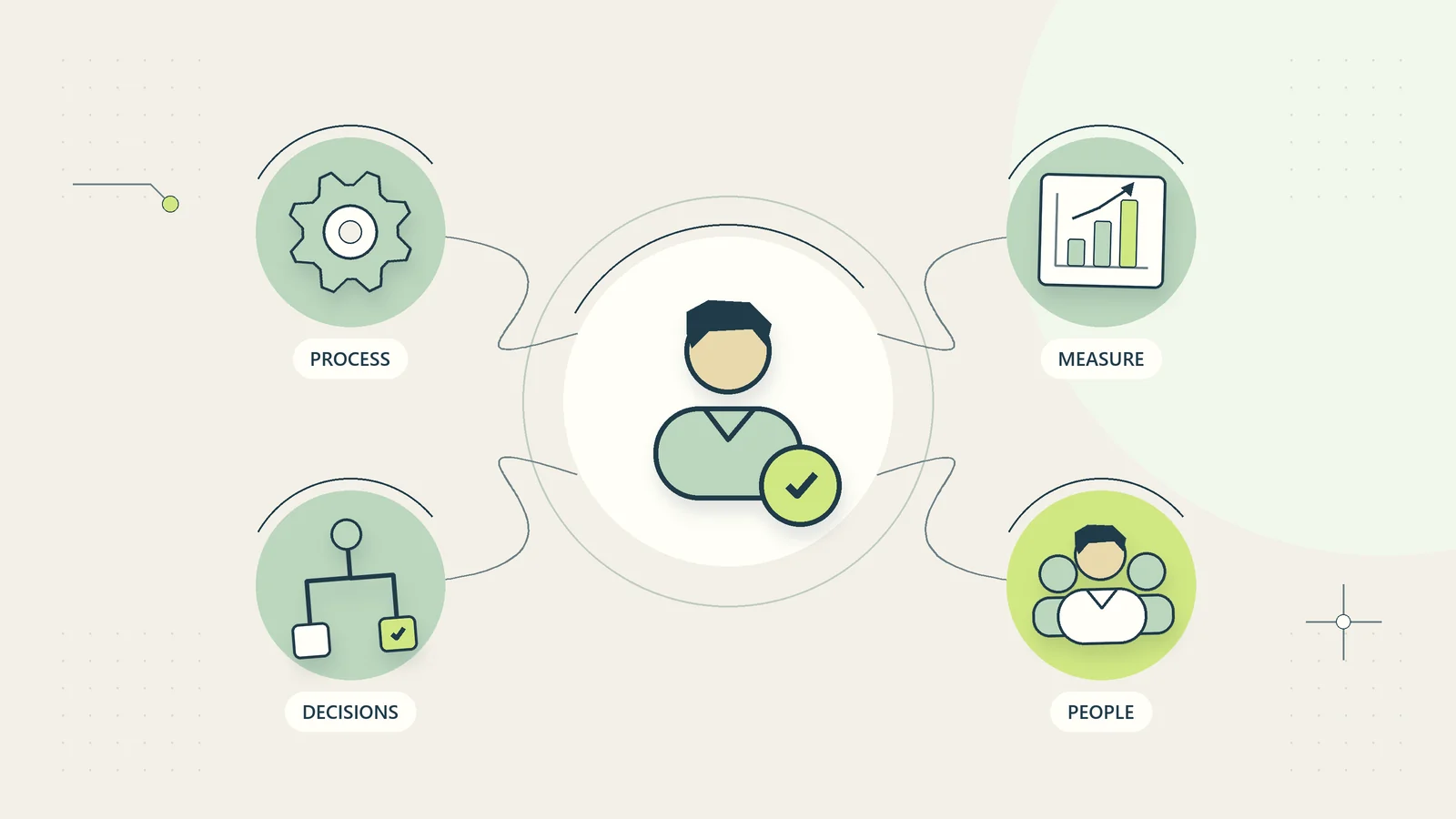
Assign ongoing ownership. A successful experiment can still deteriorate if nobody maintains the field definitions, access, or exception route. The process owner guide explains how to give that responsibility a practical scope.
Schedule a later check that fits the process. Some problems only appear when volume increases or a new colleague joins. Adoption is a decision based on current evidence, not a declaration that the method is permanently optimal.
Keep the routine light enough to survive busy periods
Limit active experiments. Several simultaneous changes to the same workflow make results hard to interpret and can exhaust the people expected to deliver normal work. Finish or pause a test before adding another that changes the same inputs or outputs.
Give improvement work a modest capacity allocation. This can be a defined block in the operating schedule rather than a separate program. Count observation, documentation, review, and training time, not only the time spent implementing the change.
Keep a short record of rejected ideas and why they were rejected. The goal is not to prove someone wrong. It is to prevent the same attractive but unsuitable proposal from returning without new information.
Use the guide to reducing administrative work when the improvement register itself becomes cumbersome. A five-field observation and a brief decision can be sufficient. The routine should make work clearer, not become a second business that competes with delivery.
Run the first month as a learning cycle
For the first cycle, select one recurring problem with a low-risk response. Agree on the test boundary, preserve the baseline definition, and choose a decision date. Share the trial instruction with everyone who might receive an affected request.
During the cycle, record deviations from the plan. An unavailable colleague, changed customer mix, or unexpected tool failure may explain the result. Do not conceal those events to make the experiment seem cleaner than it was.
At the end, evaluate both the proposed process change and the improvement routine. Could people report observations easily? Did the test have an owner? Was the decision made using the agreed measures? Could the team identify what to do next?
A useful first month may conclude that the proposed response was wrong. If the team has learned why, avoided an unnecessary rollout, and selected a better question, the routine has done valuable work. Continue with the smallest next experiment that addresses what you actually learned.
Preserve useful learning from an unsuccessful test
A stopped experiment should leave a short explanation that another colleague can understand. Record the tested boundary, what changed, what was observed, and why the team chose not to continue. Avoid a vague label such as “did not work,” which gives the next person no basis for judging whether circumstances are different.
Distinguish a disproved explanation from an inconclusive test. If the proposed change was never used consistently, the result may say more about adoption or unclear instructions than about the underlying idea. If demand was unusually low, the team may simply lack enough representative cases to decide.
Keep the record proportionate. A concise note with links to the relevant evidence is usually enough for a small experiment. The purpose is to preserve the reasoning, prevent unnecessary repetition, and make a future retest possible when new information appears. Learning should remain available even when the proposed change is retired.
Sources and editorial method
Checked on October 15, 2026. The operating routine, selection table, measurement guidance, and training-provider scenario are original practical analysis. The example is hypothetical and does not report client results, a certification, or tested integrations.
- ASQ: Continuous improvement supports the brief definition of ongoing improvement across products, services, and processes.
- ASQ: Plan-do-check-act cycle supports the short description of the four-stage improvement structure. The article’s worksheets and examples are independently developed.