How to map a business process before changing it
Map the real steps, decisions, waiting, and handoffs in a small-business process before redesigning it, with a practical digital-delivery example.
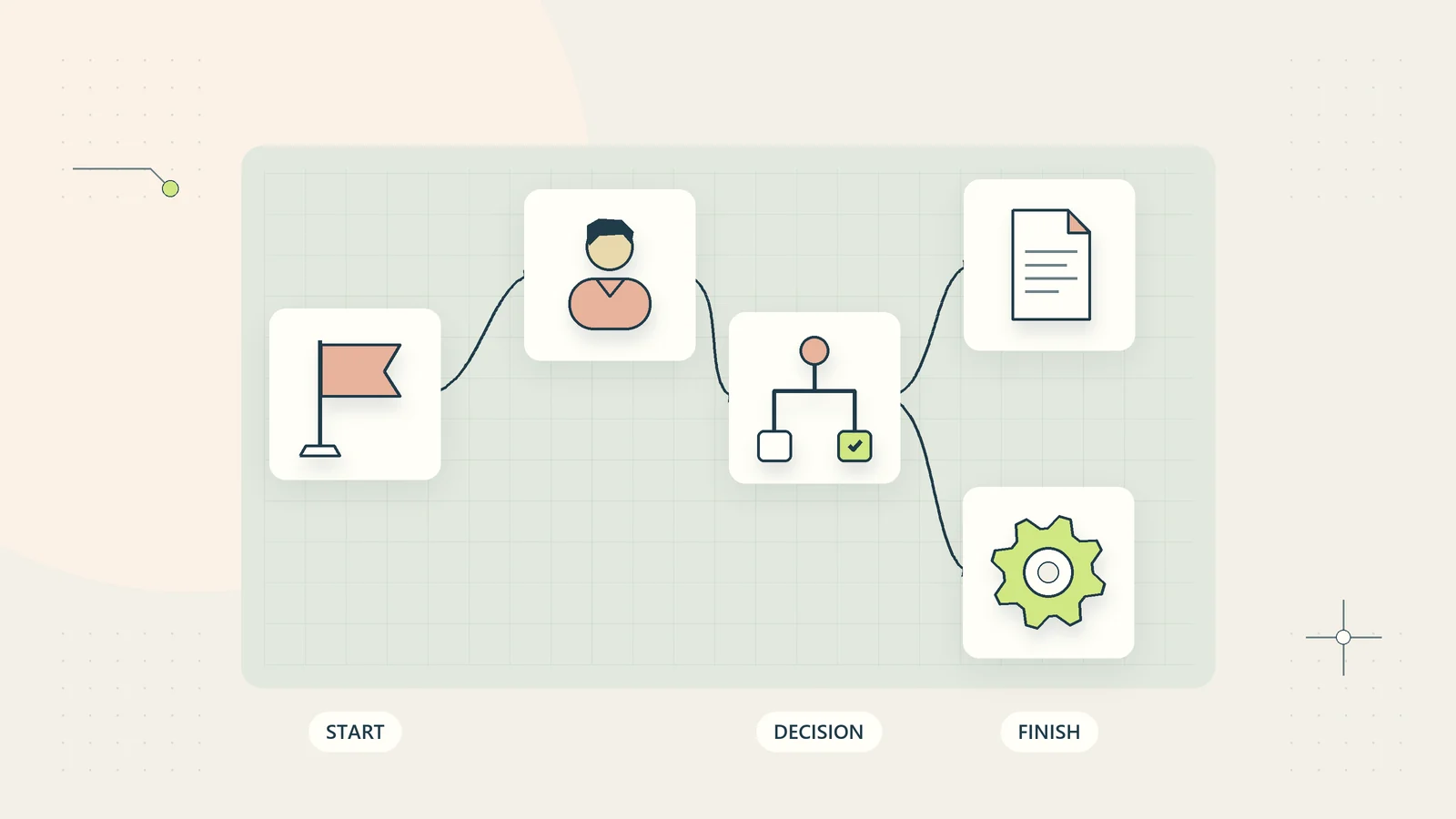
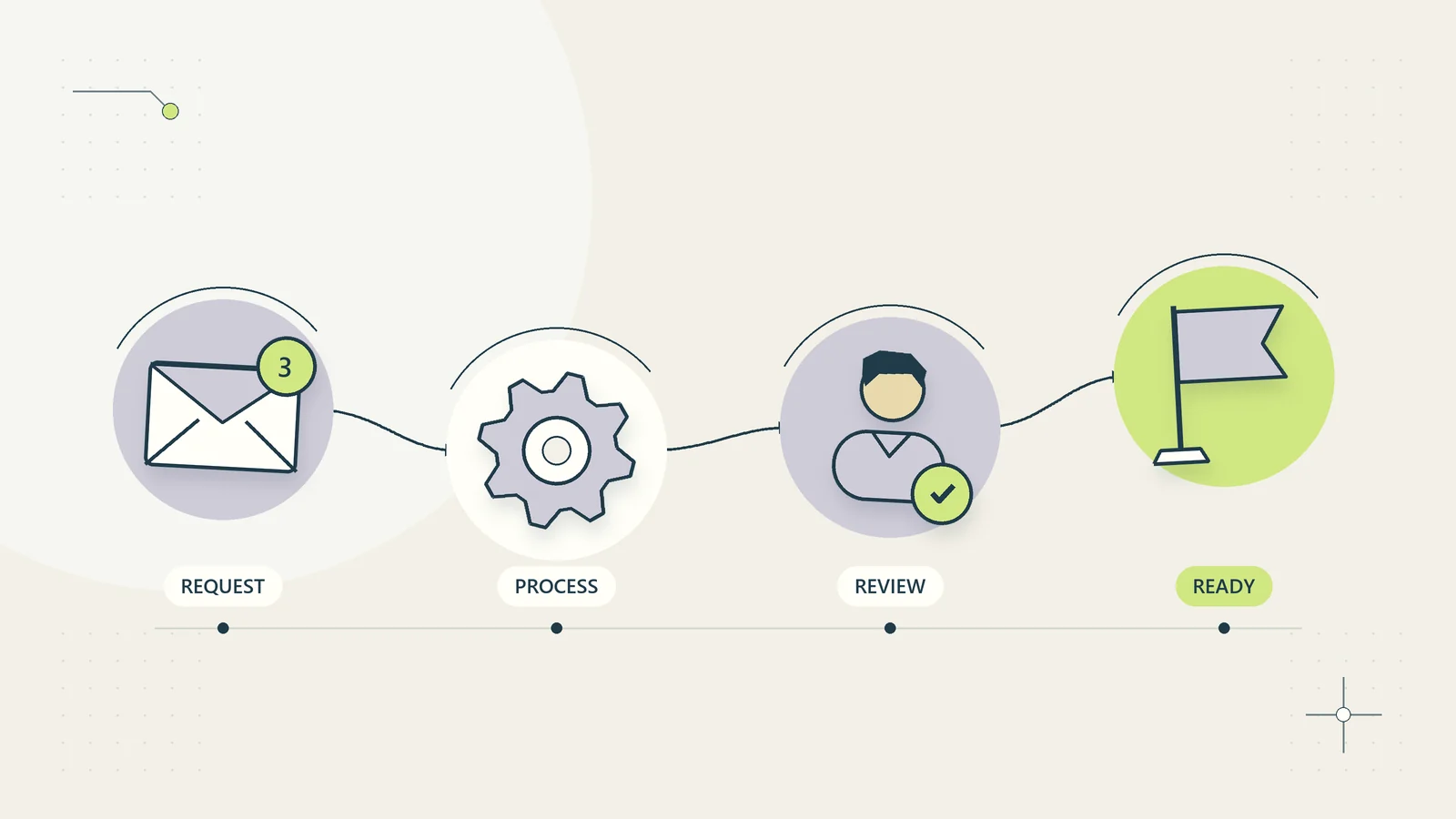
A business process map shows how a request becomes an outcome, including the decisions, waiting, and handoffs in between. Its value is practical: another person should be able to follow a real case through the picture and explain where it is, what it needs, and who acts next.
Start by mapping what happens today. Drawing an ideal future first can hide the workarounds that keep the business running. A useful map exposes those workarounds respectfully, then gives the team a shared basis for deciding what to simplify, document, or automate.
Choose one outcome with clear boundaries
Select a process small enough to observe from beginning to end. “Customer experience” is too broad for a first map. “A paid resource order becomes an accessible download or a resolved delivery exception” gives a clearer boundary and an observable finish.
Write the trigger, eligible cases, start, and finish before adding boxes. Identify related work outside the boundary. For example, a digital delivery map may begin after payment verification and exclude the marketing journey. It still needs a reference to the payment decision so that delivery cannot start from an unverified message.
Include who receives the outcome and what they regard as complete. An internal system may report “email submitted” while the customer still cannot access the file. The map should distinguish the system event from the intended customer outcome.
IBM’s process mapping overview describes process maps as visual representations of workflow steps and relationships. Use that basic purpose as a constraint: every symbol should help explain the work rather than make the document look sophisticated.
Gather examples before interviewing the process
Choose a few recent cases, including an ordinary one, a delayed one, and an exception. Remove or mask private details where possible. Walk through the evidence that already exists: request records, decisions, timestamps, delivery references, and correction notes.
Ask people to describe a specific case rather than recite the official procedure. “What did you do after this request arrived?” usually reveals more than “How should requests work?” Listen for private lists, repeated checking, missing information, and decisions based on experience that nobody has written down.
Do not treat an undocumented workaround as personal misconduct. Someone may have created it because the formal process lacks a necessary step. Record its purpose first. You can later decide whether to preserve, replace, or remove it with the people who depend on it.
Where accounts or records are inaccessible, mark the step as unverified. A reasonable assumption can support an initial conversation, but should not become a confirmed fact simply because it has been drawn neatly.
Draw the normal route in ordinary language
Use a start marker, action boxes, decision points, and an end marker. Label actions with a verb and an object: “check order status,” “select released file,” or “record delivery outcome.” Avoid labels such as “processing” that say little about what someone actually does.
Keep the first route short. Show the sequence for an ordinary eligible case before adding exceptions. A map with a dozen purposeful actions is easier to validate than a large diagram containing every screen click and technical response code.
Place an owner beside each action. This can be a role rather than a person’s name, especially where absence cover matters. A computer can perform an action, but a process owner still needs to be responsible for its rules and unresolved failures.
If the route becomes crowded, create a separate detail map for one complicated stage. Preserve a clear connection between the overall action and its detailed steps. The SOP writing guide explains where step-by-step instructions belong once the flow is understood.
Make decisions answerable and routes complete
A decision point needs a question that can be answered from available evidence. “Everything okay?” is weak. “Does the verified order reference identify a paid, eligible product?” is more specific. The map should show what happens when the answer is yes, no, or uncertain.
Separate business decisions from technical checks. A valid file reference does not establish that the customer has purchased that product. A successful message submission does not establish that a refund was authorized. Combining these checks into one green box conceals important responsibilities.
Give each exit a destination. An uncertain match might create an exception record with an owner; an ineligible request might receive an appropriate explanation; a canceled order might stop delivery. Avoid arrows that disappear into a note called “manual handling” without saying who handles what.
Record stop rules as carefully as success conditions. An effective automatic process needs to know when the right action is to wait or stop. That makes later automation safer and makes the map useful even if the team keeps performing the work manually.
Separate active work from waiting
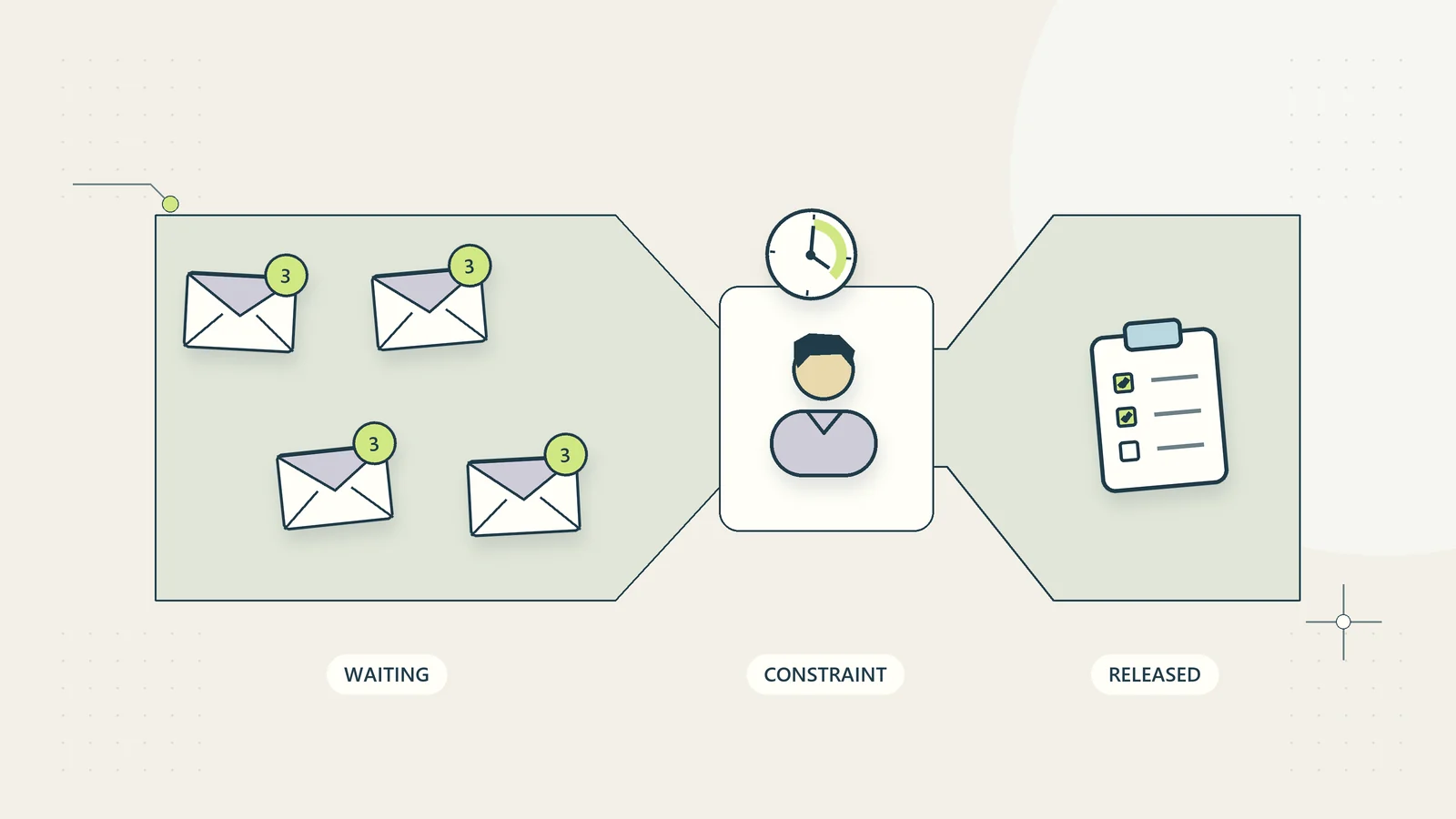
Draw waiting explicitly where it affects the case. A request can wait for missing information, approval, capacity, or a scheduled date. Those are different conditions and may need different interventions. A single “pending” box hides the reason nothing is moving.
Annotate approximate active work time and elapsed time separately, using observed examples when available. If checking a request takes five minutes but the case waits two days for an answer, speeding up the check has a different effect from resolving the dependency.
Use ranges where cases vary substantially, and label estimates. You do not need false precision to make the distinction useful. The map should help the team see where more measurement is necessary rather than pretend that one observed case represents every future case.
The bottleneck guide develops this distinction into a method for investigating queues. First make the waits visible; then decide which of them actually constrains the outcome.
Add information and evidence at handoffs
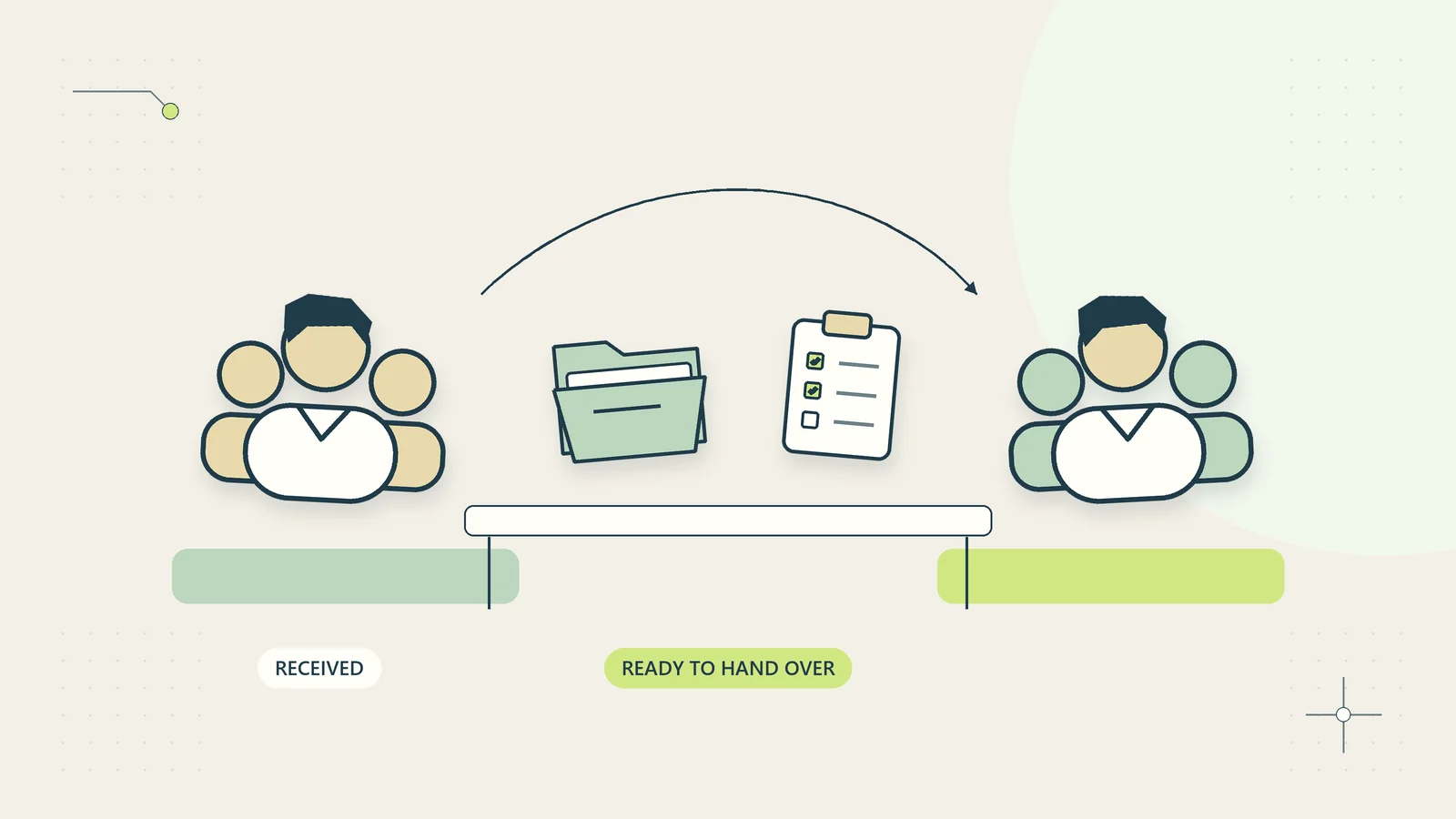
For every handoff, list what the receiver needs to act correctly. A task title alone may not carry the accepted scope, customer reference, required date, or evidence of the preceding decision. Record where that information lives rather than copying the entire underlying document into the map.
The following compact handoff pattern can accompany the diagram.
| Map element | Question to answer | Example |
|---|---|---|
| Input | What starts this action? | Verified eligible order reference |
| Required evidence | What must be checked? | Product and payment status |
| Owner | Who is responsible? | Delivery process owner |
| Output | What does the next step receive? | Correct released file reference |
| Exception | What prevents completion? | Product has no released version |
Identify duplicate entry. If the next person copies details from an email into a private worksheet, ask whether the handoff could instead carry one stable reference. However, do not remove a copy until you understand whether it serves a legitimate verification or continuity purpose.
Show access boundaries where they affect the work. Someone who receives a case reference may not need permission to see private billing details. The map can identify the necessary fact without exposing all the data behind it.
A hypothetical map for automatic resource delivery
Imagine a business selling its own downloadable operations workbook. The process begins when a verified paid order becomes eligible for delivery. It finishes when access is available and the delivery outcome is recorded, or when a delivery problem has an assigned recovery route.
The normal route checks the order reference, resolves the purchased product to its released file, creates authorized access, prepares the delivery message, submits it through the configured email service, and records the result. A separate customer access check confirms that the link resolves to the intended resource.
The map includes several branches. A repeated order event finds the existing delivery record instead of creating another entitlement. A missing released file pauses delivery and alerts the owner. An uncertain email result is checked before retrying. An expired access link follows a controlled recovery route that verifies the customer’s entitlement.
The team initially notices that staff use a private list of corrected email addresses. Rather than deleting it, they discover its purpose: the order system lacks an approved address-correction path. The future design adds that path with an auditable change and removes the private list only after the new route is working.
This illustrative map is a design exercise, not evidence that any particular checkout or delivery integration has been tested. Its benefit is the questions it makes visible before implementation.
Validate the map with the people doing the work
Walk a real, appropriately protected case through every action and decision. Ask the relevant person whether the input is sufficient and the output is accurate. Where two people describe different routes, record the variation rather than choosing the most senior person’s account automatically.
Check exception ownership. Can the named owner access the information, make the necessary decision, and contact the relevant person? A role printed beside a box does not create those abilities. Identify missing authority and absence cover before relying on the map operationally.
Ask the recipient of the outcome to review the finish. Internal teams often define completion earlier than customers do. A report can be uploaded while the client still needs the access instructions. A return can be received while its refund remains pending.
Keep disputed details visibly unresolved until evidence settles them. A map is a working representation of the process, not a reason to conceal disagreement. Record its date, scope, owner, and known limitations so someone can judge whether it still applies later.
Design the future route with explicit changes
Create a separate future-state map rather than overwriting the verified current route immediately. For each proposed change, explain the problem, intended effect, risk, owner, and evidence needed to judge it. This keeps improvement connected to an observable outcome.
Consider removal before automation. A status update copied into three places may be unnecessary. An approval required for every routine case may need a clearer delegation limit. An automation that reproduces these habits can make them faster while preserving their cost.
IBM’s business process management overview places process improvement in a continuing cycle of design, execution, monitoring, and refinement. Treat the future map as a proposal to test in that spirit rather than a permanent blueprint that cannot be questioned.
Our business process automation guide explains how to choose a bounded first pilot once the process and its rules are clear.
Make the map useful during daily work
Publish the map where staff can find it alongside the relevant instructions. Keep a concise overview visible, with links to detailed procedures and controlled records. The map should orient someone quickly; it should not require reading a long manual to understand the first handoff.
Use labels that match operating records. If the map says “awaiting client” while the register says “blocked external,” decide whether those labels mean the same thing. Shared language reduces the translation work required every time a person changes tools or joins the process.
Give the process owner a simple correction route. Staff should be able to report that a decision is missing or a route no longer matches reality. Require a review when the product, responsibilities, policy, or technical behavior changes materially, rather than relying only on an annual calendar reminder.
Keep older versions according to your records needs. An earlier map can help explain why a past case followed different steps. Avoid allowing multiple apparently current diagrams to circulate without a clear version and owner.
Add a compact legend and an assumptions register
A simple legend prevents readers from interpreting the same symbol differently. State which shape means an action, which means a decision, how waiting is shown, and what a dotted arrow represents. You can choose ordinary symbols without claiming formal notation compliance. Consistency within the map matters more than a complicated visual vocabulary.
Mark the evidence behind uncertain details. An assumptions register might identify “address correction is handled by the order owner,” name the person who must verify that statement, and give a review date. Once confirmed, update the map; if disproved, correct the route and review any dependent design decisions.
Distinguish informational connections from permission to act. A message notifying staff that an order exists is not necessarily authorization to issue a refund or change the buyer’s details. If all arrows look identical, a reader can mistake awareness for approval. Label the relationship where the distinction affects the outcome.
Check the map without its author in the room. Ask a colleague to locate the current case, identify the next action, and explain what happens if the named owner is absent. Note where they hesitate. Those points often reveal missing context more effectively than another round of cosmetic editing. Resolve the important ambiguity before adding decorative detail or publishing the map as an authoritative procedure.
Use a small release checklist
Before adopting the map, confirm that the trigger and finish are explicit, ordinary and exceptional routes have owners, decisions use accessible evidence, and waiting states have review rules. Check that the map contains no private credentials or unnecessary customer information.
Test a normal case, an incomplete case, a duplicate, an absent owner, and a changed instruction. If the process includes an external action, verify authorization and recovery before relying on automation. A successful diagram walkthrough is useful preparation but does not replace technical testing.
Then choose one measurable outcome for a bounded pilot. It might be fewer incomplete handoffs, a shorter identifiable wait, or fewer cases with an unknown owner. Review what happened, update the map with the evidence, and retain only the detail that helps people perform and improve the work.
Sources and editorial method
Research checked October 15, 2026. Sources are IBM on process mapping and IBM on business process management. Brief source references establish the purpose of mapping and continuing improvement. The questions, handoff table, testing method, and hypothetical delivery example are original operational analysis. They are not claims of a deployed system or measured customer results.