AI vs rules-based automation: choose by task
Choose rules, AI drafts, or human decisions for each task using a practical comparison table, hybrid workflow example, and measured pilot plan.

The useful question is not whether your business should “use AI.” It is which part of a task requires interpretation, which part follows an explicit rule, and which part should remain a person’s decision. A workflow can use all three. Choosing at the step level makes the design easier to test and avoids adding uncertainty where a simple check would do.
For example, an invoice reference can be required by a fixed rule, a free-text description can be summarised as a draft, and an unusual commercial commitment can go to an authorised owner. This guide offers a decision worksheet and a hypothetical request-routing example. It is intended for business owners planning first-party resources or internal processes, without requiring a vendor account.
Start by describing the task’s input and output
Pick one task and write a concrete input-output pair. “Handle customer service” is too broad. “Read the current question and suggest one of five internal categories” is a task that can be tested. “Send a legally binding response” is a separate task with different authority and evidence requirements.
List the permitted input formats, required fields, known exceptions, and the intended output. Decide whether the result must be exact, whether a range of answers is acceptable, and who can judge correctness. A spelling variation in a draft may be harmless; a different currency or recipient in a financial instruction is consequential.
Map the next step as well. An imperfect internal label may be acceptable when a person sees and corrects it before action. The same label may be unsuitable if it automatically refuses a customer request. Use the process mapping guide to separate interpretation from action before comparing technologies.
Recognise tasks that fit explicit rules
A rule works well when the required condition and response can be stated clearly. If a mandatory field is empty, return the form with a useful explanation. If a record’s approved status is false, do not release the file. If the selected category has a named owner, route it to that queue.
Rules are valuable because people can inspect the condition and test its boundaries. The same specified inputs should lead to the same defined result when the relevant state is unchanged. They still require maintenance: an outdated routing table is a wrong rule, even when the software follows it perfectly.
Prefer a direct field or a controlled choice over interpreting prose when that choice serves the customer well. A clear “Which order is this about?” field can remove the need to infer an order from a long message. However, do not make a form so restrictive that customers cannot describe an unusual issue. Provide an “other” route with clear ownership.
Recognise tasks that may benefit from AI
AI can be useful when the input varies in language or structure and the desired result involves interpretation. Examples include proposing a summary of a long request, suggesting a category from a free-text question, or identifying candidate facts in a document. The output should remain a proposal until the process’s checks permit its use.
Describe what acceptable variation looks like. A useful summary may use several phrasings but must preserve the customer’s actual request. A suggested category must belong to the allowed list. Extracted dates must point to source evidence and preserve ambiguity rather than inventing a missing year.
IBM’s overview of intelligent automation describes AI, business process management, and robotic process automation as complementary components. The practical implication here is to combine methods deliberately. It does not mean that every business needs an agent or that a mixed workflow automatically becomes accurate, compliant, or profitable.
Use a task selection table
Apply the following table to individual steps. Its choices are starting hypotheses for a pilot, rather than universal prescriptions. Your data quality, volume, consequences, and available expertise determine whether the proposed approach is appropriate.
| Task | Starting approach | Key check | Exception route |
|---|---|---|---|
| Required field present | Rule | Correct field definition | Ask for missing information |
| Exact identifier match | Rule | Unique and current reference | Human resolves ambiguous match |
| Free-text request summary | AI draft | Meaning and omissions | Reviewer reads original |
| Arithmetic total | Calculation | Defined inputs and rounding | Investigate discrepancy |
| Unusual contract interpretation | Authorised person | Relevant agreement and context | Qualified advice where needed |
| File release after payment | Rules plus verified status | Actual entitlement and current state | Recovery queue |
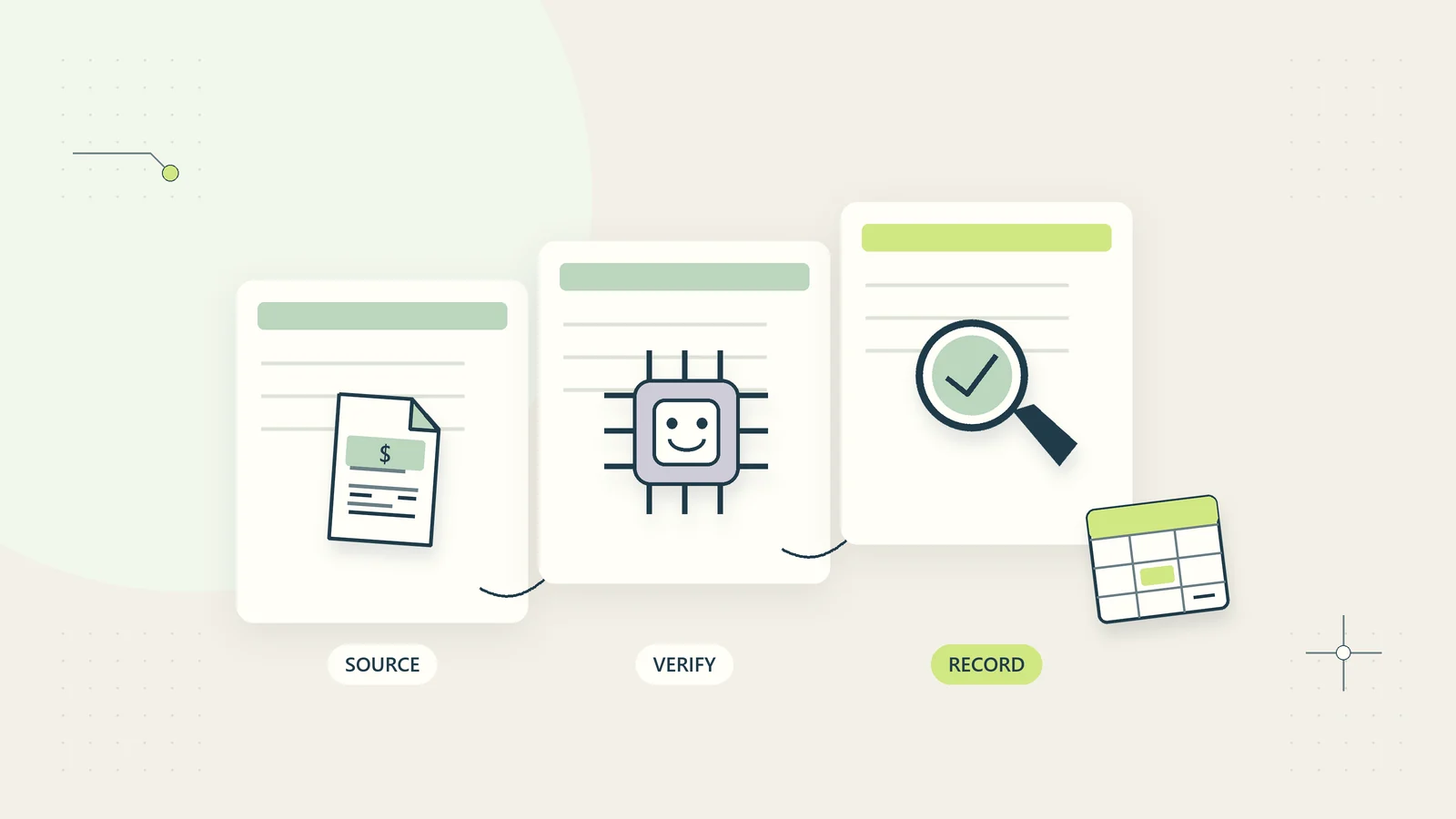
| Candidate document fields | AI proposal plus validation | Source evidence and field checks | Document reviewer |
Avoid interpreting “AI proposal plus validation” as permission to make records change automatically. The document extraction review guide explains why readable output, valid formatting, and business correctness are separate checks.
Compare uncertainty with the cost of a wrong action
Consider two dimensions: how variable the input is and how consequential a wrong result would be. A varied input does not automatically justify autonomous action. It may justify an AI draft that helps a person make the decision. Conversely, a consequential action can sometimes be governed by exact rules when the required evidence and authority are well defined.
Write down the failure consequence in ordinary language. Would a mistake create a confusing label, expose information, make a promise, duplicate a payment, or deny someone a service? This helps business owners choose a sensible boundary without needing to interpret abstract model scores.
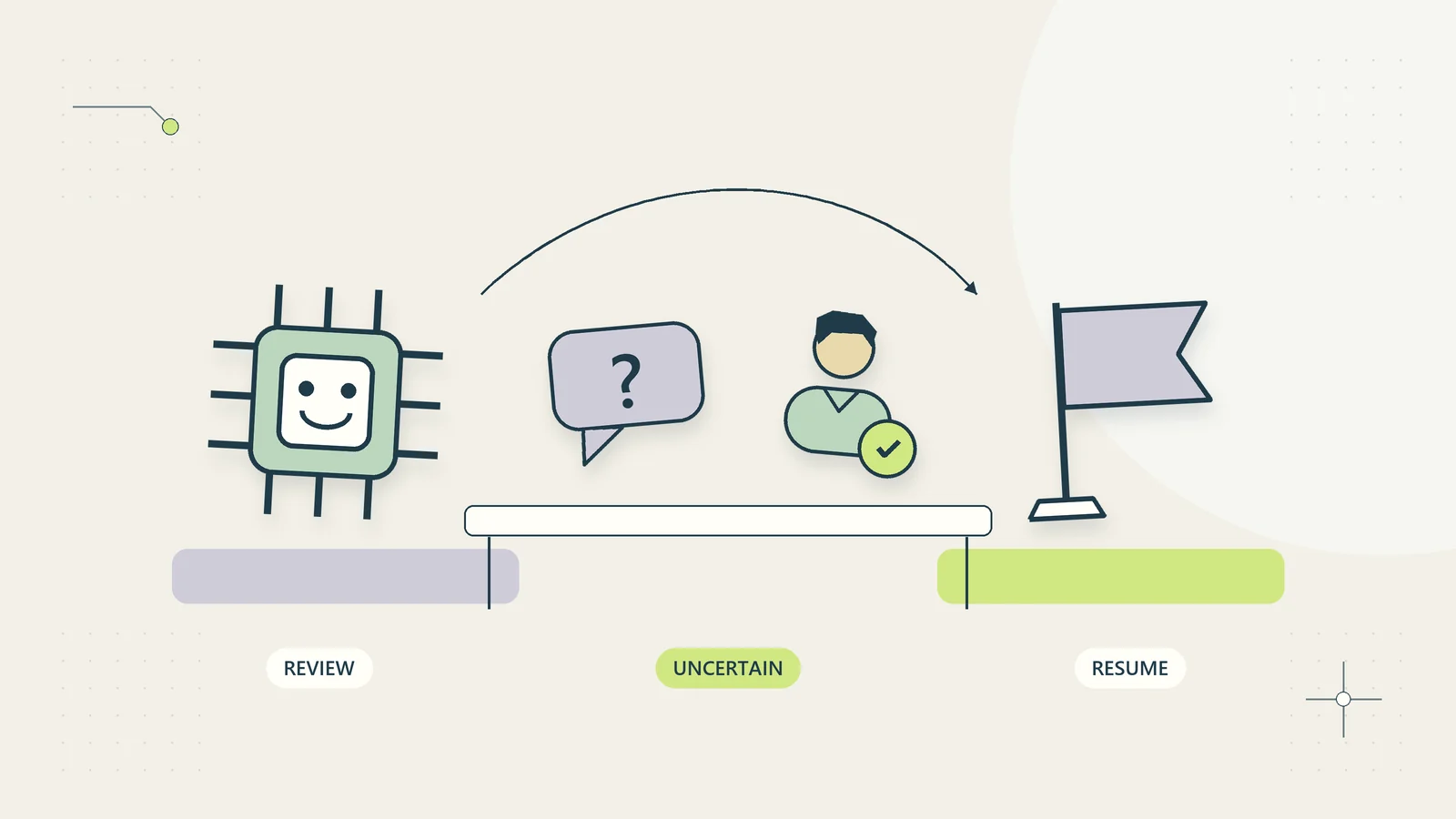
Do not use the model’s confidence as the entire decision policy. Require checks that correspond to the business consequence: allowed recipients, current source versions, permitted categories, and authorised actions. The human handoff guide provides a way to pause when those checks cannot establish that a proposal belongs in the normal path.
Design a hybrid workflow with clear boundaries
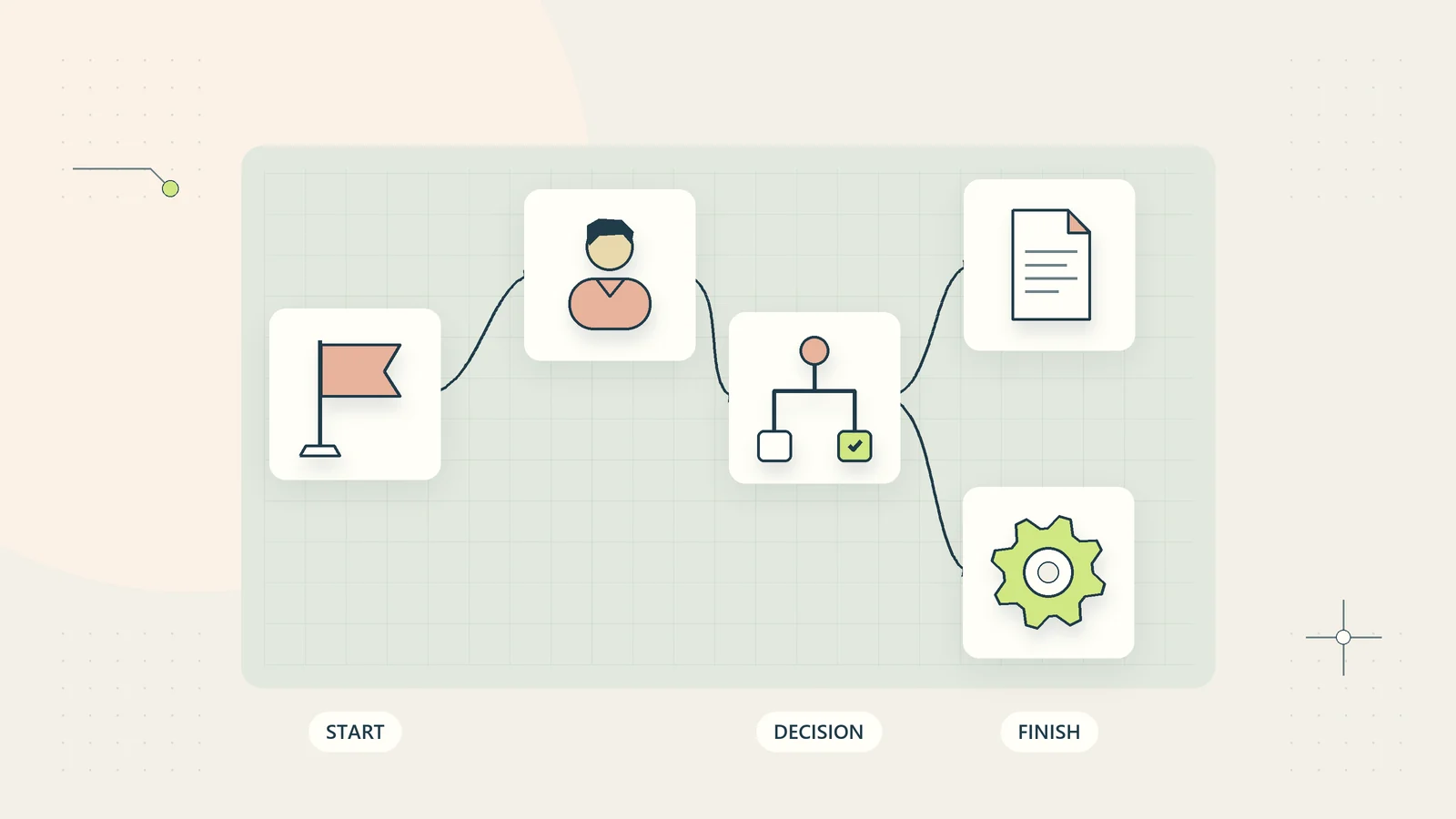
A practical hybrid has distinct stages. First, rules confirm that the case is eligible and that required inputs are present. Next, AI may propose an interpretation. Then fixed checks validate the output’s structure and permitted values. Finally, an authorised process decides whether the result can support an action or must go to review.
Keep calculations and exact lookups outside free-form text generation where possible. A model can draft an explanation of a balance, but the balance should come from a defined calculation or source record. A model can suggest a response category, but it should not create new categories that bypass reporting and ownership.
Make the boundary visible to people operating the workflow. “Suggested priority” and “approved priority” should not appear as interchangeable labels. A person should know whether a field was entered by a customer, computed by a rule, proposed by AI, or confirmed by a reviewer. Those distinctions make later corrections more precise.
Work through a hypothetical request-routing example
Imagine a small design studio receiving website enquiries. It has five internal categories: new project, existing project, invoice question, access problem, and other. The team wants less sorting work, but it does not want a system negotiating scope or promising delivery dates.
The studio first improves its own form. Customers can choose whether they have an existing project and provide a project reference. A rule routes an exact, current reference to the responsible coordinator. Messages without a reference remain eligible for an AI category suggestion based only on the current question.
The AI result must contain one allowed category and a short explanation. A rule rejects unknown categories and empty outputs. Any message asking to change agreed scope is marked for an authorised project owner, regardless of its category. No external message is sent automatically. The queue displays the customer’s text alongside the suggestion.
During a synthetic test, a message says, “The invoice is fine, but I cannot log in.” A keyword-only rule would likely choose invoice question. The AI proposal may identify access problem, but the team still checks whether it preserves the actual request. Another message contains an ambiguous project reference; exact matching stops rather than guessing a customer identity.
The studio compares a form-only approach, a rules-only approach, and the hybrid using the same test cases. It may discover that a better form solves most cases, leaving too little benefit to justify the AI step. That would be a successful design decision, even if the final workflow uses less technology than originally expected.
Evaluate methods using the same evidence
Prepare a representative set of synthetic or appropriately authorised examples. Include common inputs, unusual wording, missing fields, duplicate records, unsupported requests, and cases that should stop. Write expected outcomes before running the alternatives so the evaluation does not favour whichever answer looks plausible afterward.
Measure correct handling, incorrect handling, appropriate referrals, unnecessary referrals, active review time, and total completion time. Break results down by case type. An average can hide the fact that a method handles simple questions well but fails precisely where the business consequence is greater.
NIST’s AI Risk Management Framework is a voluntary framework for considering trustworthiness throughout AI use and evaluation. This article’s comparison worksheet is an original operating tool. It does not establish certification or remove the need to evaluate your own workflow, people, and source records.
Count the work that maintenance creates
Every approach creates maintenance. Rules require current definitions, routing owners, and tests after changes. AI adds prompt versions, model or service changes, evaluation examples, and review of unexpected output. A manual process requires training, coverage, and consistent records. Compare the complete operating work, rather than only the time taken by the central step.
Document who can explain a wrong result. With a rule, the question may be whether the condition was wrong or the input was inaccurate. With AI, the question may involve missing context, an ambiguous source, or variation between runs. Without recorded versions and examples, the team may be unable to determine what changed.
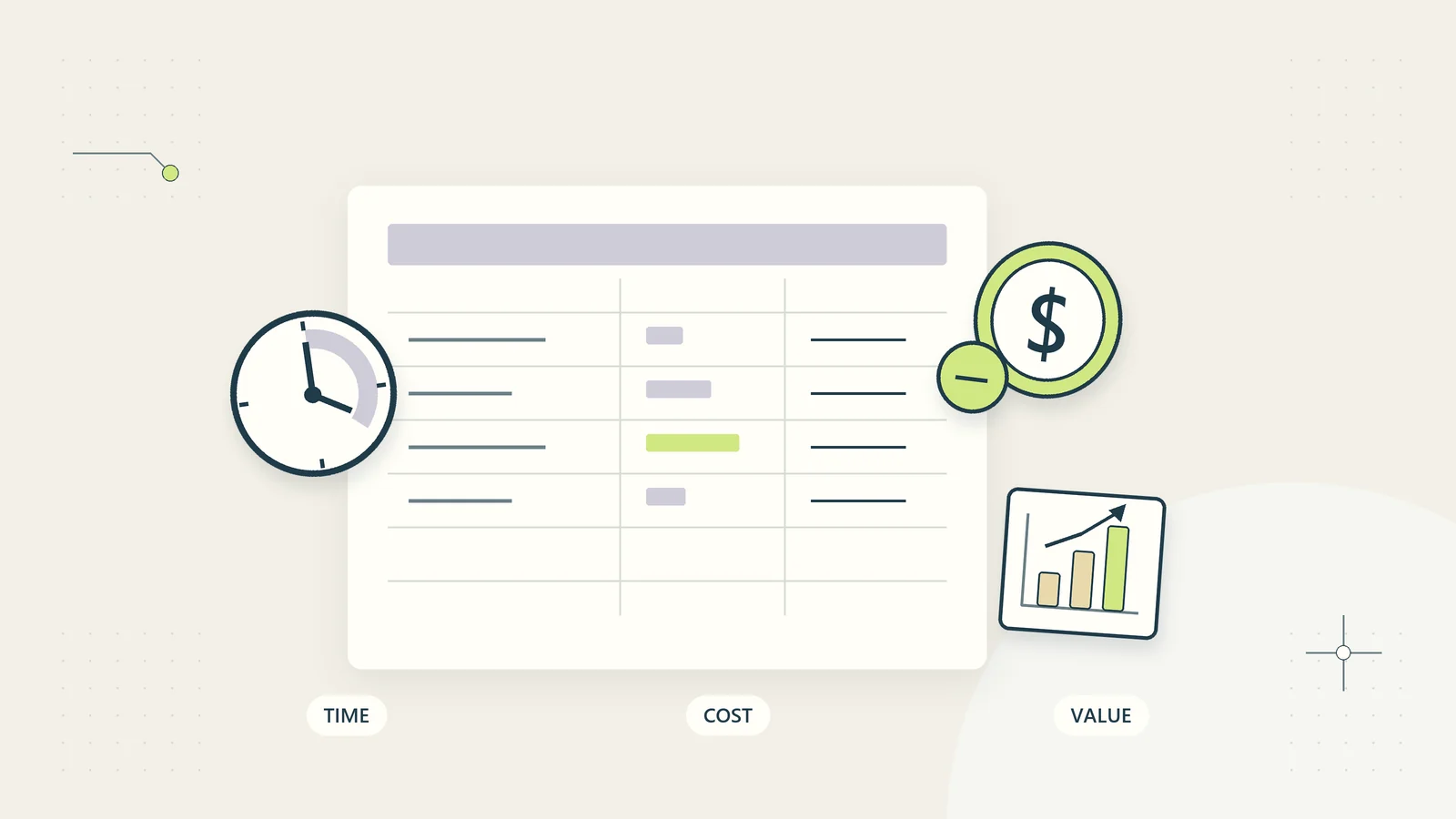
Use the automation ROI guide to distinguish recovered capacity from actual cash savings. A workflow that saves five minutes of sorting but adds eight minutes of review and maintenance has not delivered the intended operational benefit. Keep a manual fallback while you establish whether the new arrangement earns its ongoing cost.
Keep a simple decision record
For each automated step, record the chosen method, the reason, required inputs, permitted outputs, and stop conditions. Add the owner and the date when the choice will be reviewed. A concise decision record is more useful than a broad declaration that the business is “AI enabled.”
Include a rejected alternative when it explains a tradeoff. For example, “We chose a controlled form field because customers can identify this category accurately; AI interpretation added review work without improving the tested outcomes.” The note helps future staff avoid repeating the same experiment without understanding its result.
Revisit the decision when the task changes. A draft-only workflow moving to outbound messages needs a fresh boundary review. A small intake queue becoming a high-volume operation may need stronger monitoring. Adding a new industry can introduce different terminology and consequences. Past performance on one task is not evidence that a broader task is ready.
Test difficult combinations rather than isolated fields
A method that passes individual checks can still fail when conditions combine. An exact project reference may be present in a message that belongs to a different customer. A correctly calculated amount may use the wrong currency. A summary may preserve every sentence while assigning the action to the wrong person. Include these combinations in the comparison, because they resemble the awkward cases operators actually need help with.
For each combination, describe which source has authority. A customer-supplied reference should not automatically override verified account ownership. A model’s interpretation should not override an explicit selection without a reason and a review route. A current approved policy should be distinguishable from an older document quoted inside a message. These are process decisions before they are technical choices.
Create a “no suitable automation” outcome in the worksheet. Some tasks have too few cases, too much contextual judgment, or too little reliable evidence to justify the proposed arrangement. Keeping that step manual can be the most economical choice while the business improves its records. Revisit it when the underlying conditions change, rather than treating a manual decision as a permanent defeat.
This discipline also makes later automation easier. Clear definitions, stable references, and known exceptions create a better starting point for either rules or AI. The preparatory work remains useful even when the first pilot does not proceed. Record what would need to change before reconsideration, such as clearer source ownership, a more consistent input format, or enough recurring volume to justify maintenance.
Choose a first pilot with a reversible outcome
Select a task with clear examples, a named owner, and an output that can be checked before a consequential action. Internal categorisation or draft preparation can be easier to observe than a process that immediately changes customer entitlements. Keep the pilot separate from live actions until its stops and recovery routes work.
Set an explicit decision date and acceptance criteria. Decide what error categories would stop the pilot and how much review work the team can support. Include the current manual or rules-only process as the comparison. Otherwise, an impressive demonstration can be mistaken for an improvement despite lacking a meaningful baseline.
At the decision point, choose the method that handles the task well within its boundaries. It may be a rule, an AI draft, a human decision, or a combination. The quality of the workflow comes from matching each step to its evidence and consequences, then maintaining that match as the business changes.
Sources and editorial method
Primary sources checked on October 15, 2026: IBM: intelligent automation and NIST: AI Risk Management Framework. The task table, design studio example, evaluation approach, and selection worksheet are original analysis. Examples are hypothetical. This guide makes no claim of tested integrations, guaranteed savings, or suitability for consequential professional decisions.