How to manage recurring tasks without a reminder avalanche
Organize recurring work with clear schedule rules, unique occurrences, useful reminders, coverage, and honest completion evidence.
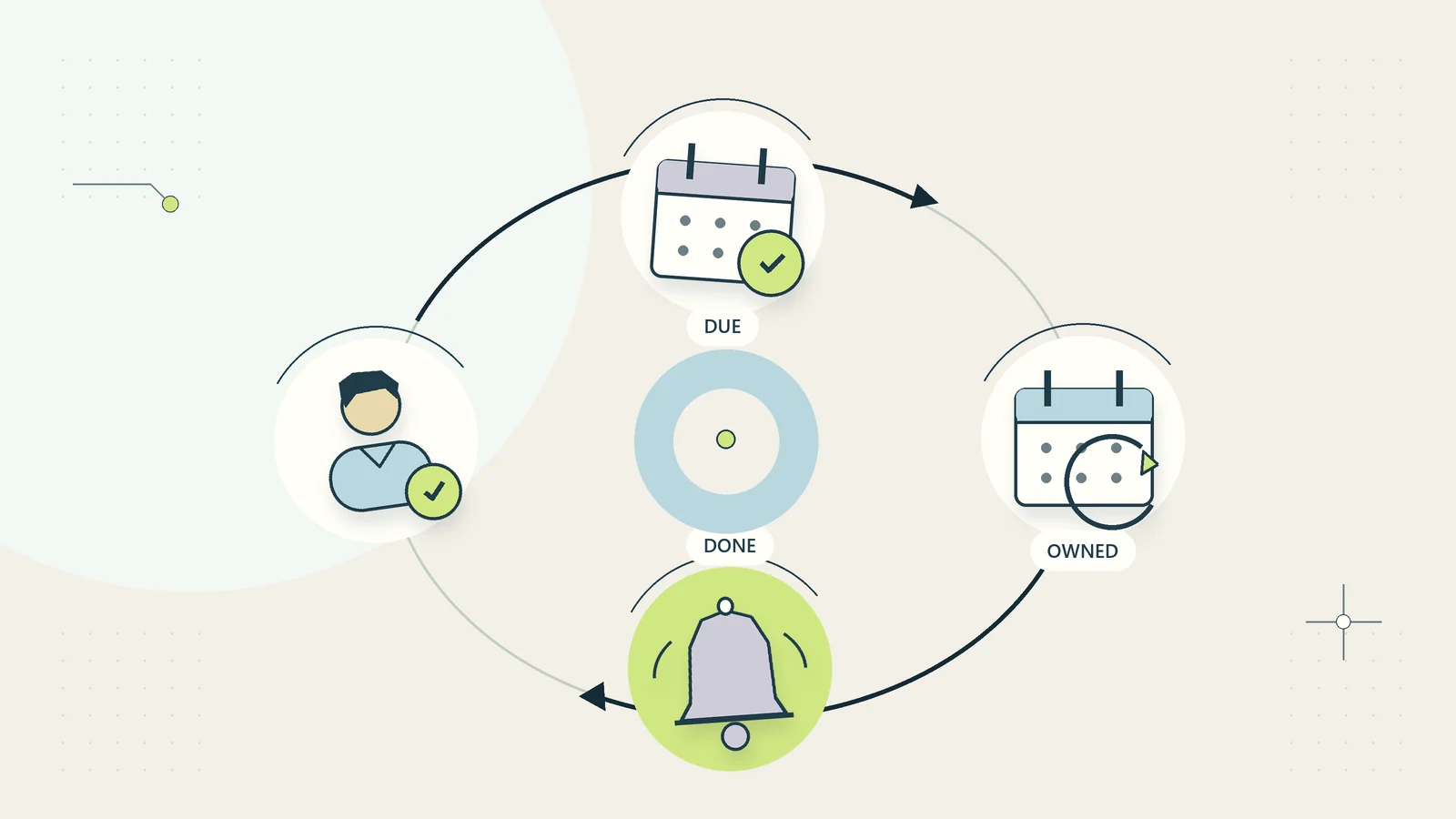
Recurring tasks become difficult to manage when reminders replace an operating system. A message appears every morning, another overdue notification follows, and several people assume someone else completed the work. The calendar is active, but the underlying responsibility is unclear.
A dependable recurring task system answers a few practical questions: why does this work repeat, what starts each occurrence, who owns it, what evidence proves completion, and what happens if it is late or blocked? You can answer those questions before choosing any automation.
This guide develops an original register and review method for recurring business administration. It includes schedule choices, exception rules, a hypothetical service-team example, and a pilot. It does not depend on a particular task platform or assume that every repeated activity should be automated.
Separate the task definition from each occurrence
The task definition describes the repeating responsibility. An occurrence is one instance of that work for a particular period, customer, or event. Keeping them separate prevents changes to the template from erasing what happened in earlier cycles.
For example, “check unresolved customer document requests” is a definition. “Review the document request queue for the week beginning October 19” is an occurrence. The first contains the method and ownership rules. The second contains the actual findings, actions, and completion evidence.
Give the definition a stable identifier and a named owner. Give each occurrence a unique reference that includes an appropriate period or source event. The reference should let you distinguish a duplicate reminder from a genuinely new piece of work.
Link the definition to the relevant SOP or checklist. Do not paste a full procedure into every occurrence unless the business needs a frozen copy for a specific reason. A link to a maintained definition keeps routine instances readable while preserving the version that applied where necessary.
Audit why the work repeats
List recurring tasks across a representative cycle. Include work hidden in private calendars, personal notes, copied emails, and team memory. Ask what result each task produces and who uses that result.
Some tasks repeat because they protect an important condition. Others exist because an old report was once requested and nobody stopped producing it. Review the purpose before optimizing the reminders. Removing an unnecessary recurring task can be more valuable than making it run faster.
Distinguish obligations from chosen operating routines. A contractual, statutory, or professional deadline needs an authoritative source and appropriate review. Do not infer those deadlines from a generic template written for another country or business model.
For internal routines, ask whether the frequency matches the decision. Checking a rarely changing reference every day may add noise. Checking a fast-moving exception queue once a month may leave customers waiting. Record why the cadence was chosen so that later owners can evaluate it rather than treating it as permanent tradition.
Choose the right recurrence rule
Three common patterns need different behavior: calendar-based work, completion-based maintenance, and event-triggered work. A reminder engine can support all three while still producing the wrong result if the team chooses the wrong pattern.
| Recurrence pattern | Example | Key design question |
|---|---|---|
| Fixed calendar | Review the queue every Monday | What happens if Monday is not a working day? |
| After completion | Recheck a reference after a defined interval | Should a late completion shift the next review? |
| Relative to an event | Prepare a pack before an accepted delivery date | Which event version controls the schedule? |
| Condition-based | Investigate when an exception remains unresolved | Who verifies that the condition still applies? |
Asana’s official scheduling documentation illustrates why this distinction matters: its periodically recurring tasks calculate due dates from the previous completion date. That behavior may suit one responsibility and be unsuitable for work that must happen on a fixed calendar regardless of a late prior instance.
Write the rule independently of the software setting. Then test that the chosen setting produces the intended next occurrence. Include a late completion, a skipped occurrence, and a changed source date in the test.
Build a compact recurring work register
Keep the register small enough to maintain but complete enough to explain the responsibility. A task title, owner, and due date alone will not resolve questions about readiness, evidence, or coverage.
For each definition, record its purpose, trigger, frequency, owner, backup, procedure link, expected effort, completion condition, and exception route. Include an active or retired state so that discontinued work does not continue generating reminders.
For each occurrence, record its reference, applicable period, current owner, state, due point, next action, and completion evidence. Preserve the original due point when it changes; otherwise the team cannot distinguish replanning from on-time completion.
Use a small number of meaningful states. Ready, active, waiting, completed, skipped with reason, and cancelled may be sufficient. “Waiting” should identify what is missing and who can supply it. A waiting state without a next action can become a quiet place for forgotten work.
Define ownership and coverage explicitly
One person should be responsible for moving an occurrence forward, even when several people contribute. Naming a team can be useful for routing, but it does not show who will act today.
Agree whether the definition owner and occurrence owner are the same person. The process owner may maintain the method while different coordinators execute individual cycles. Make the distinction visible so that a question about instructions reaches the right person.
Plan leave coverage in advance. A backup needs access to the source records, the current procedure, and the list of open exceptions. They should also know whether they have the same decision limits as the usual owner.
Use the delegation guide to define what the operator can decide independently. A task can be assigned successfully while its approval route remains the owner’s responsibility. Do not leave the operator waiting on an unavailable approver without an agreed alternative.
Design reminders around action
Send a reminder when it can lead to a useful action. A task may need an early prompt if inputs take time to gather, a due notification if the result is required that day, and an escalation only when the responsible person cannot resolve the delay.
Avoid notifying every contributor at every stage. Identify who needs to act, who needs awareness, and who only needs the completed result. A daily summary of ready work may be more useful than several separate messages for low-risk tasks.
Make the reminder contain the occurrence reference, expected action, due point, and link to the authoritative record. It should not require the reader to reconstruct the task from an old message thread.
Atlassian’s working agreements guidance treats communication norms as shared expectations that should be revisited when circumstances change. Apply that idea to reminders: agree which channel is monitored, how urgent cases are identified, and when a reminder should become an escalation. The notification rule is part of the operating method, not simply a software preference.
Prevent duplicates and false completion
Choose one route that creates occurrences. If a calendar rule, an imported spreadsheet, and a manual coordinator all create the same weekly task, reminders may multiply while ownership becomes less clear.
Before creating a new occurrence, check its definition identifier and period or source-event reference. When duplicates appear, preserve the meaningful history and mark the extra record as a duplicate rather than pretending that two pieces of work were completed.
Do not use completion as a convenient way to clear a reminder. If the work was not required, record a skipped or cancelled state with a reason. If the task is blocked, leave the blocker visible. Accurate states are more useful than a perfectly empty overdue list.
Test nested recurrence carefully. A repeating parent task and repeating child tasks can generate unintended extra work in some tools. Verify the actual behavior of your chosen system using harmless test records before relying on it for operational deadlines.
A hypothetical weekly queue review
Imagine a fictional small consulting team that reviews open customer information requests every Monday. The purpose is to identify requests needing follow-up and decisions that are blocking delivery. The review is an internal routine rather than a promise that every customer will receive a Monday message.
The task definition links to a queue review checklist. Each occurrence is named for its week and assigned to the duty coordinator. Completion requires a short list of reviewed exceptions, a next action for each unresolved request, and confirmation that urgent decisions have named owners.
During a hypothetical holiday week, Monday is outside the coordinator’s working calendar. The team’s rule moves the review to the next agreed working day while preserving the original weekly period. Urgent customer issues continue through a separate monitored route; they do not wait for the routine review.
One request has already received a reply through another channel. The coordinator updates the authoritative record before considering a follow-up. A reminder does not authorize sending a duplicate message without checking current information.
Another request cannot be resolved because the service owner must decide whether the missing input is essential. The coordinator records that decision request and marks the queue review complete once its defined checks are done. The unresolved customer case remains open separately. This separation prevents a recurring review from becoming permanently overdue because an underlying case needs more work.
Handle overdue occurrences without rewriting history
When an occurrence becomes late, identify the reason before changing the schedule. Was it not ready, not assigned, underestimated, blocked by a dependency, or simply missed? Different reasons require different responses.
Keep the original due point and record any revised plan. If the business merely moves every overdue date forward, its records stop showing whether the recurrence is workable. The purpose is to understand capacity and dependencies, not to punish people for reporting reality.
Decide whether an overdue occurrence must still be completed before the next one. Some checks can be combined with explicit evidence; others cover distinct periods and cannot be silently merged. Ask the appropriate process owner rather than letting the reminder engine decide.
Use the capacity planning guide when late occurrences reveal that the schedule contains more work than the team can reasonably perform. Additional alerts will not create the missing time or resolve an unavailable specialist dependency.
Review the recurring system itself
At a suitable interval, inspect active definitions rather than only open occurrences. Check whether each task still has a purpose, current owner, usable procedure, appropriate cadence, and valid completion condition.
Look for definitions that are frequently skipped, always late, or completed without evidence. Those patterns can signal obsolete work, unrealistic scheduling, or a misleading task design. Read examples before changing the rule.
Check notification volume as part of the review. Ask which reminders led to action and which were routinely ignored. Consolidate redundant messages while preserving visibility of important exceptions.
Connect recurring defects to the continuous improvement routine. A repeated missing input may justify changing the upstream process rather than adding another recurring task to chase it. The register should help eliminate preventable work, not make every workaround permanent.
Pilot one cycle before automating more
Choose a small set of recurring definitions covering different patterns. Include a fixed calendar task, a completion-based task, and an event-relative task if those exist in your business. Write their rules before configuring automatic creation.
Run harmless schedule tests and inspect the generated occurrences. Check time zones, working-day assumptions, late completions, cancellations, duplicate triggers, and reassignment. Do not use live customer messages or payments as the test action.
During the operating pilot, count missed occurrences, duplicate records, clarification questions, reminder volume, and time spent maintaining the system. Also check whether completion evidence is sufficient for a backup to understand what happened.
At the end, simplify rules that confuse users and remove tasks that lack a useful outcome. Automate the stable creation and routing steps only after the underlying responsibility is clear. A successful recurring task system makes the next action and its owner visible without requiring everyone to keep interpreting a growing pile of reminders.
Test awkward calendar boundaries explicitly
Recurring schedules deserve a few deliberate edge cases. A task set for the thirty-first day of each month needs a defined response in shorter months. A quarterly review needs an agreed interpretation of the quarter. An occurrence tied to a customer date needs a rule for changes to that date after the preparation work has begun.
Write the intended result first, then compare it with the tool’s actual output. Include a time-zone boundary if the task is scheduled near midnight, because the displayed calendar date may differ between the source and the operator. If the platform does not support the rule directly, simplify the schedule or use a reviewed creation step rather than relying on an undocumented workaround. Do not silently convert a fixed obligation into a completion-based interval merely because that is the easiest setting.
Also test what happens when the schedule owner changes. The next occurrence should reach the current responsible person, while historical instances should continue to show who handled them. A bulk reassignment that rewrites past ownership can make the record misleading.
For consequential deadlines, have the appropriate authorized person review these assumptions. A generic operating calendar cannot establish which local holiday rule, contractual date, or professional requirement applies. Keeping that authority separate from routine scheduling helps the team automate the mechanics without inventing the underlying obligation.
Sources and editorial method
Checked on October 15, 2026. The register, recurrence comparison, notification design, and consulting-team scenario are original practical guidance. The example is hypothetical and makes no claim of measured results or tested integrations.
- Asana: Scheduling tasks using start dates, due dates, and times supports the limited example of completion-based periodic recurrence and the need to check actual scheduling behavior.
- Atlassian: Working agreements supports the brief reference to shared communication expectations that are revisited as working circumstances change.