Capacity planning for a small service business
Plan service capacity by usable hours, skills, and decision authority, with a worked review-capacity example, demand scenarios, and realistic absence cover.
Capacity planning asks whether the business can deliver the work it is considering with the people, skills, time, and other resources actually available. For a small service business, a total number of staff hours is only the beginning. A team can have spare hours overall while one necessary reviewer is already fully committed.
Build a plan that makes those limits visible before making promises. Keep confirmed work separate from possible demand, reserve room for necessary operating tasks, and compare the required skills with realistic availability. The plan should support decisions about timing, scope, and staffing rather than become another schedule everyone knows is impossible.
Choose a planning horizon that supports decisions
Use a near-term view for committed work and a longer view for possible demand. A weekly plan may help with delivery assignments, while a monthly or quarterly view can expose seasonality or an upcoming skills gap. The right horizons depend on the service’s lead times and the decisions you can still change.
Define the unit of planning. Hours can be useful where tasks vary in effort, while standard service units can work for highly repeatable work. Do not mix a count of complex projects with a count of simple requests and assume they consume the same capacity.
Record what the plan can and cannot tell you. An early estimate may identify a likely overload without establishing a precise completion date. Label tentative assumptions so staff and customers do not mistake a planning scenario for a delivery commitment.
Asana’s capacity planning overview frames capacity around available resources, skills, time, and demand. Apply that principle with a lightweight first-party worksheet or register; the quality of the inputs matters more than the software displaying them.
Start with usable availability
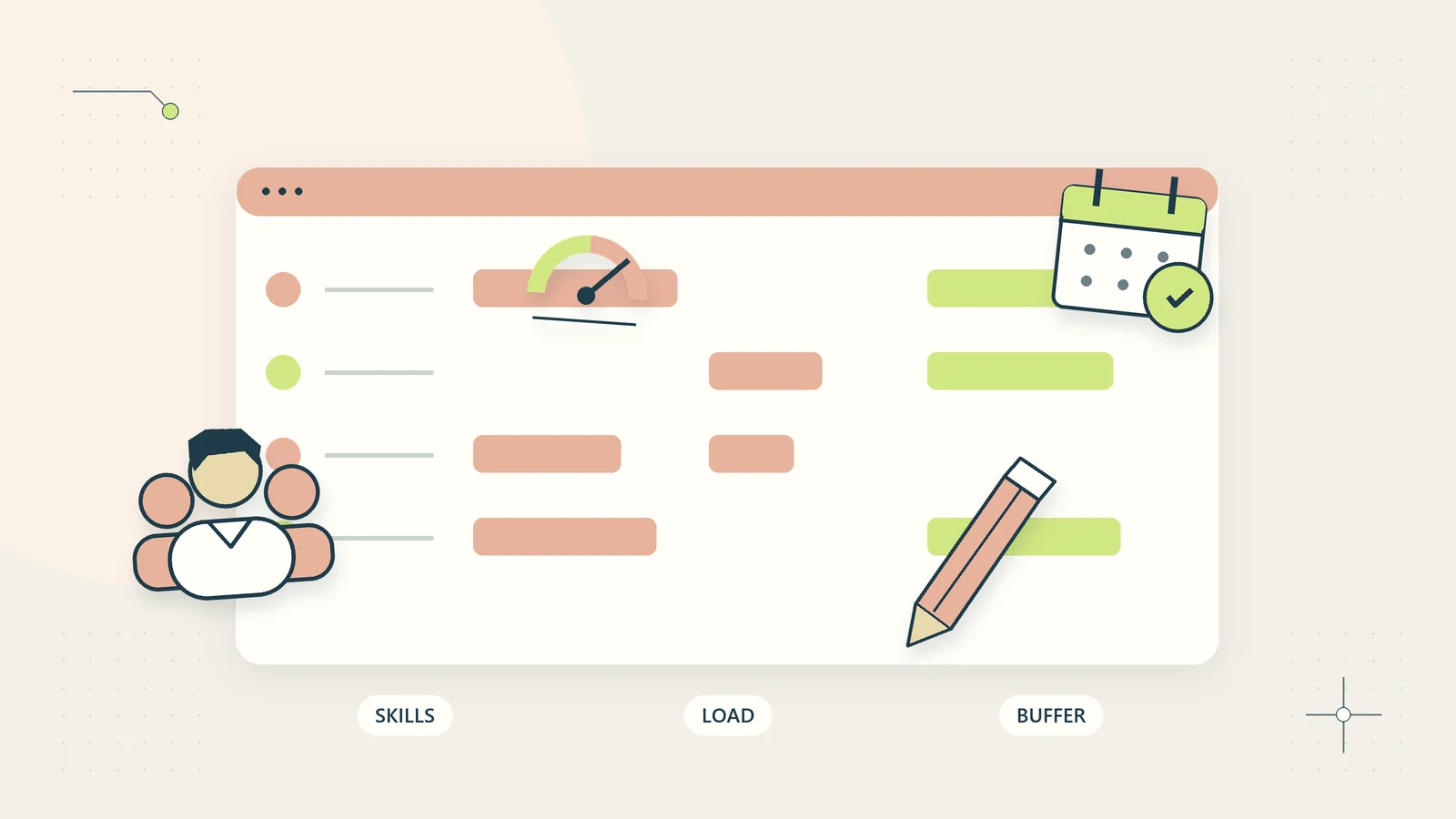
Begin with each person’s actual working arrangement for the period. Subtract known leave, training, internal responsibilities, and other committed activities. Include time for administration, customer questions, support, and maintenance rather than treating them as interruptions that somehow happen outside the working week.
Avoid assuming that every remaining hour can be scheduled into continuous delivery work. Tasks have setup costs, dependencies, and unpredictable exceptions. Use observed history to establish a reasonable reserve, and explain what it covers. A universal utilization target copied from another business is unlikely to fit your service mix.
Include the owner honestly. Small-business plans often show employees’ delivery time while ignoring the owner’s sales, approvals, finance administration, and management work. If delivery depends on the owner’s review, their realistic review availability belongs in the plan.
Track planned availability without collecting unnecessary personal details. The operational team needs to know that someone is unavailable and who covers the responsibility; it may not need the private reason for an absence.
Plan by skill and decision authority
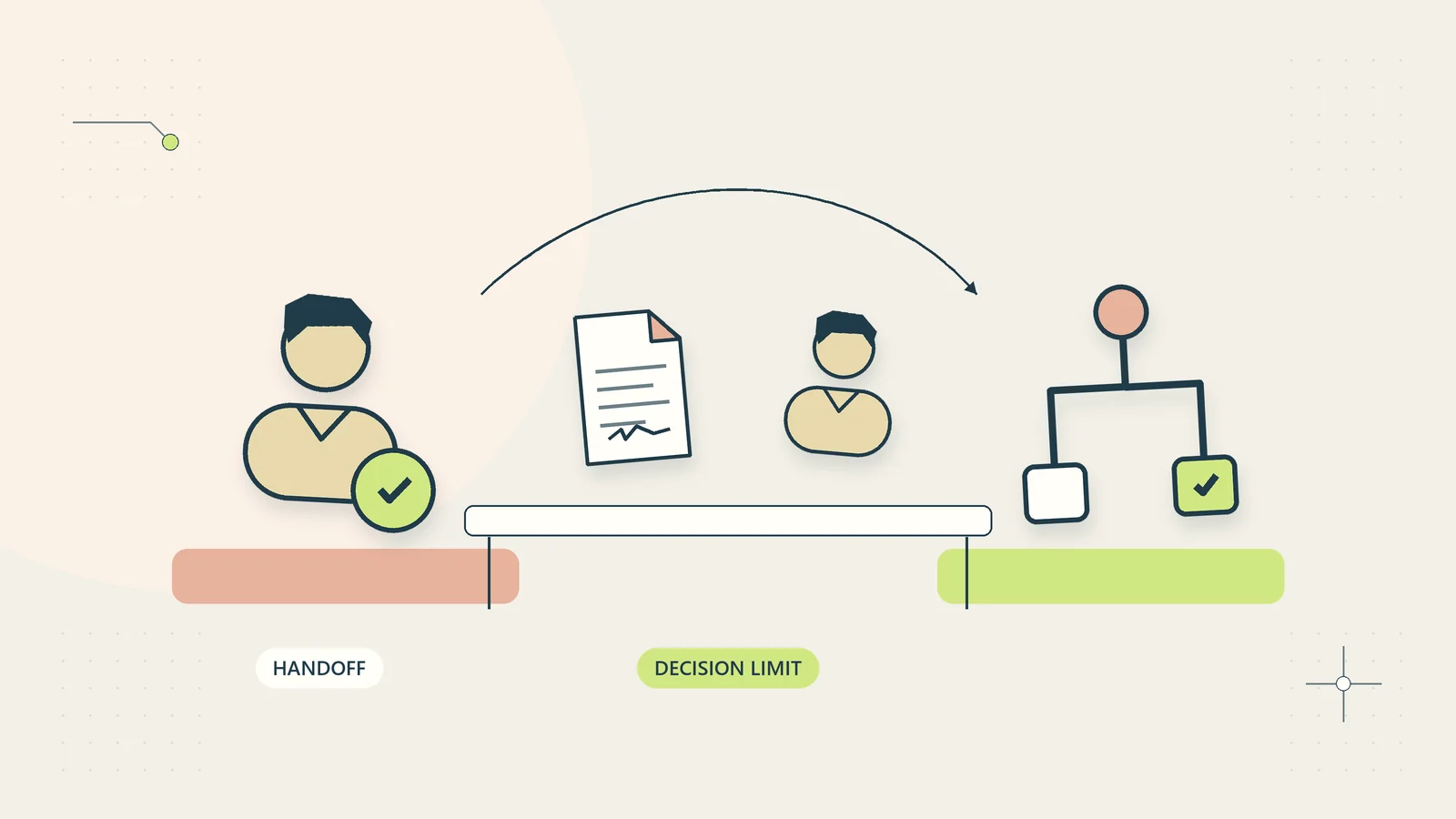
List the roles or skills required to complete the service. Separate preparation, specialist judgment, approval, and customer communication where those stages differ. A person may be able to prepare a package without being authorized to approve it.
Build a small coverage matrix showing primary and backup capability. Check whether the backup has current knowledge, access, and permission, rather than assuming that a name on a list creates usable coverage. Training a backup takes capacity now even if it increases resilience later.
Distinguish work that can be reassigned from work that requires a qualification, professional responsibility, or specific customer agreement. A capacity problem does not justify bypassing those boundaries. The plan should reveal the limit early enough to make an appropriate commercial or staffing decision.
The guide to delegating recurring work explains how to make decision limits explicit. Capacity becomes more usable when people understand what they can complete independently and where they must stop for review.
Turn demand into comparable work estimates
Separate confirmed commitments, recurring obligations, likely new work, and speculative opportunities. Give each category its own treatment. A signed engagement and an early inquiry should not occupy identical blocks on the committed schedule.
Estimate the work needed at each major stage. Use relevant previous cases where available and include correction or review effort. For a new service, record a range and the uncertainty behind it. An estimate is more useful when the team can explain why it could change.
Include dependencies and readiness. A project waiting for source materials may not be ready to start, but its promised future delivery can still create a capacity risk. Record both the missing dependency and the potential workload if several paused projects become ready at once.
Our work intake process distinguishes received, ready, and accepted work. That separation prevents every incoming request from becoming an invisible commitment that later overwhelms the capacity plan. The staff capacity planning workflow guide can serve as an additional design checklist, without implying that a vendor integration has been installed or tested.
A hypothetical weekly capacity worksheet
Imagine a small service team preparing and reviewing client reports. Three people each have 30 realistic hours available for this delivery process after their other responsibilities. Preparation capacity is therefore 90 hours for the week. A separate authorized reviewer has 18 hours available for review.
The team expects 24 standard reports. Each requires three hours of preparation and one hour of review, based on a relevant observed sample. Planned demand is 72 preparation hours and 24 review hours. Although total available time exceeds total demand when combined, the review role is short by six hours.
| Role or stage | Usable hours | Planned demand | Difference |
|---|---|---|---|
| Preparation | 90 | 72 | 18 hours available |
| Authorized review | 18 | 24 | 6-hour shortfall |
| Combined total | 108 | 96 | 12 hours available overall |
The combined total hides the problem. Spare preparation hours cannot automatically become authorized review hours. The business needs to change timing, scope, demand, or appropriately qualified review capacity rather than promise that everyone will somehow absorb the gap.
This is an illustrative calculation, not a staffing benchmark. Actual report complexity, rework, leave, and review requirements may differ. The worksheet’s purpose is to show why capacity needs a meaningful stage or skill boundary.
Reserve room for uncertainty explicitly
Identify work that varies: incomplete requests, urgent customer issues, corrections, technical failures, and necessary internal decisions. Use a reserve supported by your history rather than hiding these activities inside optimistic task estimates.
Do not count the same reserve twice. If observed handling estimates already include normal correction time, record that fact before adding a separate correction allowance. Conversely, if estimates describe only ideal preparation, make the additional review and recovery work visible.
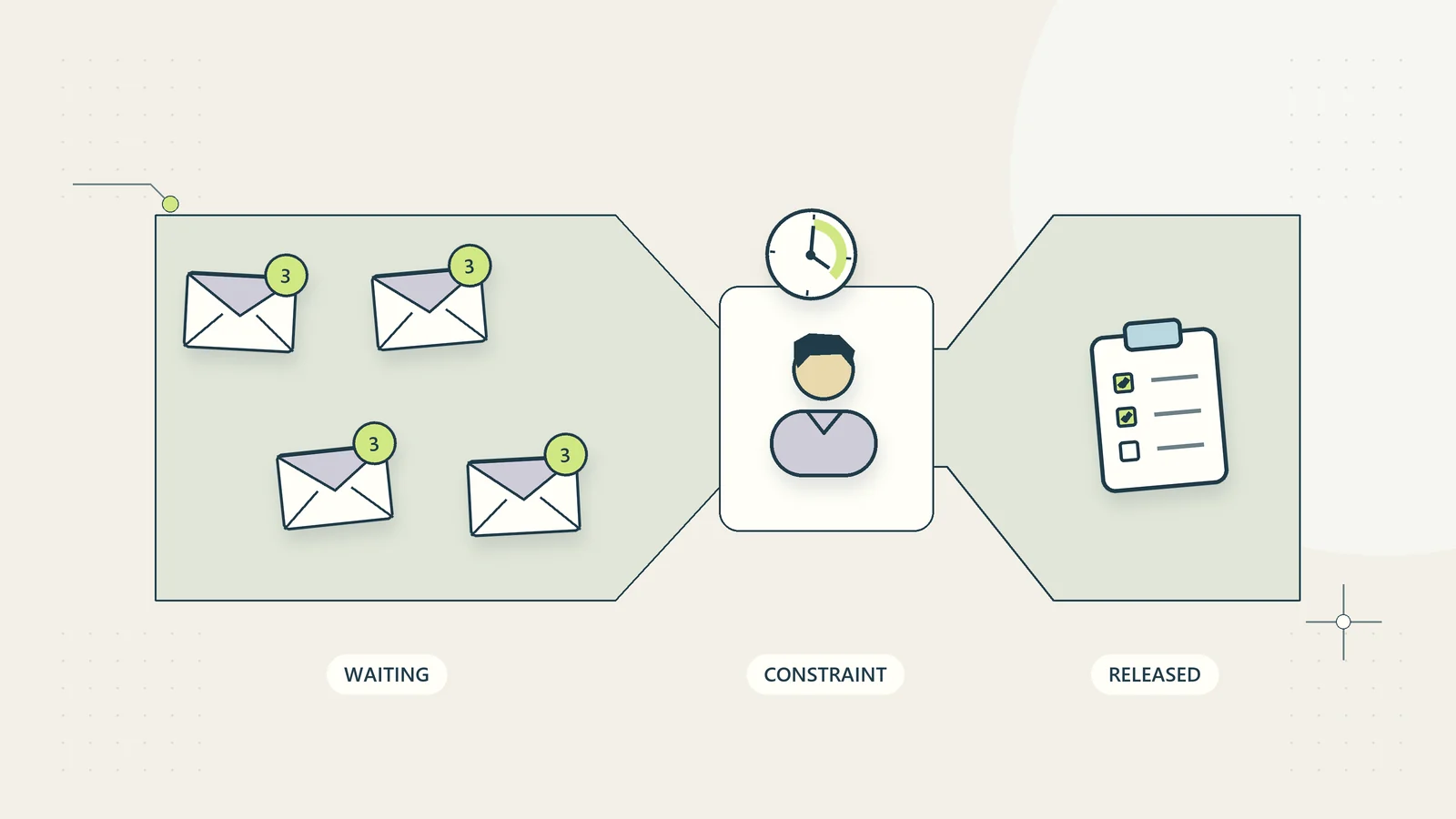
Check how much uncertainty the business can absorb at the constrained role. A team-wide reserve does little for a reviewer with no available hours and no qualified cover. Some capacity must be held where unexpected work actually requires it.
Review the reserve after the period. Repeatedly unused capacity may indicate a conservative assumption or opportunities for flexible work. Repeated overruns may indicate bad estimates, poor readiness, or unrecorded demand. Avoid treating either pattern as proof about individual effort without examining the process.
Decide what to do about a shortfall
First check whether the demand and estimate are valid. A duplicate request or outdated project can create a false gap. Then consider removing unnecessary work, clarifying inputs, reducing scope with agreement, changing timing, or adding appropriately capable resources.
Communicate choices before the promise becomes impossible. A customer might prefer a smaller deliverable on the original date or the full package later. Staff need authority to present those options through the approved commercial process rather than quietly cut quality to preserve a deadline.
Overtime may be available in some circumstances, but it is not a sound default assumption for every forecast. Consider actual availability, applicable requirements, sustainability, and the effect on quality. Repeated dependence on extra hours is evidence to review the service model or staffing assumptions.
The bottleneck investigation guide helps assess whether a local shortfall truly controls completed outcomes. Increasing capacity at a stage that is not limiting delivery may add cost without resolving the customer’s wait.
Keep scenario planning separate from commitments
Build a base case using confirmed work and a clearly defined treatment of likely demand. Add a busy case to test what happens if several opportunities convert together, and a quieter case to examine the financial and staffing implications of lower demand.
Do not rely on a weighted average alone. Two projects with a 50% likelihood may have modest expected demand mathematically, but both can still be accepted in the same week. The business needs a rule for what happens when that plausible scenario occurs.
Record decision triggers. For example, a certain combination of accepted projects may require a new delivery date or additional qualified help. The trigger should give the owner time to act rather than appear only after staff are already overloaded.
Review the cash and commercial implications with the appropriate person. More capacity can require spending before revenue arrives, and reduced hours may have contractual consequences. An operations worksheet supports those conversations but does not replace employment, accounting, or legal advice relevant to the business.
Connect the plan to daily scheduling
Capacity planning determines whether the available resources can support the demand. Scheduling assigns specific work into time. Keep the two connected without trying to produce a detailed daily schedule months before the inputs are stable.
Near the delivery period, confirm readiness, owners, dependencies, and the current estimate. If a prerequisite is missing, agree whether to hold the slot or reassign it. Explain the consequence to the requester rather than allowing a silent gap followed by a rushed catch-up.
Limit work started at once where it creates avoidable switching and unfinished queues. A small number of ready tasks with clear ownership is often easier to coordinate than many partially started projects. Choose the limit based on your operation and observe its effect.
Keep a route for material changes during the period. A new urgent case should trigger an explicit decision about which existing work moves. Otherwise the plan remains visually unchanged while everyone informally agrees to conflicting priorities.
Treat automation as a capacity hypothesis
Automation may reduce handling effort, but it can also create monitoring, maintenance, review, and support work. Model the net effect rather than remove an entire task from the plan because a tool can perform one part of it.
For an automatically delivered first-party resource, the happy path might require little manual work. The business still needs capacity to release correct versions, maintain access, investigate failed deliveries, and answer genuine product questions. Estimate these activities from observed operation as it develops.
Use the automation ROI worksheet approach to distinguish recovered capacity from cash savings. A projected saving should enter the committed plan cautiously until a measured pilot shows how much usable time is actually recovered.
IBM’s business process management overview emphasizes the whole repeatable process and continuing monitoring. Apply that perspective when evaluating an automation: moving work from delivery staff to an already constrained owner may leave overall capacity unchanged.
Review estimates without turning planning into surveillance
Compare planned demand, actual completions, remaining work, and major reasons for variance. Use the comparison to improve estimates and remove recurring obstacles. An unexplained variance deserves investigation before becoming a judgment about a person’s productivity.
Ask whether the work changed after commitment, inputs arrived incomplete, review took longer, or an unplanned obligation appeared. Record useful patterns at the service or stage level. A good plan helps people make realistic commitments; an intimidating one encourages them to hide uncertainty.
Keep the review brief and decision-focused. Update the next period, resolve a specific constraint, and identify any customer communication required. You do not need an elaborate reporting ritual to learn that a particular service consistently needs more specialist review than expected.
Give the plan one owner and an understandable update route. Staff should know how to report changed availability or effort without maintaining multiple conflicting schedules. Clear ownership makes the plan dependable even when the underlying situation changes.
Test absence coverage as a real capacity scenario
Remove a key person from the next planning period and trace the effect on each required stage. Some tasks can move to a trained backup; others may need a later date or a different customer commitment. Record the actual alternative rather than assume colleagues will distribute the work evenly.
Check the backup’s own commitments before assigning cover. In the hypothetical report team, moving a preparer into a qualified review role could reduce preparation capacity at the same time it increases review availability. Recalculate both stages. The intervention may help overall throughput, but the transfer is not free additional time.
Consider access, instructions, and decision limits as well as hours. A backup who cannot locate the current customer agreement may spend much of their available time reconstructing context. Preparing a useful handoff in advance is therefore part of capacity resilience, not merely administrative tidiness.
Use the scenario to decide which commitments need protection, what can be deferred, and what information should be prepared before leave begins. This turns absence planning into an explicit service decision while respecting the person’s agreed availability and privacy.
Start with one service and a rolling view
Choose one service with enough recent examples to estimate. Record usable availability by required role, confirmed demand, likely demand, and the most important uncertainties. Check the arithmetic and the professional or authority boundaries before making new commitments.
Test an absence, an urgent request, a late dependency, and two likely projects becoming confirmed together. Ask which decision the plan supports in each situation. If it only displays overload without suggesting who can respond, add the missing decision owner and trigger.
Then use the plan for a bounded period and revise it from actual work. The result should be a realistic conversation about what the team can deliver, what must change, and which promises it can make with confidence.
Sources and editorial method
Research checked October 15, 2026. Sources are Asana on capacity planning and IBM on business process management. Brief references support resource availability and whole-process monitoring. The weekly worksheet, scenario method, and hypothetical report example are original editorial analysis, not measured customer results, employment guidance, or a requirement to purchase planning software.