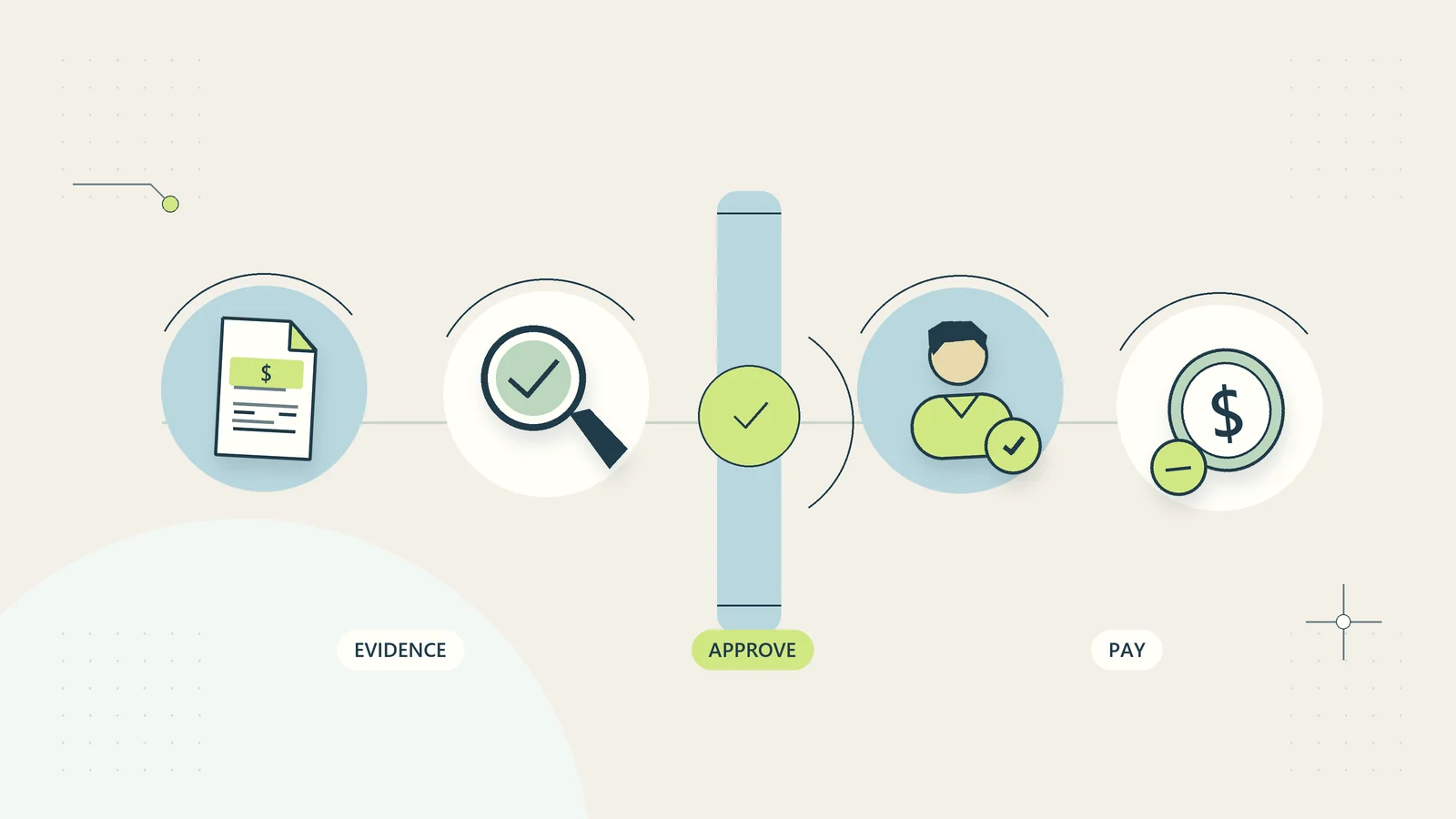
A vendor onboarding checklist for a small business
Verify supplier identity, scope, access, delivery evidence, and payment details with a proportionate vendor onboarding checklist and worked example.

A vendor onboarding checklist should establish what a supplier will do, who can authorize that work, what information they need, and how your business will verify the first delivery and payment. A completed form is useful only when it leads to those decisions. Otherwise, a supplier can appear approved while the person placing orders, the person granting access, and the person paying invoices each hold a different understanding.
This guide describes an administrative process for a small business buying goods or services. It works with records you control: a supplier register, an approval checklist, a restricted evidence folder, and a first-order review. It does not require a particular procurement platform. Local tax, employment, privacy, sanctions, and sector requirements still need appropriate professional review where relevant.
Define the purchase before collecting supplier details
Start with a short purchase brief. Name the business problem, the deliverable, the expected purchase frequency, and the budget owner. State what would happen if the supplier failed to deliver. An office stationery order and a service that hosts your customer records have different consequences, even when the monthly fees are similar.
Include the alternatives considered. You might use an existing supplier, change the internal process, purchase a downloadable resource, or stop doing an unnecessary task. This prevents onboarding from becoming the default response to every new request. The purchase request process is the place to establish this business need before onboarding starts.
Give the purchase a reference that survives the whole relationship. A readable supplier name helps people, while a stable supplier ID connects orders, access requests, invoices, and later changes. Names alone are unreliable because brands, trading names, and billing entities can differ.
Assign responsibility without creating a committee
One person should coordinate onboarding, but several decisions may require different authority. The requester explains the intended use. The budget owner approves spending. Someone with suitable knowledge checks operational or information risks. The person maintaining payment records verifies the approved payee. A business owner can perform several roles in a very small team, provided the checks remain explicit.
Record who can approve exceptions and who covers absences. Avoid a process in which an absent founder becomes the only person able to release an ordinary repeat purchase. Equally, an available administrator should not inherit permission to approve a new financial commitment merely because a deadline is approaching.
For each decision, capture the answer, the person, the date, and the evidence reference. A shared checkbox marked “approved” does not explain whether someone approved the price, the security review, the payment details, or all three.
Use proportionate onboarding tiers
Choose a tier from the effect of the relationship rather than from spend alone. A low-cost subscription can have extensive access to sensitive records. A large one-time equipment purchase may involve no continuing account access but create delivery and warranty dependencies.
| Relationship | Useful review emphasis | Release condition |
|---|---|---|
| Ordinary goods, no business-system access | Identity, specification, delivery, price | Approved order and verified supplier record |
| Recurring operational service | Scope, service ownership, continuity, cancellation | Named service owner and workable exit route |
| Access to business or customer information | Access limits, security evidence, incident contact | Approved access plan and required agreement review |
| Business-critical dependency | Recovery, alternatives, service interruption | Documented contingency and accountable acceptance |
The tiers are an original planning tool, not an official certification scheme. The NCSC supply-chain assessment guidance provides a broader reference for assessing supplier cyber security. Apply relevant checks to your situation; do not treat a long questionnaire as proof that every risk has been resolved.
Build the minimum supplier record
Collect information that supports a defined decision. Typical fields include supplier ID, legal or individual payee name, trading name where applicable, official contact route, service description, operating location where relevant, currency, agreed payment terms, and business owner. Keep signed agreements and approved quotations linked to the record rather than scattered across inboxes.
Ask your accountant which tax or invoice details are required for the actual transaction and jurisdictions involved. Do not copy a foreign supplier form and make every field mandatory worldwide. Unnecessary identity documents increase handling work and expose more personal information without necessarily improving the purchase decision.
Separate restricted financial information from the general supplier directory. Most colleagues need to know who supplies packaging and who owns the relationship. They rarely need the supplier’s complete bank details. A public-facing or broadly shared spreadsheet should not become the payment master record.
Verify payment instructions through an independent route
A genuine-looking invoice does not establish that its bank details are genuine. Establish the approved payee through a trusted route and record how verification happened. For a change request, use an independently established contact method rather than the telephone number included in the message requesting the change.
The FBI’s business email compromise guidance recommends verifying payment requests and changes in payment procedures. Build that verification into ordinary work, including urgent requests and requests that arrive inside an existing email conversation.
Keep a change history instead of silently replacing the old payment record. Store the requested change, verification outcome, approver, effective date, and affected unpaid invoices. If verification fails, place payment on hold and notify the authorized owner. The workflow should distinguish a verification problem from an accusation against the supplier.
Agree what counts as a satisfactory delivery
Describe acceptance before ordering. For goods, this could mean the correct item, quantity, specification, delivery destination, and condition. For a service, define the output, acceptance evidence, included revisions, access arrangements, and completion date. “Support as needed” leaves substantial room for disagreement unless the parties explain what support means.
Record dependencies your business must provide. A designer cannot complete packaging artwork without approved dimensions. A maintenance contractor may need site access. A digital resource may need a compatible file reader. Make those dependencies visible so delays are not automatically attributed to the supplier.
Keep change authority separate from casual operational discussion. A colleague can clarify a delivery instruction without authorizing a higher price or expanded scope. If a request changes the purchase, route it back to the appropriate owner before the supplier proceeds on a different assumption.
Plan access and information handling
List the specific records, locations, systems, or equipment the supplier needs. Prefer named access with a defined purpose and end date. Avoid sharing a general administrator login because it appears quicker during setup. Record the access owner and how access will be removed or changed at the end of the engagement.
Check how the supplier will return, export, or delete business information when the relationship ends, subject to applicable retention duties. A useful question is whether you could continue serving customers if the supplier became unavailable tomorrow. That question often reveals missing exports, undocumented configurations, or a relationship owned through one employee’s personal account.
Use the small-business access review to maintain these permissions after onboarding. Approval at the start is only a snapshot; the supplier’s work and your team’s needs can change.
Run the first transaction as a controlled trial
The first ordinary transaction is a chance to test the handoffs. Confirm the order reference reaches the supplier, the delivery reaches the correct person, acceptance evidence reaches the invoice reviewer, and the payment follows approved terms. Choose a limited initial commitment where the business situation permits it.
Track friction without inventing a performance score from one purchase. Did the invoice arrive without an order reference? Did the warehouse know who could accept the delivery? Did a shared mailbox send two contradictory instructions? These observations may reveal weaknesses in your own process as much as in the supplier’s service.
Do not mark the relationship fully operational because access was granted or a first invoice was entered. Close onboarding when the agreed release conditions are satisfied and the continuing owner knows what remains open.
Work through a hypothetical packaging supplier example
Imagine a small retailer ordering printed shipping cartons from a new supplier. The purchasing coordinator creates supplier record V-042 and links the approved carton dimensions, print proof, quantity, quoted currency, and delivery address. The warehouse lead confirms the cartons fit the packing benches and storage space. The owner approves the purchase amount.
The supplier sends a revised proof and a different delivery date. The coordinator records both as pending changes; the team does not assume that approving the artwork also approves the later date. The warehouse lead checks whether existing stock can cover the gap. The owner accepts the revised date after seeing that assessment.
On arrival, two cartons are opened for an illustrative acceptance check chosen by the retailer. The receipt record identifies the actual quantity and visible condition, with any concerns referred to the agreed owner. The invoice is matched against the accepted order rather than against an old quotation. This example demonstrates record relationships, not a universal inspection standard or a reported client result.
Handle exceptions with explicit limits
Urgent purchases still need an accountable decision. Create a short exception record describing what could not be completed, why the purchase cannot wait, the limited commitment being allowed, the approving person, and the deadline for completing outstanding checks. An exception should expire rather than quietly becoming the standard procedure.
| Exception | Immediate action | Follow-up evidence |
|---|---|---|
| Payee name does not match the approved record | Hold payment for verification | Confirmed identity and approved resolution |
| Supplier requests broader access | Keep existing limits | Reviewed purpose and updated access approval |
| Delivery differs from specification | Record discrepancy and protect affected stock | Authorized acceptance, replacement, or other agreed remedy |
| Requester wants work to begin before agreement review | Escalate the specific commitment | Written decision and completion date for missing review |
Use neutral language and preserve facts. “Requested account differs from approved record” is more useful than “suspicious supplier” when the actual cause may be a legitimate corporate change.
Make an exit route part of the initial decision
Before accepting a recurring service, write down how you would stop using it. Identify notice dates, business-owned records to retrieve, equipment to return, and the person who will verify that the work has transferred elsewhere. Ask how exports are delivered and whether they preserve the information needed to continue operations. An export that contains transactions without their identifiers may be difficult to connect to your remaining records.
Include ordinary account recovery in the plan. A service should have a business-controlled owner and a suitable recovery route rather than depending on one employee’s private mailbox. Keep recovery instructions restricted and do not put passwords in the supplier register. Check whether the service can continue during a staff change without sharing personal credentials.
For physical goods, an exit route might mean retaining the approved specification, identifying acceptable alternatives, and knowing which purchase commitments remain open. For an information service, it might mean proving that a recent export can be read independently. These checks are easiest before your operation becomes dependent on the supplier. They also help you compare offers: the lowest recurring price may be less attractive if a later transition would require rebuilding essential records from screenshots.
Maintain the relationship after onboarding
Set review triggers that reflect the purchase. Changes in ownership, service scope, data access, payment details, critical subcontractors, or operational dependence may justify another check. A renewal is a useful moment to confirm that the service is still needed and the agreement matches actual use.
For recurring expenses, connect the supplier register to the subscription cost review. For outgoing payments, connect it to the invoice approval process. These links create a coherent chain from need to authorization to delivery to payment; they do not require a separate software account for each step.
Store the next review date with an owner and reason. A calendar alert saying “review supplier” is easy to postpone. A record saying “confirm access remains limited to these two project folders before renewal” identifies a decision someone can make.
Pilot the checklist and measure useful outcomes
Try the process with the next few suitable suppliers before applying it to every relationship. Measure elapsed onboarding time, active handling time, missing-information requests, unresolved checks at first order, and payment-detail changes verified before use. Record the number of suppliers reviewed alongside each measure so a tiny sample is not presented as a reliable trend.
Check whether the process is proportionate. If ordinary low-risk purchases take longer because several people approve the same fact, simplify the handoff. If sensitive access is being granted before anyone understands its purpose, strengthen the release condition. The aim is a justified purchase with explainable records, rather than a perfect-looking form.
At the end of the pilot, remove fields nobody used to make a decision, clarify repeated questions, and keep an example of a completed ordinary case. A short, owned checklist that people follow is a stronger operating foundation than an elaborate questionnaire maintained only for appearances.
Sources and editorial method
Checked October 15, 2026. Primary references: NCSC: assessing supply-chain cyber security and FBI: business email compromise. The tier table, checklist sequence, and packaging scenario are original operational planning examples. They do not establish supplier certification, legal compliance, or verified performance.