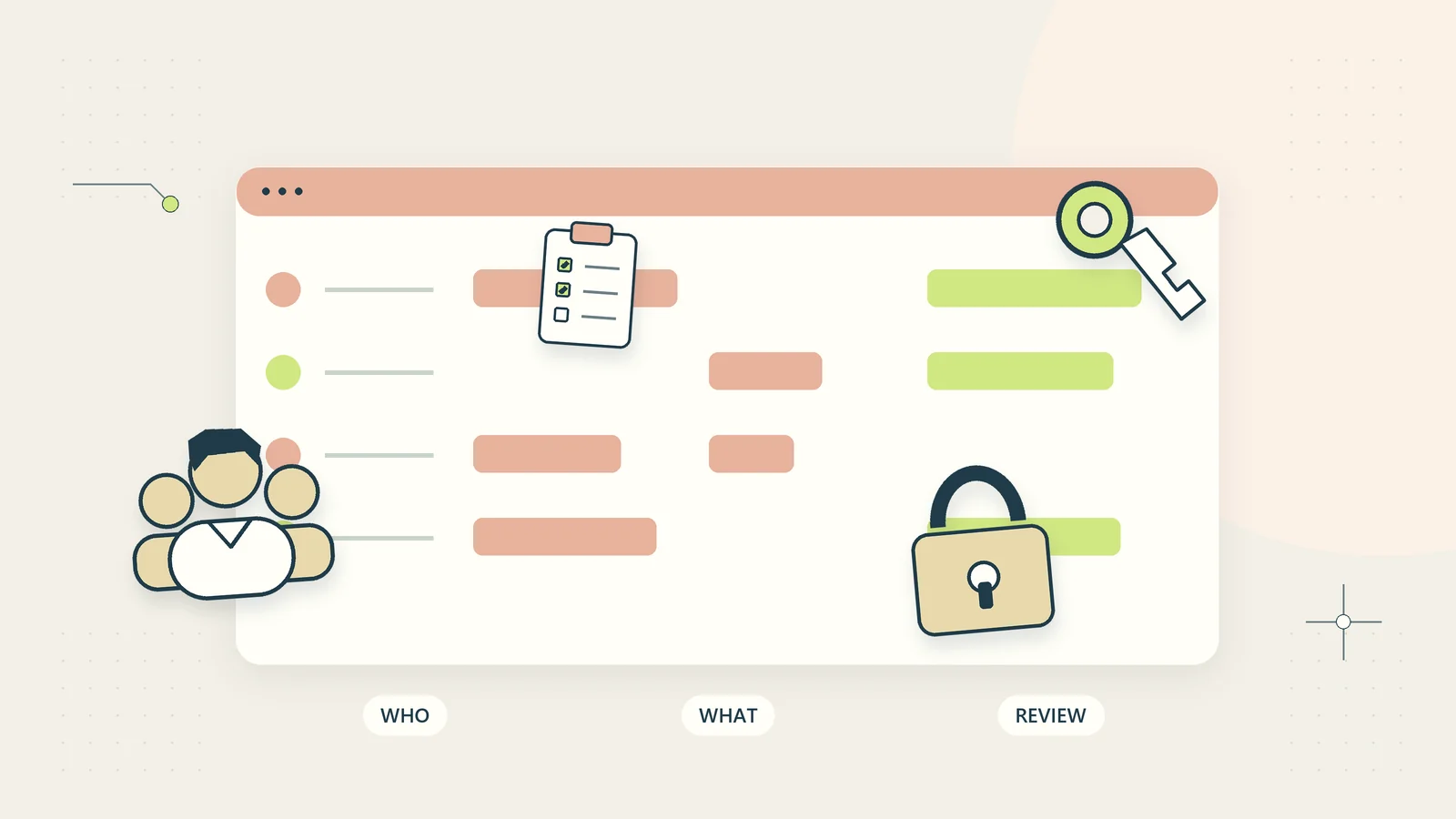
A customer data sharing checklist for everyday operations
Review customer data handoffs with a practical checklist for purpose, fields, recipients, access, completion, and ending an approved sharing arrangement.
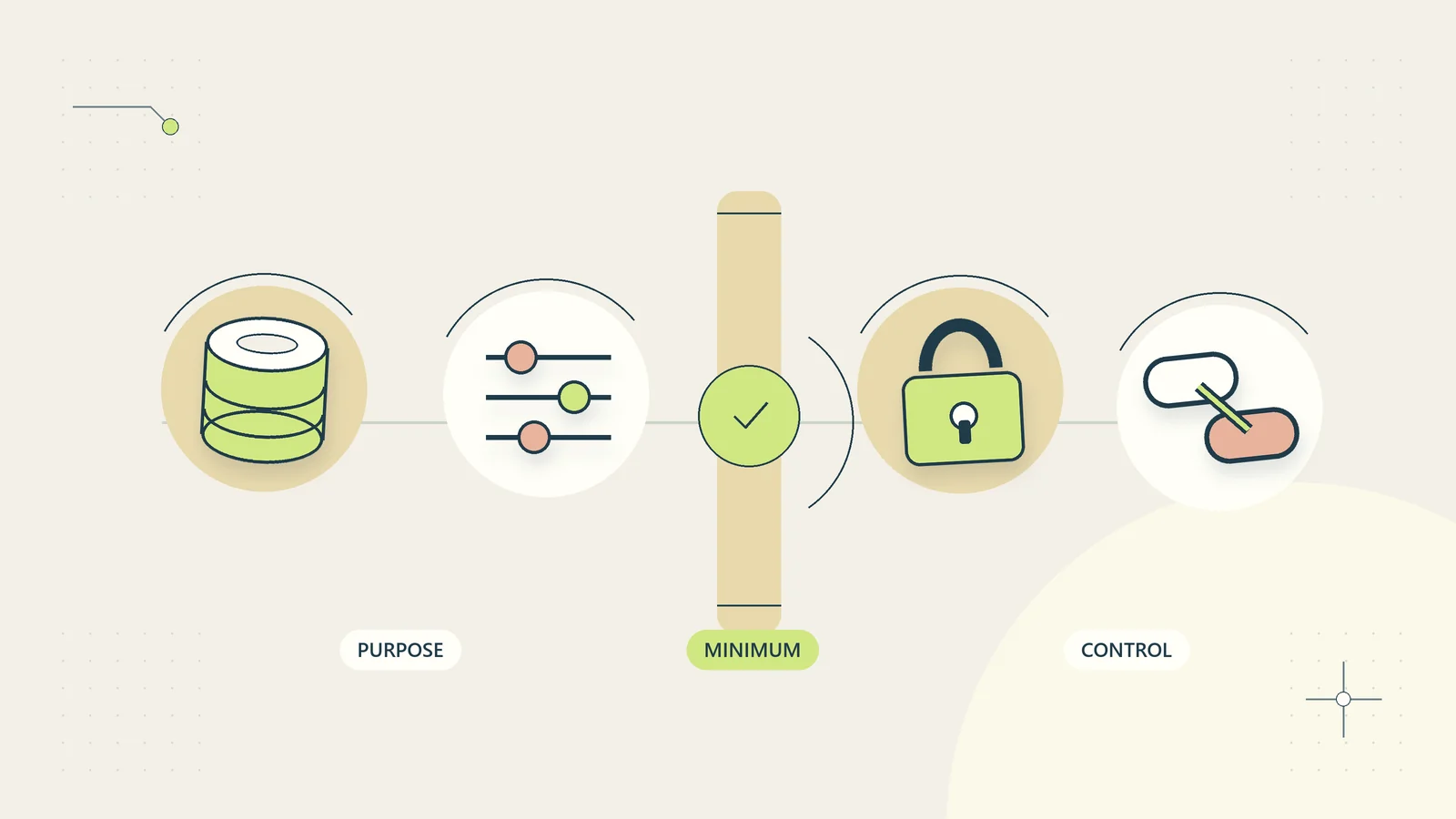
Customer information moves through ordinary business work: a delivery team needs an address, a colleague reviews an enquiry, a bookkeeper receives transaction records, or a support employee investigates a failed download. The operational question is whether the right information reaches the right recipient for a defined purpose, with enough control to understand and end that access later.
A data sharing checklist turns a vague request to “send the customer list” into a specific decision. It identifies the task, the fields needed, the recipient, the approved route, and what happens afterward. The same discipline is useful for an internal handoff, a one-time export, or a recurring automatic transfer, although their legal treatment may differ.
This guide provides an original operational checklist for business owners worldwide. It does not establish a lawful basis, authorize a transfer, or replace advice on applicable privacy, confidentiality, contractual, or sector requirements. Those questions need appropriate review for the actual business and circumstances. Examples below are hypothetical.
Begin with the task rather than the available export
Write one sentence explaining what the recipient needs to accomplish. “Prepare shipping labels for these confirmed orders” gives you something to evaluate. “Help with operations” does not explain why a complete customer history is needed.
Then ask whether the task can be completed without sending personal information. A count, an anonymized operational example, or a restricted view of a particular record may be enough. Avoid calling information anonymous merely because customer names have been removed; other details or combinations may still identify someone.
Separate the task from the convenience of an existing export button. The default file may include information collected for unrelated purposes, old customers, internal notes, or fields that the recipient cannot use appropriately.
The guide to client intake information design explains how decisions made at collection affect later work. Collecting fewer unnecessary details also reduces what people can accidentally include in a routine handoff.
Identify the recipient and their role precisely
Record who will receive the information, which organization or team they represent, and the work they are authorized to perform. “Finance” or “our partner” may hide several people with different access needs.
Verify a new recipient through an established route, especially when a request changes the usual destination or creates broader access. Do not treat a familiar display name or an email thread as sufficient evidence for a sensitive change. Confirm which account should receive access and whether it belongs to the intended organization.
Clarify whether the recipient may involve additional people or systems. A file given to one contact may be uploaded into a wider workspace unless the arrangement states otherwise. Your review should consider the real destination and use, rather than stopping at the first person who receives a link.
If roles are unclear, pause and obtain the missing decision. The requester’s urgency does not explain who is responsible for the information after it leaves the current system.
Map the fields to the actual purpose
List the proposed fields and explain what each contributes to the task. This is more concrete than a general instruction to share “only necessary data.” Remove fields that lack a clear operational reason, then check whether a smaller group of records would be sufficient.
| Proposed information | Example task | Question before including it |
|---|---|---|
| Order reference | Connect the work to the correct order | Can a business reference replace the customer’s name? |
| Delivery address | Fulfil a physical shipment | Is this needed for every included record? |
| Email address | Send an authorized operational update | Does the recipient need direct contact, or can the business send it? |
| Free-text notes | Understand an unusual case | Do the notes contain unrelated or sensitive details? |
| Transaction amount | Reconcile a payment | Is the full payment record necessary? |
| Account history | Investigate a specific issue | Would the relevant event or date range be enough? |
Review free-text fields carefully. A structured export can look tidy while an internal note contains information the recipient does not need. Replace an unnecessary narrative with a limited factual summary when appropriate and authorized.
Resolve the permission question before transferring
Operational usefulness does not itself establish permission to share. Identify who in your business is responsible for reviewing the applicable legal, contractual, and confidentiality conditions. Record their decision reference where a review is required.
The UK’s Information Commissioner’s Office publishes a data sharing checklist that considers purpose, necessity, recipients, safeguards, and accountability. It is UK-specific guidance, and the page states that it is under review following the Data (Use and Access) Act. It should not be treated as a worldwide rulebook.
Avoid making consent a universal shortcut. Different circumstances can require different analyses, and a customer’s general acceptance of website terms may not answer the proposed use. Route uncertainty to the responsible adviser rather than selecting a convenient label in a form.
Changes in destination country, information type, recipient role, or intended use may require a fresh review. A previous approval is useful evidence of its original scope, not unlimited permission for future variations.
Choose an access method that matches the task
Consider whether the recipient needs a downloadable file, a restricted view, or a particular action performed by your own team. A file may be appropriate, but it creates a copy whose later use and removal can be harder to observe.
For a shared view, decide which records and actions are permitted. Viewing, editing, exporting, inviting others, and changing permissions are different capabilities. Give the recipient the access needed for the approved work and verify the actual configuration.
For a transfer, use the approved secure route and check the destination before sending. Do not place a sensitive file in a public link simply because it is convenient. If a separate credential or access step is part of the approved method, follow the documented arrangement rather than improvising in the same message.
The business access review guide provides a deeper method for checking permissions. For this checklist, record how access was granted, its scope, its owner, and its planned review or ending condition.
Define what happens after the handoff
Agree what completion looks like for the recipient. Will they return an output, update a record, confirm delivery, or perform an analysis? State where that result belongs and who verifies that the task is complete.
Also establish what happens to the shared information afterward. Identify the agreed retention or review condition, any return or deletion action, and the person responsible for confirming it. Do not invent a single retention period for every type of record or country.
When a copy must remain for a justified reason, record that reason and the applicable controls. Closing a project does not automatically prove that every copy should be deleted immediately, or that keeping every copy indefinitely is acceptable.
Include a route for the recipient to report an error, unintended disclosure, or request that exceeds the agreed scope. The handoff should give them a useful contact and instructions for raising uncertainty before they continue with a different use.
Use a concise sharing decision record
A useful record connects the decision to the actual information and recipient. It does not need to reproduce the customer data itself. Store it where the people responsible for the arrangement can find it with suitable access controls.
Include the request reference, purpose, recipient and role, selected records, approved fields, excluded fields where relevant, decision owner, approval reference, transfer route, access scope, start time, completion condition, and review or ending date.
Add the result of the transfer or access verification. “Approved to send” and “sent successfully to the verified recipient” are separate events. Record both when they matter, so a later investigator does not mistake a prepared file for a completed handoff.
Use the business audit trail principles to link the decision, execution, and review. Keep the record concise enough to maintain. Copying a full customer list into a log would create another unnecessary location for the same information.
Work through a hypothetical contractor request
Imagine a small retailer asking a temporary operations contractor to investigate delayed orders. The contractor requests the full customer export because it is the report they have used elsewhere.
The retailer first defines the task: identify which confirmed orders missed their expected dispatch checkpoint and prepare an internal exception summary. The contractor does not need to contact customers directly. The initial review therefore removes email addresses, unrelated purchase history, marketing preferences, and general customer notes from the proposed dataset.
The business prepares a limited view containing order references, relevant dates, fulfilment status, and the operational reason code where one exists. A staff member checks unusual notes separately rather than exposing every free-text entry. The authorized reviewer confirms the arrangement and its scope before access is granted.
The contractor receives a named restricted account with the agreed permissions. The task ends when the internal summary is accepted. The retailer then checks that temporary access is removed and that any permitted working copy is handled under the agreed arrangement.
If the contractor later needs to contact customers, that is a new task with different information and authority. It goes through review rather than being treated as a minor convenience. The example shows how purpose changes the handoff, without claiming that this particular arrangement meets every jurisdiction’s requirements.
Add controls for recurring automatic transfers
An automatic transfer repeats the original decision, sometimes thousands of times. Define its source, destination, allowed fields, selection rule, frequency, identity used for access, and the person responsible for maintenance.
Test it with synthetic records before using real customer information. Check ordinary cases, missing fields, duplicate records, a changed recipient, and a source schema change. Confirm that a new source field does not automatically become an approved destination field merely because it appears in the export.
Record failures without copying the full payload into broadly visible alerts. A failed transfer should keep a reference and next action. An uncertain outcome needs verification before repeated transmission if duplicate copies could create a problem.
Require review when the purpose, destination, access scope, or information categories change. A reliable automatic process preserves the approved boundary. It should not expand that boundary silently as software or business needs evolve.
Treat AI input as another destination for information
Pasting customer records into an AI tool is a form of information use that needs its own evaluation. Identify the actual task and whether synthetic, redacted, or smaller inputs would work. An instruction to a model to “keep this private” is not evidence about the service’s handling of the input.
Review the approved environment, account settings, contractual arrangement, access, retention behavior, and intended use with the responsible people. Do not assume that two services with similar interfaces have identical conditions.
The AI data minimization guide covers this specific problem in more detail. Keep your routine sharing checklist simple: what information is proposed, where it will go, why it is needed, and who has approved that use.
Where the answer is unclear, use a synthetic example or pause the transfer while the question is resolved. That preserves progress on a draft or test without assuming that real customer information is necessary for the first experiment.
Review the arrangement when ordinary work changes
Set review triggers around meaningful changes, not just the date on a calendar. A new recipient team, additional report fields, wider export permissions, or a different use of the results can change the original arrangement.
At review, compare the current transfer or view with the approved field list and purpose. Ask whether the task still exists, whether the named owner remains responsible, and whether access still matches the work. Check a small sample of actual outputs rather than relying only on the settings someone remembers selecting.
If the arrangement is no longer needed, close it deliberately. Record the access removed, scheduled transfer stopped, and any remaining information that still needs handling. The ending should be as understandable as the initial approval, so an old handoff does not continue simply because nobody remembers to turn it off.
Handle mistakes as incidents with a clear route
Prepare an operational response for a wrong recipient, overly broad access, incorrect file, or unexpected further use. Staff should know whom to contact immediately and how to describe what happened without spreading the information further.
Record the time, information categories, intended and actual recipient, access route, and actions already taken. Where safe and authorized, the responsible administrator can restrict access or disable the link. Do not assume that revoking a link removes a copy already downloaded.
Keep communication coordinated. A request to the recipient to stop using information may be appropriate, but legal duties, customer notification, and reporting decisions need the correct review. Applicable requirements depend on the circumstances and jurisdiction.
After addressing the incident, examine why the handoff permitted the mistake. An export with unnecessary fields, an unchecked recipient change, or a broad default permission may need a process change. Avoid ending the review with only a reminder to “be more careful.”
Pilot the checklist on common handoffs
Choose three ordinary examples: an internal customer request, a one-time file transfer, and a recurring report. Use synthetic records for the first walkthrough. Ask the people involved to complete the decision record and explain any field they cannot answer.
Measure preparation time, unclear approvals, unnecessary fields removed, recipient verification gaps, and access that lacks an ending condition. These are proposed pilot measures, not a claim about savings or incident reduction.
The NIST Privacy Framework is a voluntary tool for identifying and managing privacy risk. That wider perspective can help organize follow-up work, while the checklist gives staff a practical route for a particular handoff.
Revise the checklist around the gaps found, then assign its owner and review triggers. The useful result is a repeatable way to explain why information moved, who received it, what they could do, and how the arrangement ended or remained justified.
Sources and editorial method
Research checked on October 15, 2026. The operational record, table, hypothetical retailer example, and pilot are original editorial guidance. Legal permission and international transfer questions require review for the actual circumstances. The ICO material is UK-specific and marked under review; NIST describes its framework as voluntary. Neither source provides automatic approval for a proposed sharing arrangement.