An inventory discrepancy process for small retailers
Investigate inventory differences with clear stock definitions, recounts, movement evidence, approved corrections, and a practical discrepancy log.
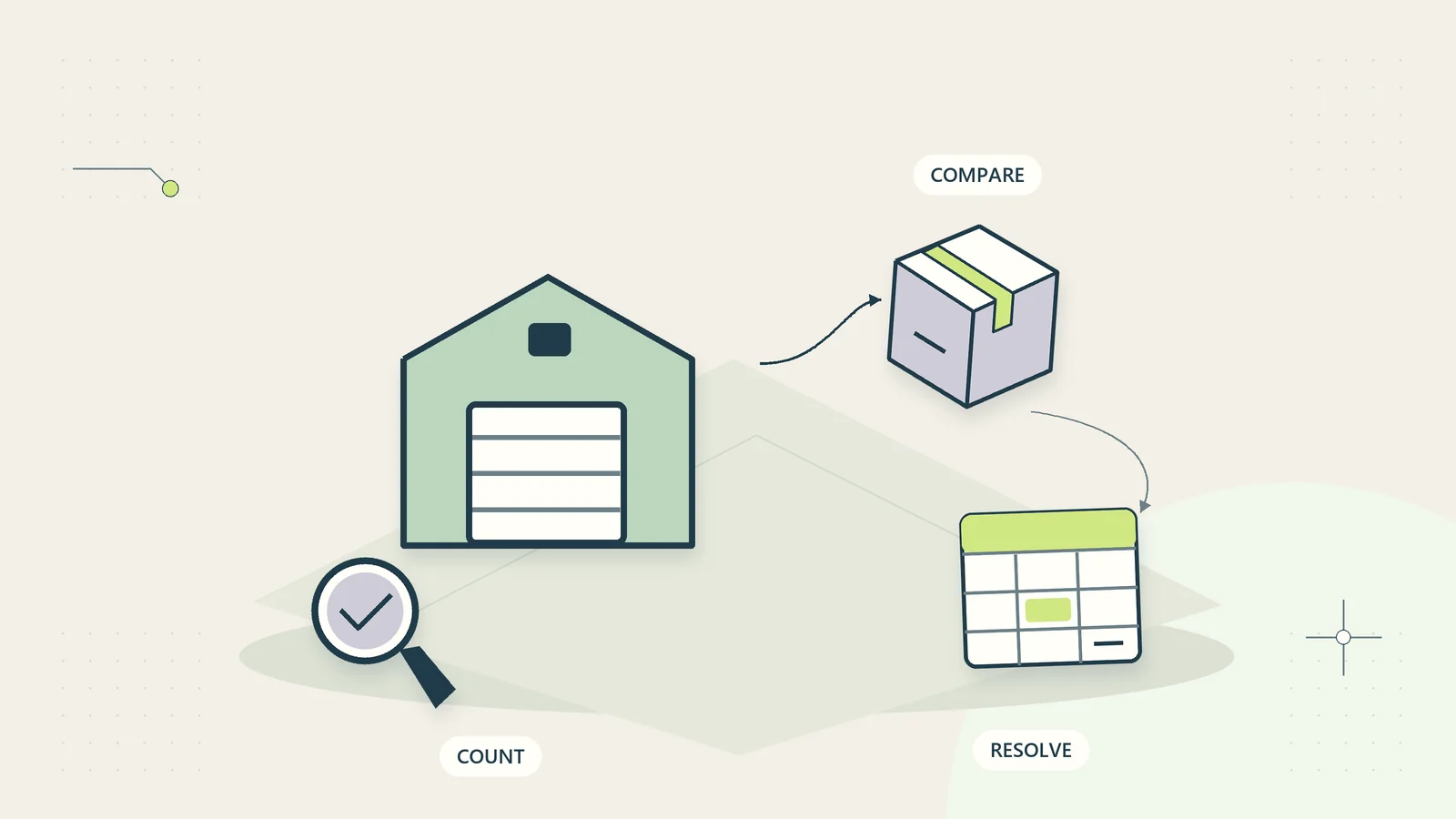
An inventory discrepancy occurs when the stock your records describe does not match the stock your team can verify. The useful response is not simply to type the physical count into a quantity field. A small retailer needs to establish what was counted, which stock state was compared, what moved during the count, and who can approve the correction.
This guide provides a practical investigation process for ordinary retail stock. It can begin with a controlled count sheet and a discrepancy log. Products with safety, traceability, expiry, regulated storage, or specialist accounting requirements need the relevant additional procedures and qualified decisions.
Define the quantity you are comparing
Physical stock, sellable stock, stock reserved for customers, damaged goods, and incoming deliveries are different quantities. A shelf can contain ten units while only six are available to sell because four are already committed. Treating every difference as a loss can create incorrect adjustments.
Shopify’s inventory-state explanation distinguishes on-hand, available, committed, unavailable, and incoming inventory. Other systems may use different labels. Map your own labels to clear definitions before a count starts.
Write the intended comparison at the top of the count instruction. For example, “count physically present units by location, separating damaged and customer-allocated units.” Do not mix an available-to-sell export with an undifferentiated physical count and expect the difference to explain itself.
Give each item and location an unambiguous identity
Use the SKU, variant, unit of measure, and location together. A product name such as “blue bottle” may describe several sizes. A location such as “back room” may contain sellable stock, returned goods awaiting inspection, and units reserved for collection.
Check pack sizes before investigating a variance. A supplier carton containing twelve units is not the same unit of measure as one retail item. Record whether the count uses each, pair, case, length, or another defined measure. If quantities are converted, document the approved conversion and its source.
Include temporary holding areas in the location map. Goods waiting near a packing bench are still somewhere, even if the inventory system has no label for that space. The product data quality checklist helps prevent identity and variant errors that later appear to be stock problems.
Establish a count boundary and movement rules
Choose a cutoff time and record the stock snapshot used for comparison. Explain whether sales, picking, receiving, returns, and transfers will pause or continue. A full shutdown may be impractical, but uncontrolled movement makes the count hard to interpret.
If movement continues, record the transactions that affect the counted stock after the snapshot. Give the counting person a way to mark a location as counted and tell other staff how to handle units moving through it. Avoid counting a carton in receiving and again after it reaches the shelf.
Use a small area for the first trial. Test whether staff understand the instructions and whether a transaction can be traced across the cutoff. Fix the count method before scaling it to the entire stockroom.
Capture observations before explaining the difference
Record the expected quantity, observed quantity, count time, person counting, location, unit, and any visible condition issue. Keep the first observation even if a later recount finds an error. The history helps distinguish a counting problem from a stock movement problem.
Use neutral reason labels such as awaiting recount, possible receiving difference, transfer under review, or condition classification needed. Avoid declaring theft, supplier error, or employee negligence before evidence supports the conclusion.
Keep supporting evidence proportionate. A photograph may clarify a mislabeled shelf but should not unnecessarily capture customer paperwork or staff personal information. Link the evidence to the discrepancy reference and restrict access where appropriate.
Recount before adjusting the record
For a meaningful discrepancy, arrange a recount using the same unit and location definition. Where practical, have someone recount without seeing the expected number first. This reduces the temptation to stop searching once the expected total has been reached.
Check nearby locations, similar variants, open packs, returned goods, and items set aside for customers. Confirm that labels correspond to the actual goods. A correct barcode on the wrong shelf can make a scanning process look reliable while counting the wrong item.
State who can decide a recount is sufficient and what differences need escalation. The threshold may depend on value, frequency, product characteristics, or customer commitments. A small repeated variance can deserve more investigation than a larger one-time counting mistake.
Review the movement history in a consistent order
Work through receiving, sales and fulfilment, returns, transfers, adjustments, and holds for the affected period. Compare the timing and quantities with the count cutoff. Look for duplicated entries, incomplete receiving, an unrecorded transfer, a wrong variant, or an adjustment applied at the wrong location.
Shopify’s inventory adjustment history shows the value of recording changes with timing, activity, and the actor. Use the equivalent history in your own system and preserve relevant evidence before normal retention or reporting limits make it harder to retrieve.
Do not assume the latest transaction caused the difference. A variance can accumulate from several events. Record what the investigation confirms, what it rules out, and what remains unknown. An honest unresolved reason is more useful than a confident but unsupported category.
Use a discrepancy log with decision-ready fields
The log should connect the observation to the correction and its authority. It does not need to reproduce every transaction in the stock system.
| Field | Example purpose |
|---|---|
| Discrepancy reference | Links recounts, evidence, and correction |
| SKU, variant, unit, location | Identifies the exact stock being compared |
| Snapshot and count times | Defines the comparison boundary |
| Expected and verified quantities | Separates the original observation from the final count |
| Confirmed cause or unresolved explanation | Prevents invented certainty |
| Affected orders | Identifies immediate customer consequences |
| Proposed correction and approver | Separates investigation from authority |
| Posted adjustment reference | Shows what actually changed |
| Follow-up owner and date | Connects recurring causes to improvement |
Use the business audit trail guide if your current log records only a final number. An explainable correction needs the reason and decision history as well as the updated balance.
Protect open orders while the discrepancy is investigated
A shortage may affect orders already accepted. Check committed quantities and identify which orders could be affected before making a broad stock adjustment or customer promise. A quantity correction alone does not tell support who needs an update.
Route affected orders into the ecommerce exception queue with the stock investigation reference. The inventory owner establishes what can be supplied; support communicates approved options and timing. Keep each order’s outcome separate from the underlying stock investigation.
For an overage, do not immediately assume every extra unit is available to sell. It may be customer-owned, awaiting inspection, associated with an unrecorded delivery, or the wrong variant. Establish its identity and status before exposing it as available inventory.
Work through a hypothetical two-location shortage
Imagine a retailer whose records show eighteen green notebooks at location A and twelve at location B. A count finds fifteen at A and fifteen at B. The combined total matches, but the locations differ. Treating the shortage at A and the overage at B as unrelated could hide a transfer problem.
The investigator checks the movement history and finds a transfer request for three notebooks that was physically completed but never recorded as received. A recount confirms the variant and quantities. The authorized owner follows the system’s appropriate correction procedure and records the transfer reference with the discrepancy resolution.
A separate count finds one damaged notebook among location B’s units. That issue requires its own condition decision; it should not be folded into the location correction. The team checks whether any open orders rely on the damaged unit. This hypothetical example illustrates how location and condition differences can coexist without proving either a financial loss or a particular accounting treatment.
Approve corrections with the right evidence
Define who may post stock adjustments and what documentation they must review. Where a correction has a meaningful financial effect, coordinate with the responsible bookkeeper or accountant. Operational verification and accounting treatment are related but distinct decisions.
Before posting, confirm the current quantity again if stock has moved since the count. A correction calculated from a stale snapshot can overwrite valid later activity. Check whether the system supports a controlled adjustment or comparison against an expected current value.
Record the actual adjustment reference, person, time, and reason. Then verify that the resulting quantity and stock state match the approved decision. Approval of an intended correction is not evidence that the correction was successfully applied.
Handle unresolved causes without hiding the stock position
Sometimes the physical quantity can be verified while the cause remains uncertain. Separate those conclusions. The business may need an accurate operational stock position even though the investigation cannot establish when the difference arose.
Use a reason such as verified-count correction with cause unresolved, subject to your approved procedures. Keep the supporting history and a follow-up owner. Do not repeatedly reopen the same investigation without a new lead, but do review patterns across items, locations, or transaction types.
Escalate signs of safety issues, possible misconduct, or system compromise through the relevant controlled procedure. A stock log is not a substitute for a qualified investigation, and a public team discussion should not expose allegations or unnecessary personal information.
Keep bulk imports from undoing a verified correction
A carefully investigated adjustment can be overwritten by an older spreadsheet uploaded later. Give each stock export a timestamp, location scope, and intended purpose. A file produced for a physical count should not silently become the master file for a future inventory update after sales and receipts have continued.
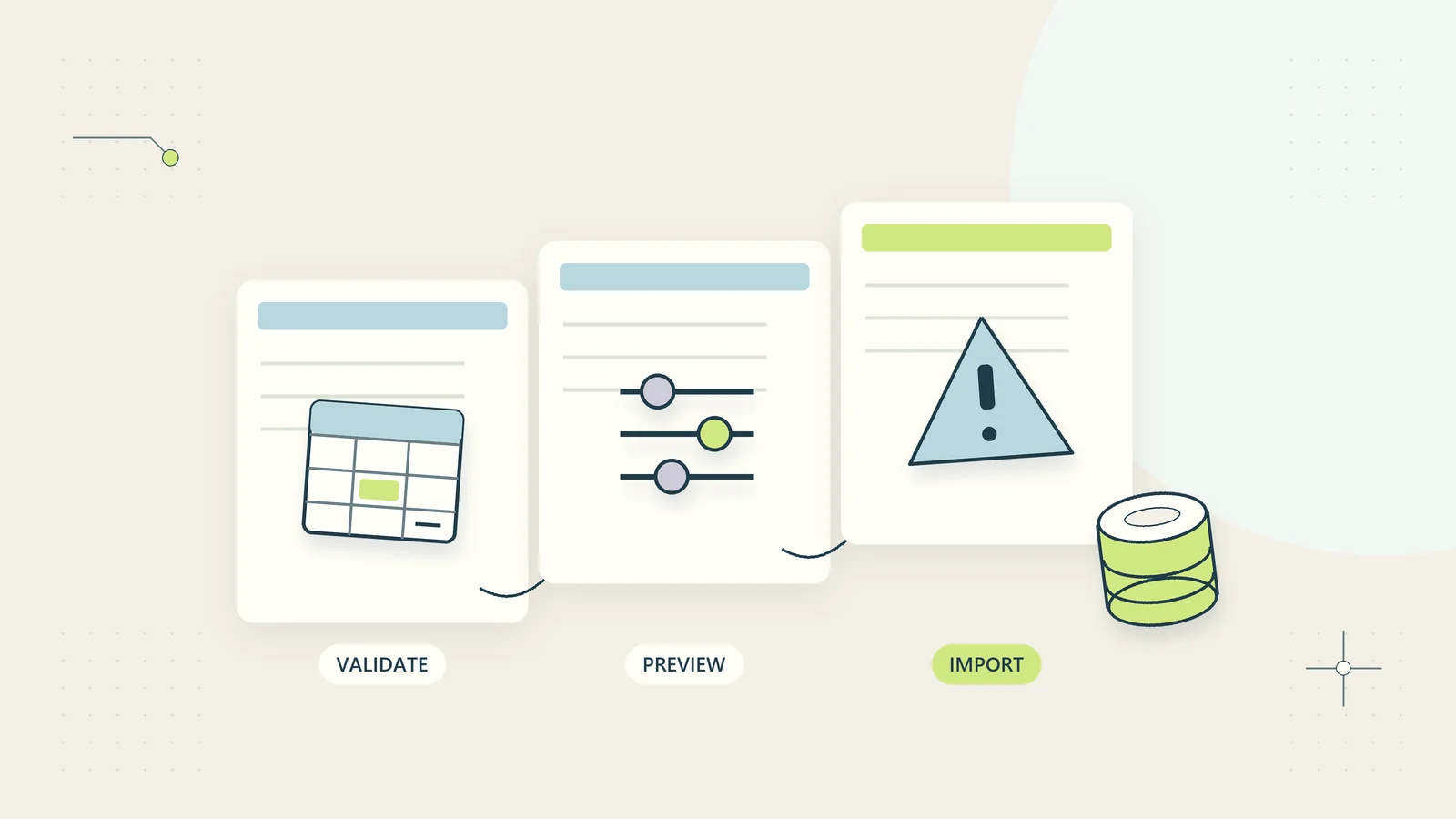
Before a bulk import, compare the file’s assumptions with the current system state. Check the unit, variant, location, and whether the operation adds a difference or replaces a balance. Those are different actions. A difference of minus two applied twice removes four units, while a replacement balance can erase valid later movement. Use a small controlled preview or sample where the system supports it.
Record which discrepancies the import is intended to resolve and who approved the changes. Afterward, inspect both the imported rows and a few unaffected items to confirm the scope was correct. Keep a recovery plan that reflects actual movements after the import; restoring an old file indiscriminately can create another discrepancy. The CSV import checklist covers this broader discipline of validating identifiers, formats, scope, and results before treating an upload as successful.
Review repeated discrepancies as process signals
Group confirmed causes by operating step. Receiving errors may need clearer unit labels or a second quantity check. Picking errors may need better variant separation. Unrecorded transfers may need an acknowledgement from the receiving location. Condition mistakes may need a defined inspection area.
Look at the denominator as well as the discrepancy count. Five variances among fifty counts and five among five hundred counts describe different operating situations. Consider the product mix, counting frequency, and whether the process deliberately targeted difficult items.
Choose a focused improvement and define a repeat check. If you change receiving labels, recount the affected category after an appropriate trial period. Check whether the change reduces confusion without creating excessive handling time or another hidden stock location.
Keep the counting instructions usable during busy periods
Place the current instruction with the count sheet and show its owner and revision date. Include one completed example that distinguishes a sealed case from individual units and identifies where damaged stock belongs. Before a count, ask the person carrying it out to explain the boundary back in their own words. This small check can reveal an ambiguous instruction before it affects hundreds of observations. When the method changes, archive the old version and tell the affected staff which future counts use the new definition.
Pilot a repeatable count-and-correction routine
Start with a limited group of products whose identities and locations are clear. Measure count completion, recount frequency, investigation age, confirmed causes, unresolved causes, correction errors, and orders affected. Record active investigation time separately from waiting for evidence.
Review a sample of resolved discrepancies. Another authorized person should be able to follow the observation, recount, evidence, decision, and posted change. If they cannot, improve the record rather than simply adding more mandatory fields.
The process is working when your team can establish a trustworthy stock position, protect customer commitments, and explain corrections without relying on memory. Keep the count boundaries, permissions, and reason definitions accessible so the routine remains reliable when the usual stock lead is away.
Sources and editorial method
Checked October 15, 2026. Primary references: Shopify: inventory states and Shopify: inventory adjustment history. The discrepancy log, investigation sequence, and notebook scenario are original planning guidance. They do not represent an implemented integration, an accounting determination, or a universal stock inspection standard.