Set useful service response targets for a small team
Set realistic response targets using clear clocks, request categories, capacity checks, waiting states, and meaningful updates customers can understand.
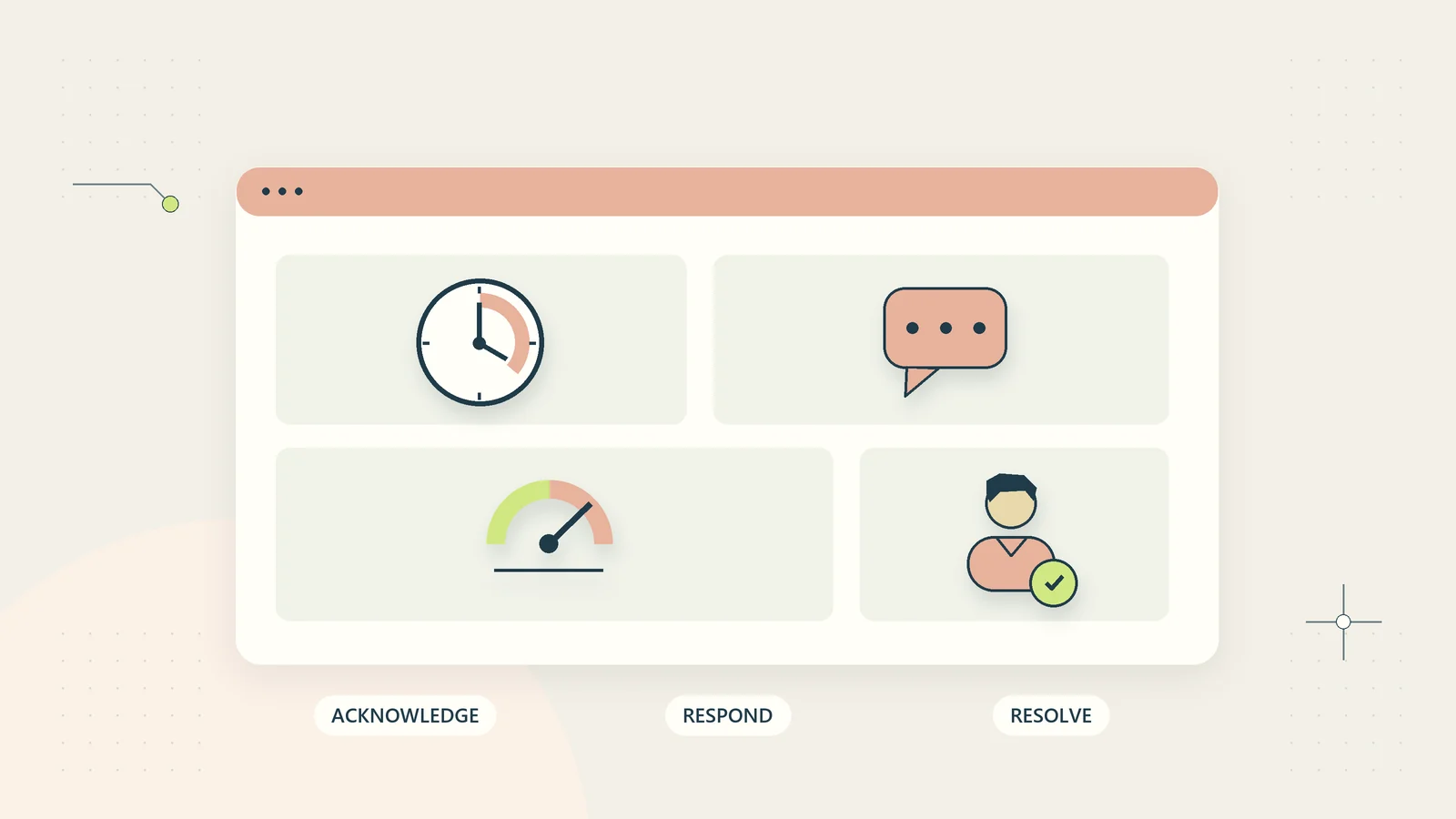
A useful service response target tells customers when to expect meaningful help and tells the team how to organize its queue. It should reflect the service you can actually provide, including working hours, absences, and complicated cases. An ambitious number on a website does not create the capacity needed to meet it.
Small teams often confuse acknowledging a request, beginning useful work, and resolving the issue. Those are different events. A receipt can arrive immediately while a specialist review takes longer. Customers become frustrated when the first event is presented as if it guarantees the last.
This guide explains how to define practical operational targets, test them against real workload, and communicate delays. Contractual service commitments need appropriate review before publication. The examples below are hypothetical planning choices, not universal industry benchmarks or promises every business should adopt.
Define the event you are measuring
Start with the customer’s experience. A response target might measure the time until a person receives a relevant answer, the time until an urgent issue is assessed, or the time until a confirmed problem is resolved. Write the definition before choosing a duration.
An automated acknowledgment should say that the request was received and what happens next. It should not count as a substantive answer simply because it contains a friendly greeting and a reference number. Likewise, an internal assignment is not a customer response if the customer has heard nothing.
Zendesk’s overview of SLA policies distinguishes response and resolution measures. You can apply the distinction in a first-party support process without buying that software. The important part is agreeing which event starts and stops each operational clock.
Keep the number of measures small. A small business can often begin with first meaningful response, next update, and resolution review. Add specialist measures only when they support a decision the team actually makes.
Specify the clock and the calendar
State whether a target uses elapsed time or staffed business time. Four business hours and four calendar hours produce very different expectations when a message arrives before a weekend. Define working days, holidays, and the relevant time zone in customer-facing language.
For a global audience, avoid ambiguous references such as “by end of day.” Use an explicit date and time zone for a particular commitment. Your public service description can explain the general window, while individual replies give a concrete next-update time.
Document what happens when a request moves between channels or is merged with an existing case. The customer should not lose their place simply because they replied through a second route. Keep the original receipt time and record why duplicates were linked.
Be careful with paused clocks. Waiting for necessary customer information may justify a different operational state, but it should not erase the case’s total age. Track both the team’s active handling window and the customer’s elapsed wait when that distinction matters.
Segment by consequence and service type
One target rarely fits every request. A routine question about using a worksheet differs from a report that a paid download is inaccessible. A possible exposure of private customer information needs a different route again. Classify the consequence rather than rewarding the loudest message.
| Request type | First operational action | Appropriate owner |
|---|---|---|
| General how-to question | Check the relevant instructions and context | Support owner |
| Purchased resource unavailable | Verify purchase and investigate access | Delivery support |
| Billing disagreement | Acknowledge and gather transaction evidence | Authorized billing reviewer |
| Possible security exposure | Restrict further exposure and escalate privately | Designated security contact |
| Requested product improvement | Record the problem and review separately | Product or process owner |
Define the categories using examples staff can recognize. “Critical” is not useful if it means different things to every person. Do not ask customers to decide an internal technical severity level before they can request help.
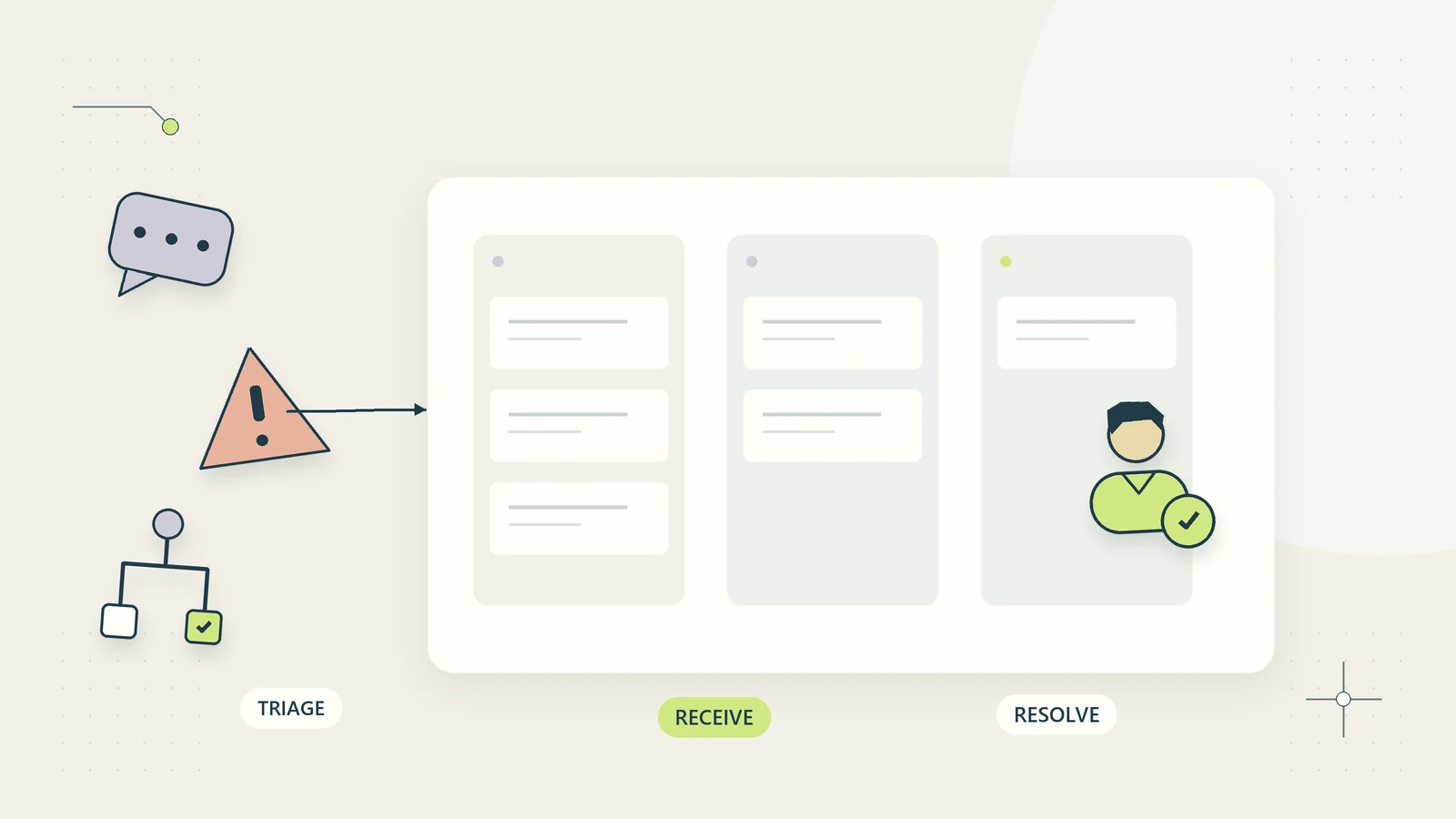
Use the customer complaint triage process to assess incoming issues. Response targets work better when classification has a consistent purpose and a practical route for uncertain cases.
Measure the work you currently receive
Before publishing a new target, sample recent requests. Record arrival time, category, first meaningful reply, total handling effort, dependencies, and final outcome. Include requests that are still open. Measuring only completed cases hides the difficult work left in the queue.
Inspect the spread rather than relying on an average. A few very slow cases can disappear inside a reassuring mean. For a small sample, a simple ordered list of wait times and a count of missed targets can be more understandable than a sophisticated dashboard.
Look at arrival patterns. Thirty requests evenly distributed across a week create a different challenge from thirty arriving on a single morning. Also separate work that one generalist can handle from requests requiring the owner’s approval.
Record the reason for delays without turning the exercise into a blame list. Missing information, inaccessible systems, unclear ownership, and conflicting priorities lead to different remedies. A slower reply caused by an absent approver is not fixed by asking the support person to type faster.
Test the target against available capacity
Estimate the time the team can devote to support after delivery work, administration, breaks, and planned absence. Do not treat every paid hour as uninterrupted case-handling time. Then compare likely workload with that capacity, leaving room for variability and unexpected issues.
In a hypothetical team, two people each reserve ninety minutes daily for support. That provides three planned handling hours. If twelve requests usually require fifteen minutes each, the expected handling effort already consumes the full allocation before interruptions or complicated cases.
That calculation does not prove a particular target is impossible, but it reveals a fragile plan. The team may need clearer self-service, better intake, broader coverage, a narrower service promise, or more support time. It should not publish a very short target and hope demand remains convenient.
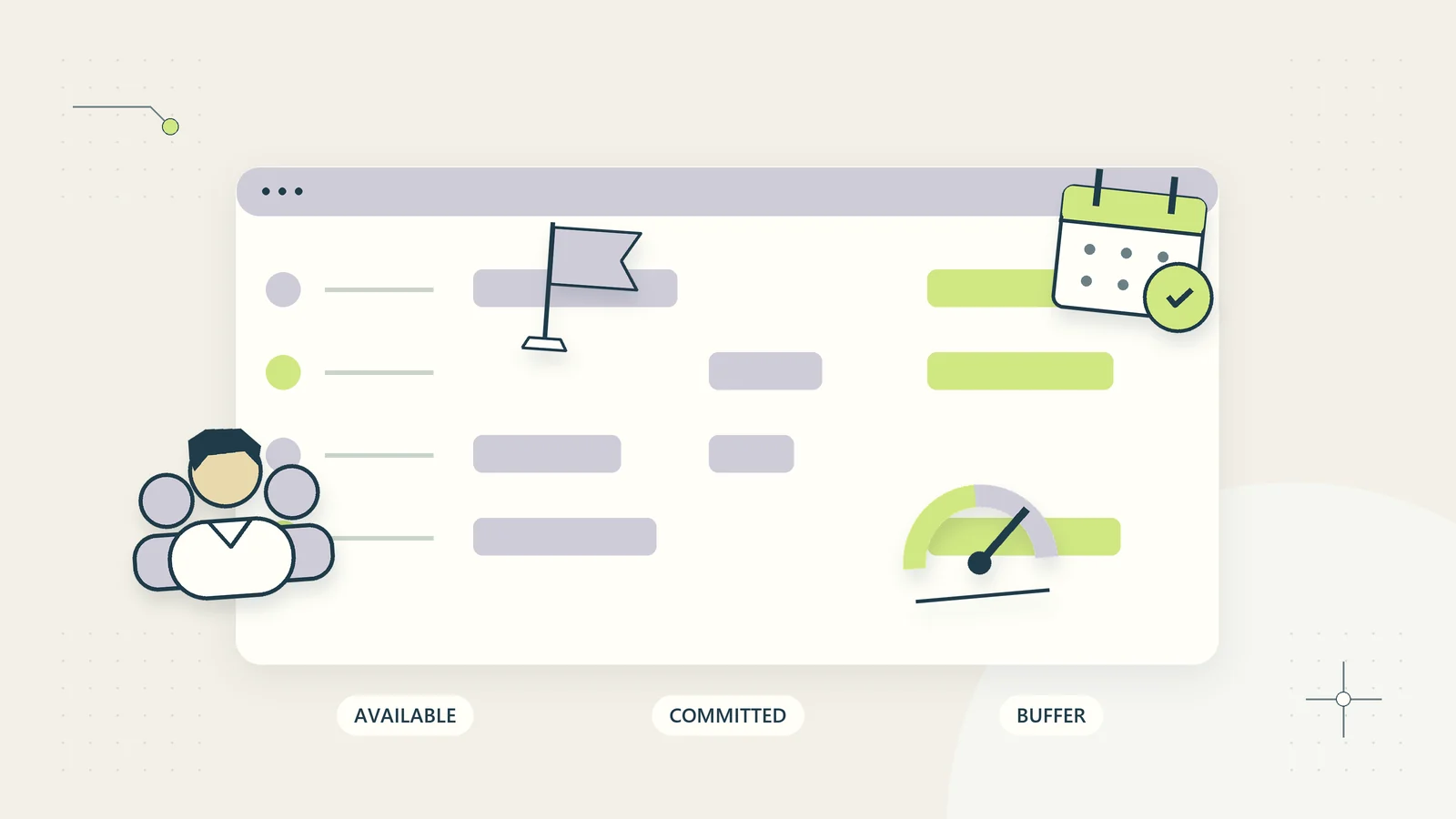
The small-business capacity planning guide helps connect response promises with actual availability. Keep the assumptions visible so a change in demand triggers a review of the target rather than a quiet decline in service.
Set separate internal and external expectations
An internal target can create room to recover before a customer-facing commitment is missed. For example, a team may aim to assess an ordinary request within a shorter window than the maximum response period it publishes. That margin should reflect reality, not conceal a service the business cannot provide.
Use precise language in public descriptions. “We normally respond during these staffed hours” is different from a binding guaranteed deadline. If you sell a contractual service level, its terms, exclusions, remedies, and measurement need deliberate review. Do not casually label every informal goal an SLA.
For requests with unpredictable resolution, promise a useful next update rather than an invented completion time. Explain what is known, what is being checked, and when the customer will hear again. A reliable update can maintain clarity while a dependency remains unresolved.
Keep sales pages, confirmation emails, support forms, and staff instructions consistent. A careful support policy cannot compensate for a promotional page promising immediate help that the team does not offer.
Design the queue so the target can be met
Every open request needs one accountable owner and a next action. Shared responsibility can otherwise become no responsibility. Ownership does not mean the person must solve everything personally; it means they remain responsible for moving the case or obtaining a clear transfer.
Provide views for unassigned requests, approaching update times, overdue items, and blocked cases. Keep high-impact exceptions visible. A single chronological inbox can bury a serious older issue under a stream of easy new questions.
Use the shared inbox management guide to define assignment and collision rules. Two people sending different answers can create more work than one slightly slower, accurate reply.
Zendesk’s SLA policy API reference demonstrates that service measures can be scoped by conditions and by business or calendar time. For your own process, document equivalent rules plainly before attempting to automate them. A timer cannot resolve an unclear policy.
Make waiting states visible and honest
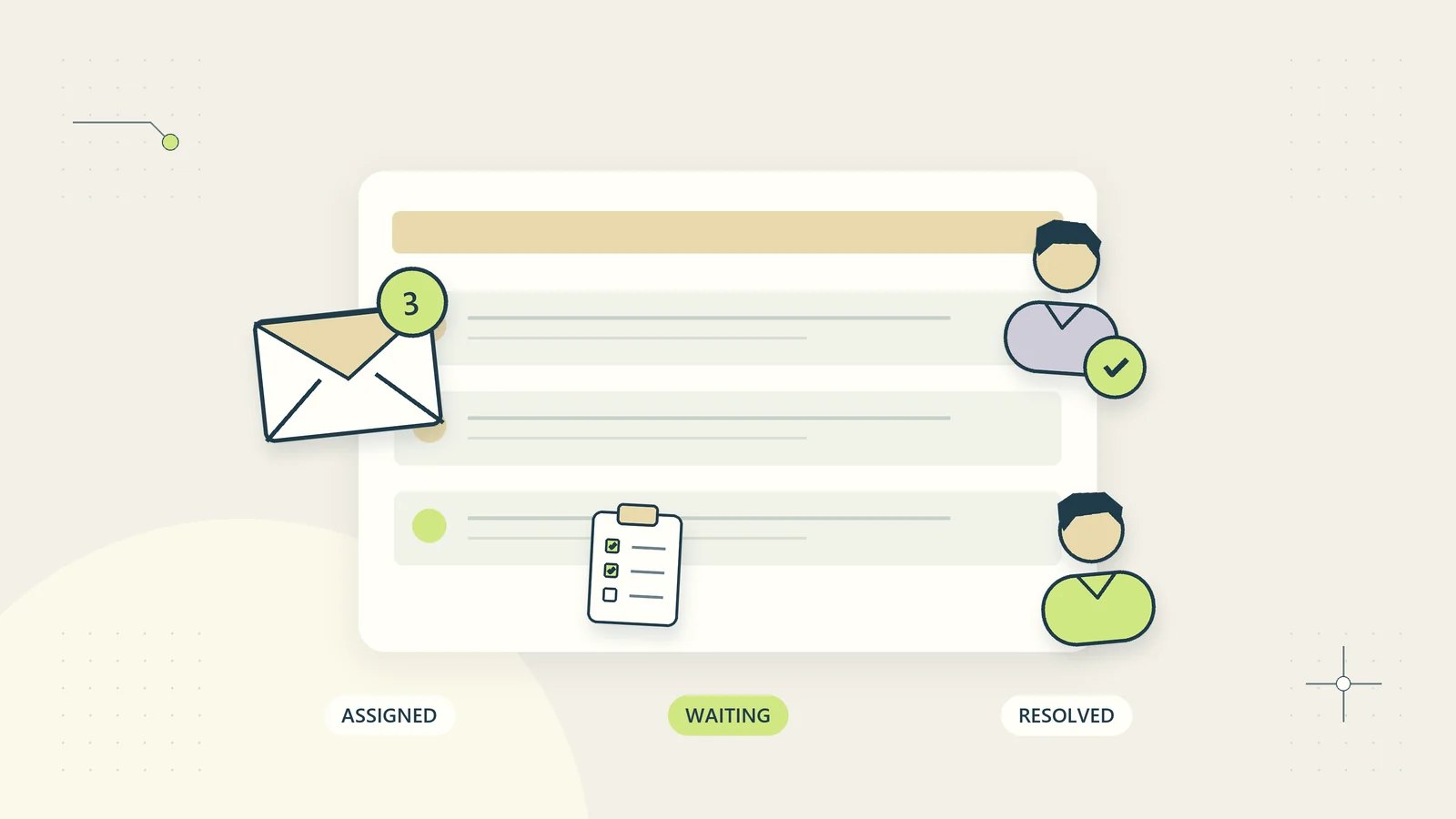
A blocked case still needs an owner. Record the missing input, who is expected to provide it, the last contact, and the next review time. Avoid a generic pending state that allows work to disappear indefinitely.
When asking a customer for information, explain why it is necessary and how to provide it safely. Do not request passwords, complete payment credentials, or unrelated personal documents simply to make support easier. Give an alternative when the customer cannot provide the preferred evidence.
If another provider controls the next step, describe that dependency accurately. You can commit to checking and updating the customer; you may not control the provider’s resolution time. Avoid converting an estimate received elsewhere into your own unconditional promise.
Agree how to handle a customer who has not replied. Send a proportionate reminder, explain the case state, and provide a route to resume. Closing a dormant conversation should not make an unresolved purchased-service problem appear successfully completed in your reporting.
Prepare a route for an approaching miss
Set an internal warning point early enough for someone to act. The warning should identify the case, the reason it may miss, the decision needed, and who can help. A notification that arrives after the deadline is a record of failure, not an opportunity to recover.
If the commitment will be missed, contact the customer before the next promised update where possible. State the current position, the reason you can share, what action is underway, and the next realistic update. Avoid blaming another employee or disclosing internal confidential details.
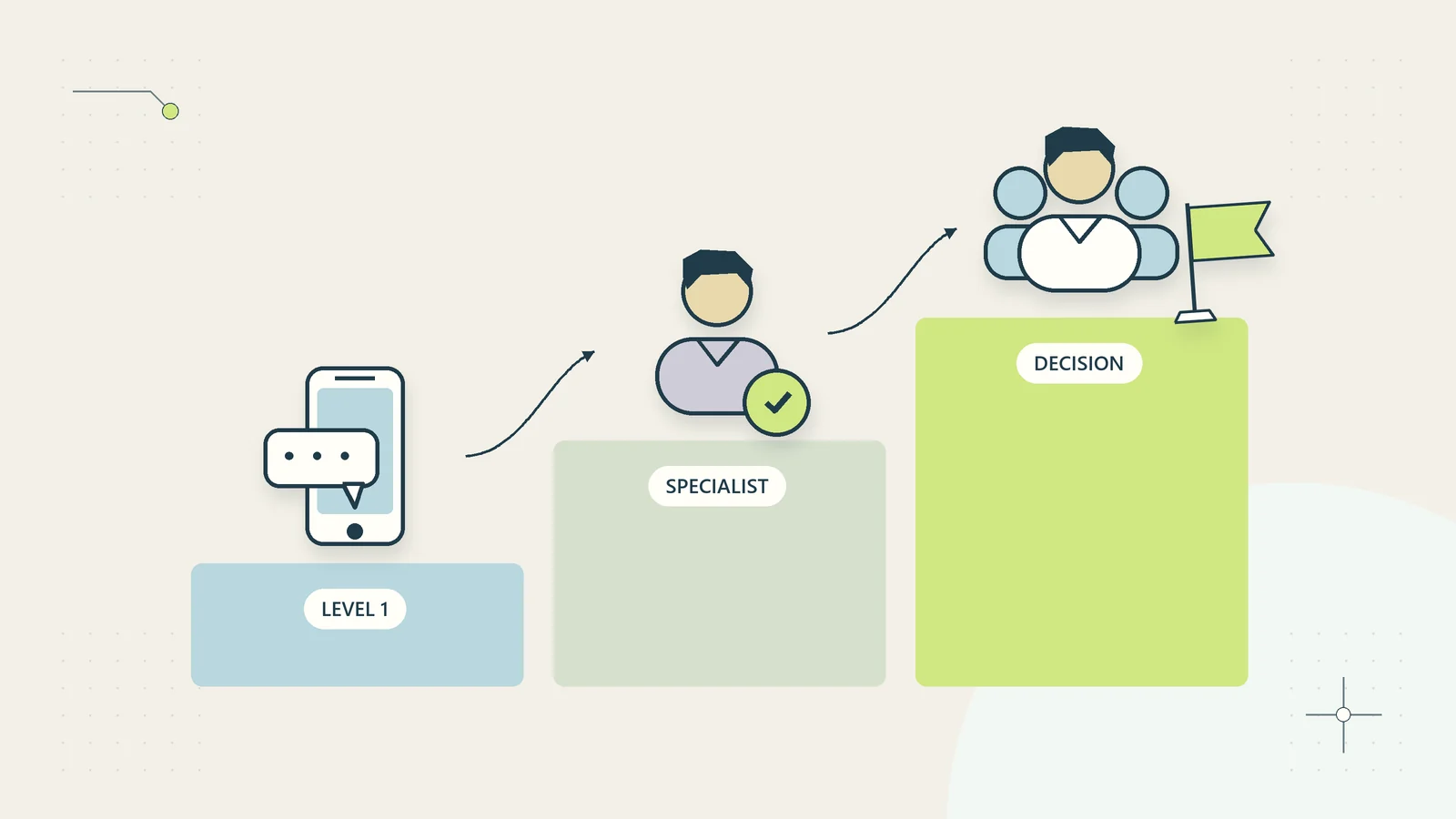
Use the client escalation process when authority, expertise, or risk exceeds the current owner’s limits. Escalation should not automatically mean the founder personally answers every delayed routine question.
Afterward, distinguish a one-off exception from a recurring mismatch. Repeated misses in the same category may indicate that the target is poorly designed, the intake is incomplete, or a single specialist has become a bottleneck. Review the operating system rather than just the wording of apologies.
Prepare for launches, holidays, and demand spikes
A target that works during an ordinary week may fail during a product launch or a period of reduced staffing. Forecast the likely change using the information available, then decide whether to add coverage, simplify the offer, or communicate a different temporary service window where existing commitments allow it.
Prepare answers and recovery instructions for foreseeable questions before the launch. Verify that the team can locate the current material and that the links work. A folder of draft responses that nobody can find will not provide useful surge capacity.
Define an overload signal in advance. It might be a growing count of unassigned requests, an approaching miss on several high-impact cases, or available handling time falling below the work already accepted. The signal should lead to a named decision, such as pausing a nonessential internal project or assigning an approved backup.
Avoid treating overtime as the default recovery plan. A short exceptional effort may sometimes be chosen, but a recurring overload indicates a mismatch between demand, staffing, and promises. Review the service design rather than normalizing exhaustion.
After the peak, inspect the backlog by age and consequence. Do not declare recovery because new requests are receiving quick replies while older customers remain unanswered. A dependable target applies to the whole eligible queue, including the difficult cases created during the busiest period.
A hypothetical response-target pilot
Imagine a business selling training materials worldwide. It has one owner and a part-time assistant. The owner currently advertises “fast support,” while customers interpret that phrase differently. The assistant can answer file-opening questions but cannot authorize refunds or investigate account security.
The team first records two weeks of requests. It separates ordinary usage questions, access failures, billing decisions, and security reports. It then defines staffed hours and assigns a backup for the owner’s planned absence. Public wording explains the support window and points customers toward immediate self-service instructions.
During the pilot, the team measures meaningful first replies and whether promised follow-up updates were sent. One complex access case remains unresolved, but the customer receives accurate progress messages. The team records the unresolved outcome separately rather than counting the first acknowledgment as a successful resolution.
The example does not establish a recommended duration for other businesses. It shows how a target becomes credible: classify work, define authority, measure capacity, communicate the clock, and inspect actual cases before making a broader promise.
Review targets without rewarding shortcuts
Check response performance alongside answer quality, reopened cases, repeated contacts, and unresolved issue age. A team can improve a first-reply number by sending vague messages that force customers to ask again. That is a reporting improvement with a worse service experience.
Sample cases near the deadline and cases marked resolved quickly. Verify that the reply addressed the customer’s situation and that any remaining action has an owner. Include customer comments, while remembering that a small voluntary feedback sample may not represent every customer.
Review the target after changes in staffing, products, geography, or demand. A promise that was reasonable for ten local clients may need different coverage when a self-serve product reaches customers across time zones. Change public commitments deliberately and honor existing agreements as applicable.
Keep the process understandable enough that staff can explain it without consulting a complex chart. A useful response target creates a dependable next step. It should help the customer understand the service and help the business decide what to do next.
Sources and editorial method
Checked on October 15, 2026. Sources are Zendesk’s SLA policy overview and SLA policy API reference, used for limited distinctions between service measures and measurement clocks. The operating framework, capacity example, queue design, and hypothetical pilot are original guidance. No response-time benchmark, contractual legal advice, or software integration test is claimed.