Build a customer feedback loop that closes the conversation
Turn customer comments into reviewed problems, owned improvements, and honest replies with a feedback register, decision rules, and a practical pilot.
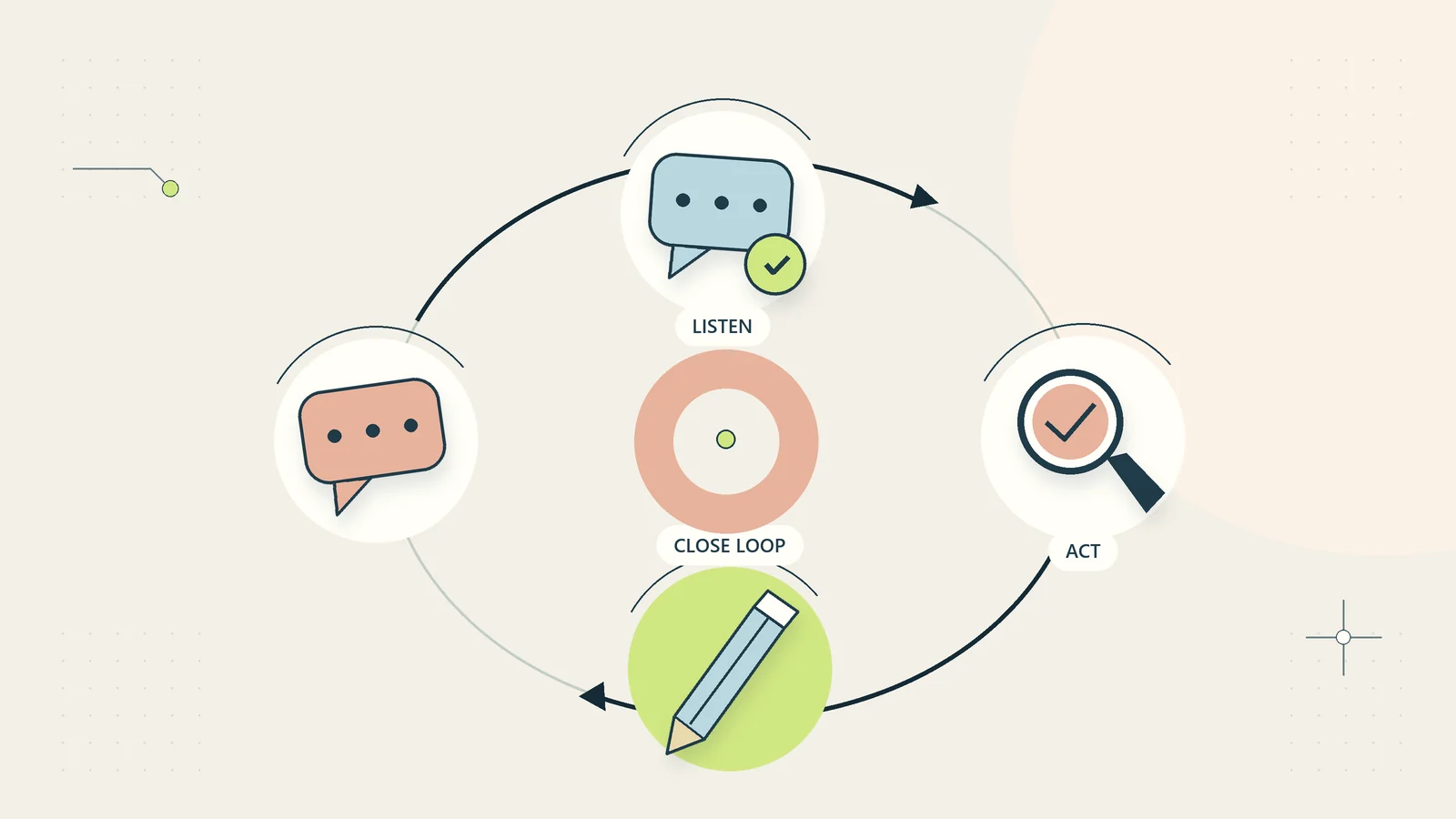
Customer feedback becomes useful when it changes a decision and the customer can see what happened next. Collecting comments is only the beginning. A small business needs a reliable route from a customer’s experience to a reviewed issue, an owned improvement, and an honest response.
The goal is not to implement every suggestion. Customers can describe a real problem while proposing a solution that would create other problems. Your job is to understand the difficulty, investigate it, decide what to change, and avoid leaving people with an implied promise nobody intends to keep.
A feedback loop can operate with a simple first-party form, a shared register, and a regular review. The design matters more than the software. Start with one part of the customer journey where the team can act on what it learns.
Define the decision before writing a survey
Ask what you want to understand and what decisions the answers can influence. “We want more feedback” is too vague. “We want to know why customers cannot finish the download recovery process” points to a specific experience and a set of possible changes.
Describe the journey stage, the people affected, and the evidence already available. A feedback request after successful delivery will mainly hear from people who reached that point. It will miss some people who abandoned the process earlier. That limitation should affect how you interpret the results.
Choose a manageable question. A small team can investigate whether instructions are unclear more readily than a broad demand to explain everything customers think about the business. Keep the review connected to someone who can authorize an improvement.
The UK government’s guidance on measuring user satisfaction discusses feedback at different stages, including the end of a service experience. Its government-service context is distinct from a commercial business, but the timing question is useful: which experience has the respondent actually completed?
Offer several routes without creating several queues
Customers may give feedback in support messages, cancellation explanations, product reviews, direct replies, or a dedicated form. You do not need to force every person into a survey. You do need a way to bring relevant observations into one review process.
Give each feedback item an identifier and link it to its original context. Avoid copying sensitive customer details into a broadly shared improvement board. Store a concise problem description and use an access-controlled reference when the original conversation is necessary.
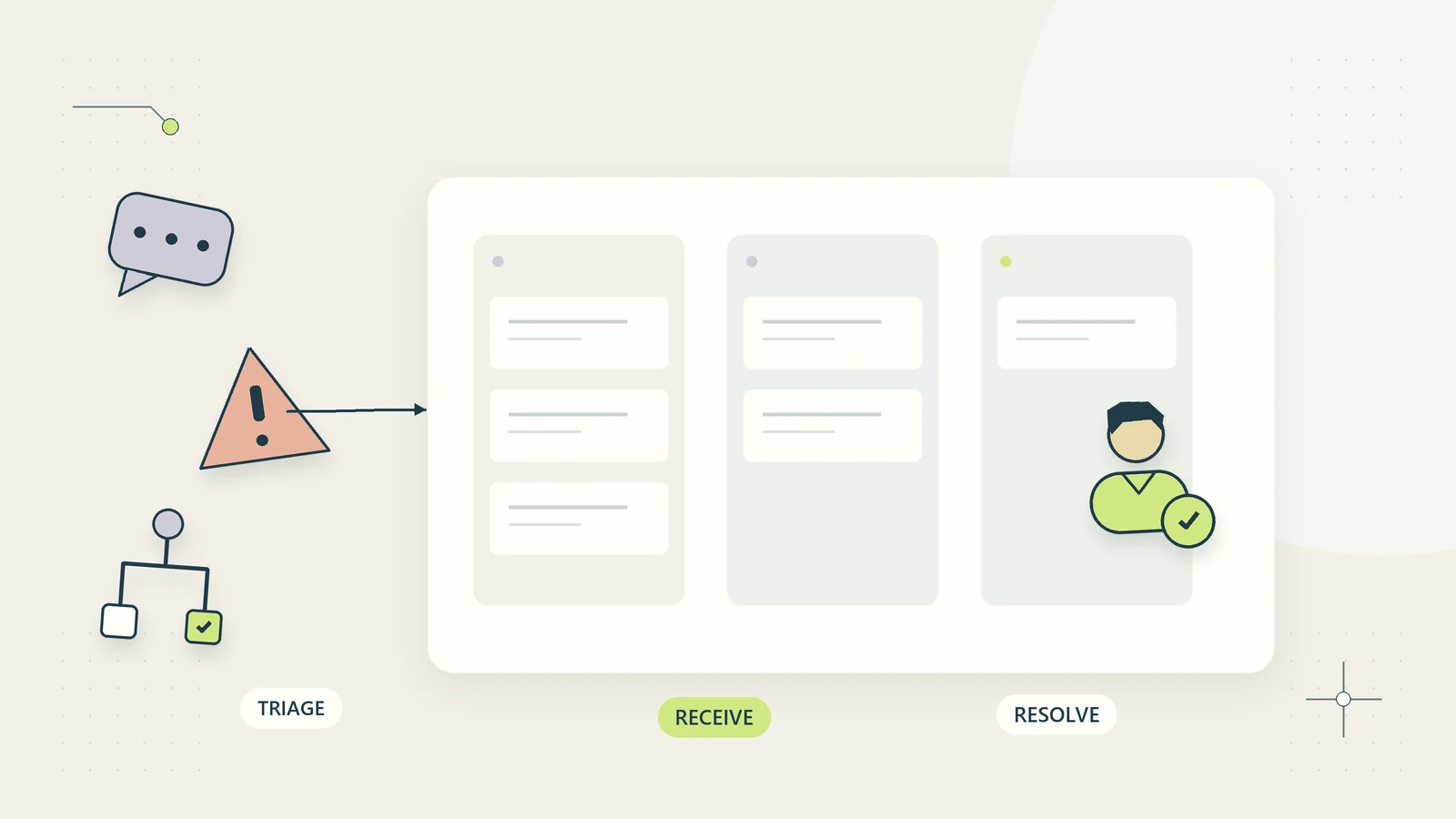
Separate feedback collection from urgent support. Someone reporting a failed delivery may need help immediately. A notice that their comment will be reviewed next month is not an adequate service response. Route the active problem through the customer complaint triage process while preserving the underlying improvement signal.
One observation may have two records: a service case for the individual and a linked product or process issue for wider investigation. Explain that distinction internally so closing the service case does not accidentally delete the improvement work.
Ask questions people can answer accurately
Focus on recent behavior and concrete friction. “What were you trying to do?” and “Where did you get stuck?” usually reveal more operational detail than “How can we be world-class?” A rating can help describe a pattern, but it rarely explains the cause by itself.
Use plain wording and ask one thing at a time. A question about speed, friendliness, and accuracy cannot show which dimension shaped the answer. Provide an optional text field rather than requiring a detailed essay before the customer can finish.
Avoid leading language such as “How helpful was our excellent new guide?” Let people report that they did not use the guide or could not find it. Include an appropriate not-applicable option when the question assumes an experience some customers have not had.
Before publishing, ask someone unfamiliar with the project to explain what each question means. If they interpret “completion” as placing an order while your team means receiving the product, revise the wording. A small comprehension test can prevent a large collection of ambiguous answers.
Explain what happens to the information
Tell people why you are collecting feedback, whether contact details are optional, and what they can expect afterward. Do not imply that a comment automatically creates a support ticket if nobody will monitor it for urgent help. Provide the correct support route beside the form.
Collect only information needed for the stated purpose. An anonymous comment about confusing instructions usually does not need an address, date of birth, or a copy of a payment document. If investigation requires an order reference, ask for that reference through the appropriate private channel.
The UK Department for Education’s service feedback guidance distinguishes ordinary service feedback from user research. Apply that distinction thoughtfully: a short optional comment form and a recorded interview need different preparation and handling. Applicable privacy and consent requirements depend on the situation and jurisdiction.
Do not add respondents to marketing messages merely because they supplied feedback. If you want permission for a follow-up research conversation, ask separately and describe its purpose. Keep the customer’s service access independent from an optional promotional choice.
Build a register around problems and evidence
The register should make a review possible without rereading every original conversation. Preserve the customer’s meaning, distinguish it from the team’s interpretation, and keep the source accessible to authorized reviewers.
| Field | Useful entry | Common weakness |
|---|---|---|
| Customer’s goal | Recover a purchased file on a new device | “User unhappy” |
| Observed difficulty | Recovery link wording was misunderstood | “Needs better UX” |
| Journey stage | After payment, before first download | No context |
| Evidence | Case reference and relevant quotation permission if needed | Untraceable summary |
| Severity | Customer cannot access the purchased material | Loudness of complaint |
| Owner and next review | Named person and date | Unassigned backlog |
Use a short category list that supports decisions: instructions, access, reliability, billing, usability, and requested capability, for example. Add categories when a meaningful pattern appears, rather than creating a separate label for every message.
Keep the original observation separate from a proposed solution. “Could not locate the download” is evidence. “Build a mobile app” is one possible response, and often a disproportionate one.
Triage for urgency before counting popularity
Review new feedback for immediate customer harm, possible security exposure, active delivery failures, and time-sensitive obligations. These issues may require action even when only one person has reported them. A popularity vote is a poor way to decide whether an exposed document needs attention.
Then distinguish recurring friction from an isolated preference. Look for similar goals and failure points across different channels. Five comments copied from the same incident are not five independent confirmations of a general pattern. Conversely, quiet abandonment may be more important than a large number of enthusiastic feature requests.
For each item, choose a next state: investigate, fix a confirmed issue, clarify existing guidance, consider later, or decline with a reason. An open state should have a review date. “On the roadmap” should mean there is an actual planned commitment, not a polite phrase used to end a conversation.
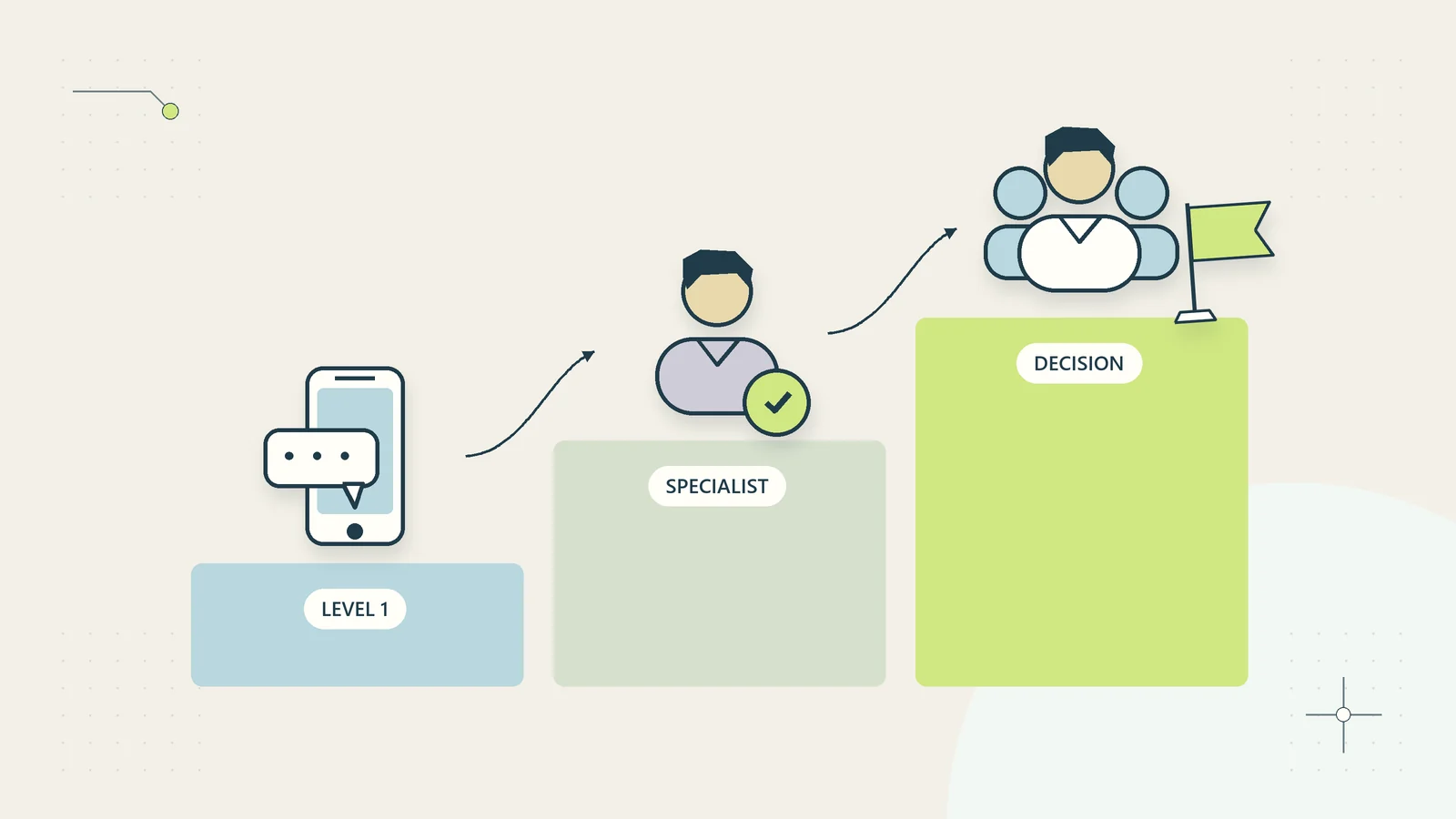
When the issue needs authority beyond the current owner, follow a clear client escalation process. Escalation should transfer the decision and its evidence rather than simply add more people to an email thread.
Turn a pattern into a testable improvement
Write a problem statement before choosing the solution. Include the affected customer, the situation, the difficulty, and the evidence that makes the problem worth addressing. Keep uncertainty visible. “We suspect the wording causes confusion” is more honest than “Customers need a redesign” when you have not investigated alternatives.
Define a small change and a way to inspect its effect. If customers misunderstand a recovery email, you might test a clearer subject line, a more explicit link label, and one screenshot. You do not necessarily need a new platform or a long development project.
Assign a person to implement the change and a different review responsibility where practical. Include accessibility, language clarity, and edge cases in the check. A revised instruction that helps desktop users but hides the recovery route on a phone has only moved the problem.
Record what would cause you to reverse the change. A feedback loop becomes a learning process when it can acknowledge that a well-intentioned improvement failed. Preserve the earlier version so recovery is possible.
Close the conversation honestly
If the customer expects a response and has provided an appropriate contact route, explain what you understood and what decision was made. Keep the reply proportional. A concise answer with a specific next step is more useful than a long expression of appreciation followed by uncertainty.
A useful response might say: “You reported that the recovery link looked like a marketing message. We changed its wording and added a reference to the order. Your original download remains available through the same account page.” This describes a completed change without claiming that every related problem has been eliminated.
When declining a suggestion, explain the relevant boundary. You may support one file format to keep the product maintainable, or avoid storing additional personal information. A clear limitation is better than an indefinite promise that the request may arrive someday.
Do not disclose another customer’s information while explaining the outcome. Aggregate learning can be shared publicly, but identifiable examples need appropriate handling. Let the team see the improvement history while protecting the individuals who helped reveal it.
A hypothetical feedback loop in action
Consider a small business selling downloadable operating templates. Three customers say a worksheet is broken because they cannot type into a protected calculation cell. Support helps each customer locate the input sheet. The product owner groups the reports under one suspected usability issue.
The team reviews the worksheet and finds that the first visible tab contains instructions written for experienced spreadsheet users. It does not clearly distinguish input cells from calculated cells. Rather than removing protection everywhere, the owner proposes a visible input legend and a sample completed row.
The revised file is tested on a clean copy. A reviewer follows the instructions without receiving verbal help. Support updates the relevant self-service knowledge-base article and records which product version contains the change. Customers with older files receive an accurate explanation of how to access the updated version if their purchase permits it.
This example is hypothetical. It illustrates a process, not a measured result. The team still needs to observe whether confusion falls and whether the new legend creates problems for customers using different spreadsheet applications.
Measure the loop rather than the size of the inbox
Useful measures include the time from feedback receipt to initial review, the age of unresolved high-impact items, the proportion of investigated items with a documented decision, and recurrence after a change. Report counts alongside rates when the sample is small.
Track where feedback comes from. A satisfaction score from successful repeat customers cannot represent everyone who considered buying. Similarly, a surge in negative comments after inviting feedback may reflect better visibility rather than a sudden deterioration in the service.
Review both customer experience and operational burden. If the team spends hours tagging minor comments while serious issues age, simplify the register. If every suggestion becomes a project, strengthen the decision criteria. The objective is informed action, not a perfect archive of opinions.
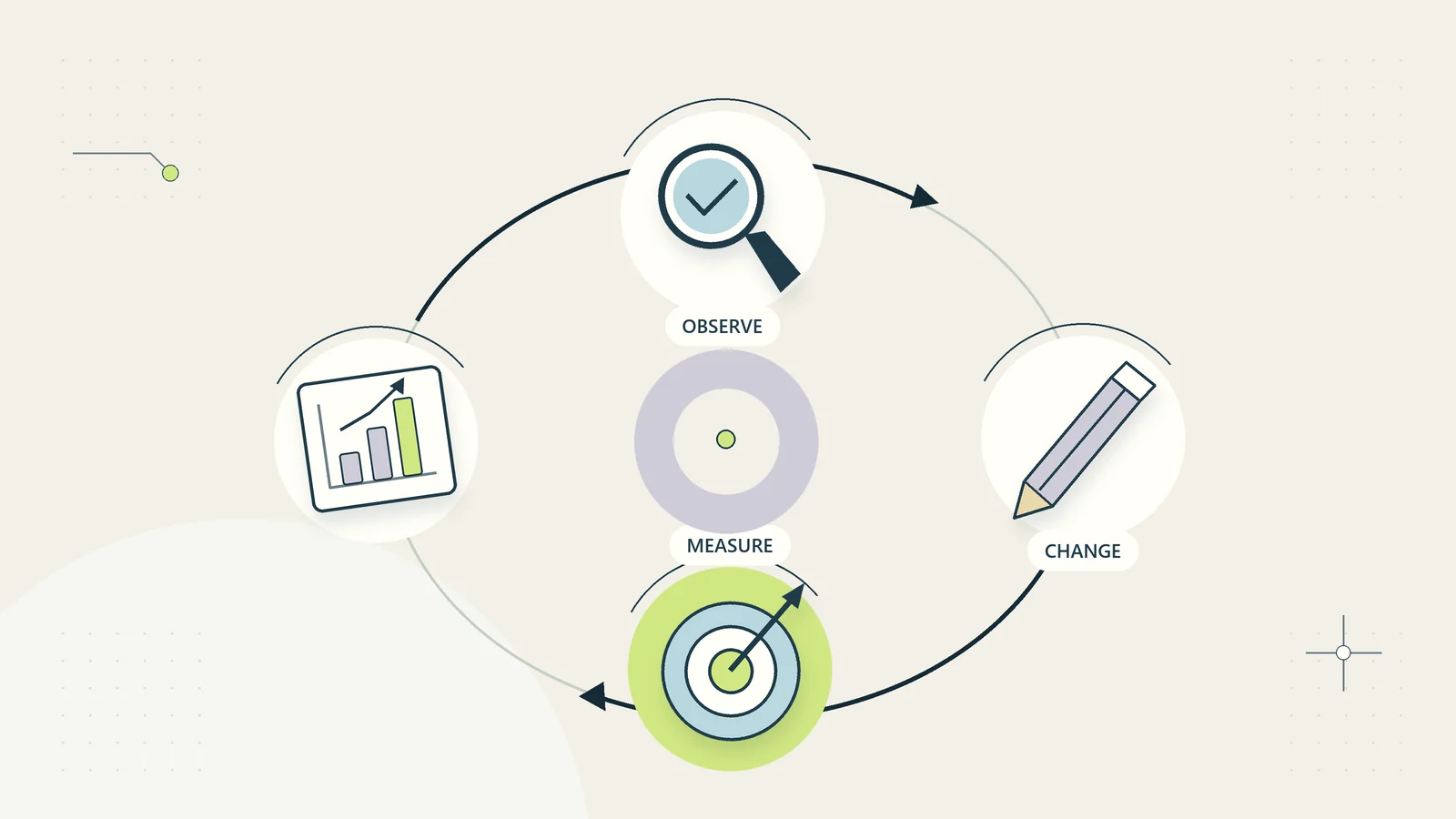
Use the continuous improvement routine to keep review regular and bounded. A small weekly review with clear decisions can be more sustainable than a large quarterly exercise that leaves the same items unresolved.
Check for missing voices and duplicate evidence
Feedback is evidence about the people and experiences observed, not an automatic census of the market. Before interpreting a pattern, ask who had an opportunity to respond, who could use the collection channel, and who may have left before the question appeared.
A customer who successfully downloaded a product can comment on the file. Someone who abandoned checkout cannot answer that question from experience. Keep those groups distinct rather than blending them into one satisfaction number. If you need to understand abandonment, design an appropriate separate investigation without assuming every departure represents dissatisfaction.
Also inspect duplicates. A single person may submit a form, reply to an email, and mention the issue in a review. Preserve the relevant context while avoiding an inflated count of independent reports. For an anonymous channel, acknowledge that exact deduplication may not be possible.
Include low-frequency but consequential observations in the review. One report that instructions cannot be used with a screen reader may reveal an important problem even if most respondents report no difficulty. Frequency, severity, and ability to act are separate dimensions.
Record the limitations beside the decision. A statement such as “This pattern appears in recent support contacts; we have not assessed customers who did not contact support” makes the conclusion easier to evaluate and helps the next review ask a better question.
Run a four-week pilot
Choose one journey stage and one accountable owner. During the first week, collect a baseline from existing messages and test the questions. In the second week, introduce the feedback route and verify that urgent support is separated correctly.
During the third week, investigate one recurring problem and implement a limited change. In the fourth, review both the evidence and the process: did customers understand the question, did the team make a decision, and did the appropriate people hear the result?
Agree on stop conditions. Pause a survey that collects unnecessary sensitive data, sends duplicate requests, or promises follow-up the business cannot provide. Fix those problems before increasing volume. More responses are not beneficial when the receiving process is unreliable.
Retain the simplest loop that produces useful decisions. Customers should be able to explain their experience without becoming unpaid consultants. Your business should be able to learn from them without promising every request, creating another unmanaged queue, or confusing feedback with marketing permission.
Sources and editorial method
Checked on October 15, 2026. Sources are the UK government’s measuring user satisfaction guidance and the Department for Education’s service feedback guidance. These sources address public-service practice and are used for limited concepts about feedback timing and collection. The register, business examples, decision rules, and pilot are original guidance. No customer outcomes or survey statistics are claimed.