How to write SOPs your small business will actually use
Write useful standard operating procedures with a complete example, a reusable template, exception rules, and a practical maintenance process.
A useful standard operating procedure tells a person how to complete a recurring piece of work, recognize a problem, and leave evidence that the result is correct. It should help someone perform the task under ordinary working conditions. A long document that describes an ideal process but ignores the exceptions people encounter will not do that job.
For a small business, the best starting point is a procedure that removes a repeated source of confusion: who approves a new supplier, what makes a client ready for delivery, or how a finished project reaches billing. This guide includes a reusable SOP structure and an illustrative example. It does not assume you need another application or a formal process department.
Decide whether the work needs an SOP
Document a process when it repeats, crosses a handoff, creates meaningful risk, or depends too heavily on one person’s memory. A weekly client-status review is a stronger candidate than a genuinely unique discussion. The procedure should address a recurring decision or action, not turn every small interaction into paperwork.
Ask what a colleague would need if the usual owner were unavailable tomorrow. If the answer is “access to the same dashboard and a clear checklist,” a short SOP may be enough. If the answer involves judgment, negotiation, or expertise, document the boundary and escalation route instead of pretending that a checklist can replace the skill.
Atlassian’s process-documentation guide treats documentation as a way to make the work and its responsibilities understandable. The practical approach here is to make the procedure usable at the point of work, then maintain it as the process changes.
Separate the outcome from the instructions
Begin with the result the procedure is meant to produce. “Prepare the client handoff” is too open to interpretation. “The delivery owner has accepted the project, the agreed scope is linked, and required access requests are recorded” gives the reader a completion test.
Next define the trigger. Does the procedure start after a signed agreement, an approved internal request, or a scheduled review? List prerequisites that must already be true. Without this boundary, staff may start work too early, repeat it unnecessarily, or assume that another person checked an important condition.
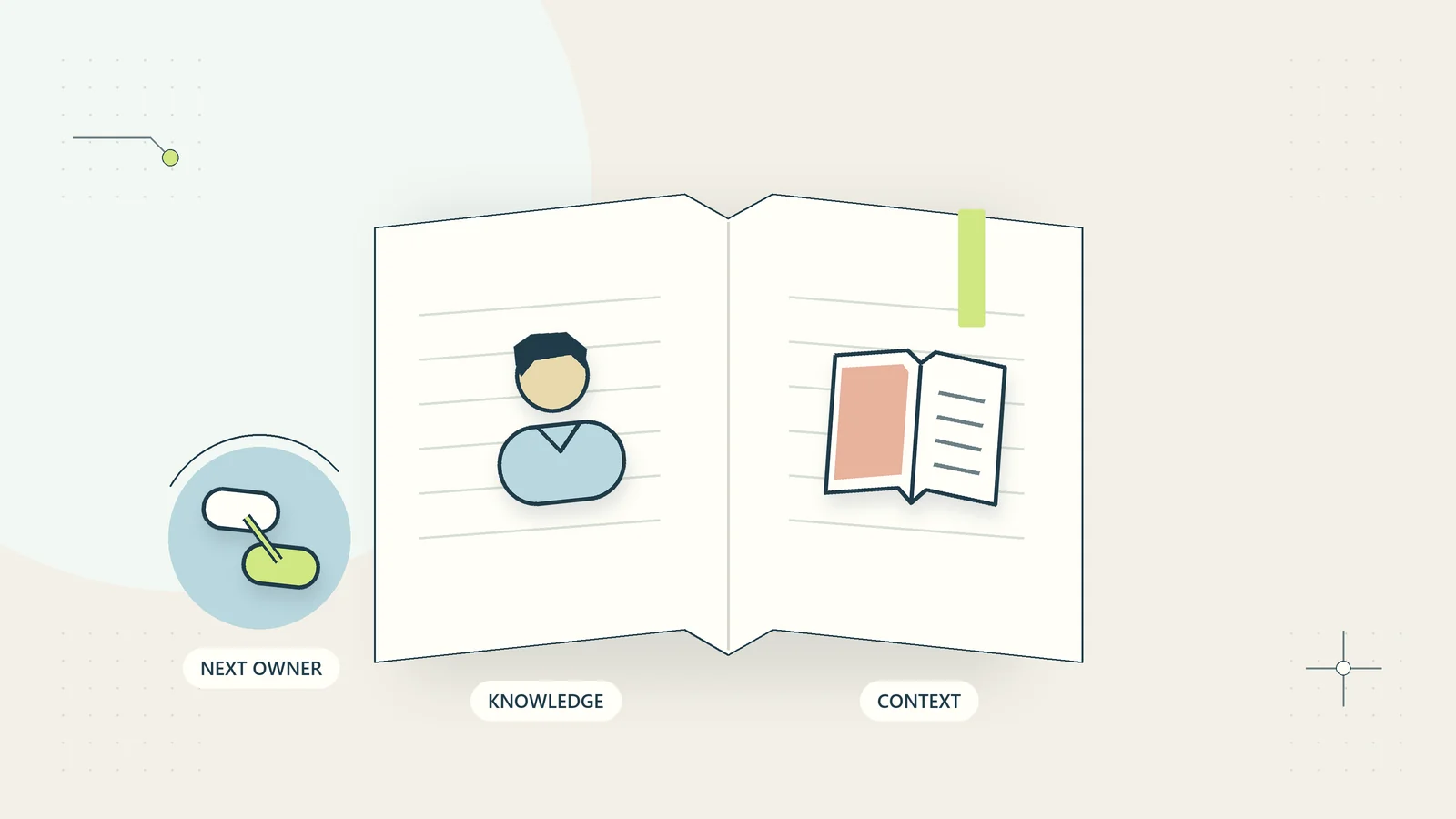
Then explain where the procedure ends. Name the next owner or system, and describe the evidence they receive. A handoff is not complete merely because someone sends a message. If the receiving team must acknowledge responsibility, include that acknowledgement in the completion criteria. This makes the SOP useful across departments rather than only within one person’s task list.
Observe the process before writing it
Ask an experienced employee to perform an ordinary case while explaining their choices. Watch where they search, compare records, pause, or contact someone. Those moments often contain the knowledge missing from an existing checklist. Record the sequence without collecting passwords, customer documents, or unnecessary personal details.
Repeat the exercise with a difficult but common case. Perhaps the client has two similar accounts, a requested file is incomplete, or an approver is away. If the procedure covers only the simplest case, the reader will abandon it as soon as reality becomes inconvenient.
Do not copy every movement of the mouse. Describe the purpose of a step and the evidence needed to proceed. Screenshots can help locate an unfamiliar control, but a procedure built entirely around screenshots becomes fragile when a vendor changes its interface. Use a current screenshot where it resolves a real ambiguity, and keep sensitive data out of it.
A reusable SOP template
Use the following structure as a working template. Remove fields that do not help the reader, but keep ownership, exception handling, and completion evidence. Store one approved version where the team already looks for instructions.
| Field | What to write |
|---|---|
| Title and identifier | A recognizable action and a stable reference |
| Purpose | The business outcome and why it matters |
| Owner | The person responsible for maintaining the procedure |
| Trigger | The event or schedule that starts the work |
| Prerequisites | Access, approval, and information required first |
| Inputs | The records the reader should consult |
| Steps | Actions, checks, and decision points in order |
| Exceptions | Stop conditions and the escalation owner |
| Completion evidence | What proves the result is ready |
| Handoff | Who receives responsibility next |
| Version and review | Approval date, change history, and review trigger |
Put the most frequently needed information near the top. A reader should not search through a company history to discover whether they can proceed. Link to supporting policies instead of copying them into every procedure. If a policy changes, duplicated text can leave several contradictory instructions behind.
Illustrative SOP: preparing a new client for delivery
Consider a fictional design studio onboarding a new client. The procedure begins when an authorized person records that the agreement is accepted. Its purpose is to create a delivery-ready project, not to decide whether the business should accept a client or change the commercial terms.
The prerequisites are an approved client identifier, a link to the accepted scope, a named internal owner, and permission to request the required information. The operator checks those facts in their authoritative systems. A forwarded email saying “looks good” does not substitute for a defined acceptance record.
The first step is to find the existing client record and confirm the identifier. If there are two plausible matches, stop and ask the record owner to resolve them. The second is to create or update the onboarding checklist, linking the accepted agreement rather than copying its confidential content into task descriptions.
The third step assigns the delivery owner and records the first milestone. The fourth prepares access requests using the business’s approved sharing method. The operator does not ask the client to paste passwords into a general form. The fifth sends the approved welcome information and records how the client can raise questions.
Completion requires the delivery owner to acknowledge responsibility and any blocking prerequisites to be resolved or explicitly accepted by the authorized person. The handoff record states what is ready, what remains open, and who owns each open item. The procedure stops if acceptance is withdrawn, the client identity is uncertain, or access requirements exceed the approved scope.
Write decision rules a new colleague can apply
Avoid instructions such as “check everything,” “use your judgment,” or “escalate if necessary” when you can describe the actual decision. State the condition, expected evidence, permitted action, and person to contact if the condition is not met.
For example, replace “check the files” with “confirm that each required category has a readable file linked to this client and period; route an unknown category to the reviewer.” This does not claim that the operator can assess the professional adequacy of every document. It makes the administrative check specific while preserving the expert review boundary.
Use explicit stop rules. If a process involves a payment-detail change, an uncertain recipient, or an active preservation hold, the SOP should state what the operator must not continue doing. The exact verification method and authority depend on the business and its obligations. A procedure should reveal that dependency rather than hide it in a vague final disclaimer.
Make exceptions part of the normal workflow
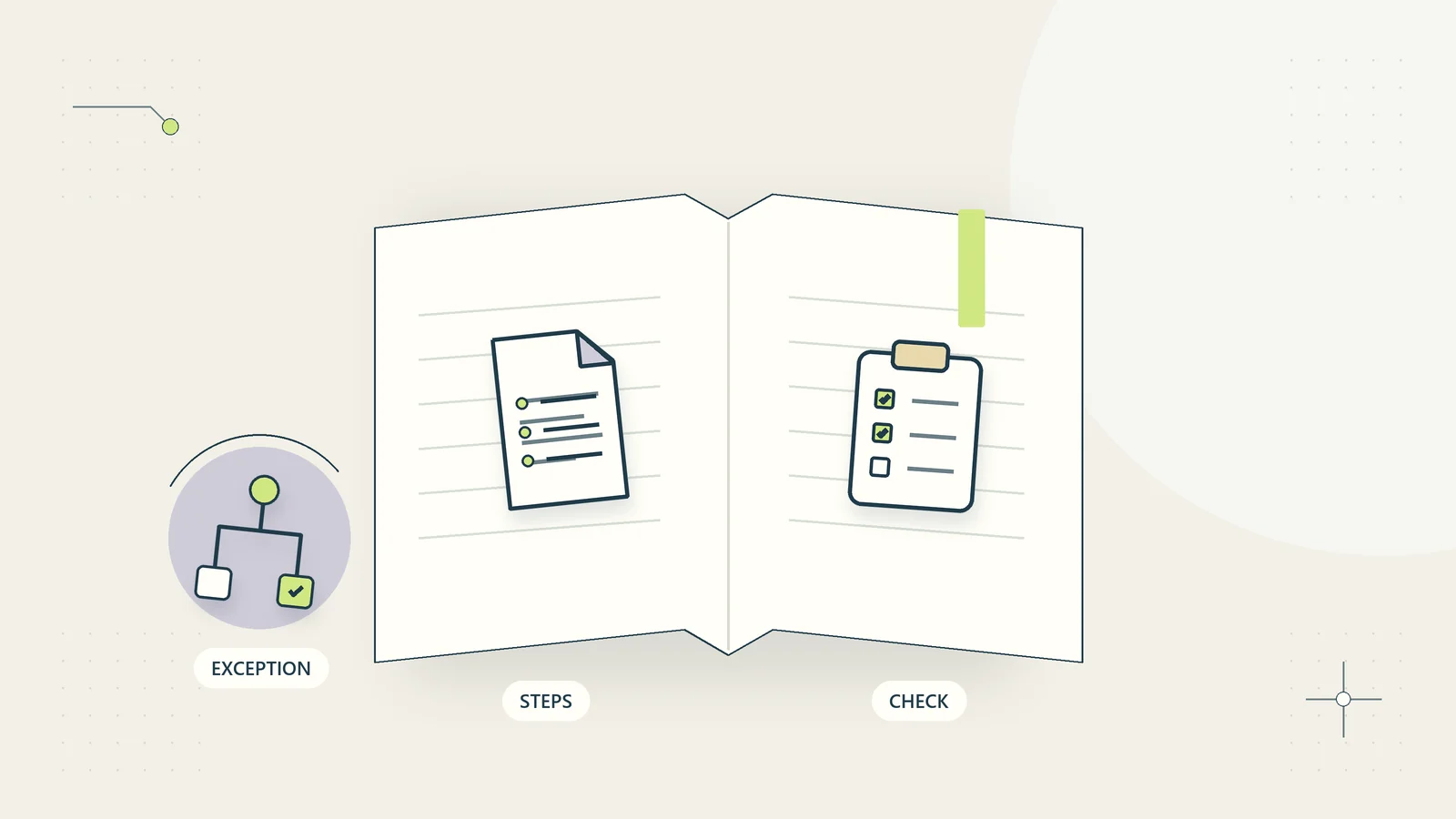
An exception is a case that cannot proceed under the ordinary rules. It is not necessarily an employee error. Missing information, conflicting records, unavailable systems, and a changed customer request are ordinary operating conditions. Give the reader a way to record them without inventing a workaround.
An exception record should include the process identifier, current step, reason, responsible person, date raised, and next review point. Keep private documents in their approved storage location and link them through controlled references. A queue full of copied attachments is harder to secure and maintain than one with the minimum information needed to act.
Specify what the reader can do while waiting. Some work can continue safely in parallel; some must stop completely. Also define how the case returns to the ordinary process after resolution. Otherwise staff may recreate the case, lose its history, or act on an approval that no longer matches the current facts.
Test the SOP with someone who did not write it
Give a colleague a synthetic case and the proposed procedure. Ask them to complete it without coaching. Watch where they hesitate, infer missing facts, or choose a different path. Their questions are useful test results, not evidence that they failed to understand a perfect document.
Test an ordinary case, a missing prerequisite, a duplicate, a changed request, and an unavailable approver. Check whether the person knows when to stop and where to record the problem. If the process depends on a specific application, test what happens when the application is unavailable or a menu has changed.
Record the issues and revise the instructions before approval. A procedure can be grammatically clear and operationally incomplete. The strongest completion test is whether another authorized person can perform the work and leave the evidence the next owner needs. Repeating the writer’s demonstration from memory does not establish that the written procedure works independently.
Keep the format short enough to use
Length should follow the work. A routine daily check might fit on one page. A more complex procedure can use a concise main path with linked exception instructions. Do not remove an essential decision just to meet an arbitrary page limit, but do remove background information that belongs elsewhere.
Use action-oriented headings, numbered steps for a sequence, and tables for decisions that are easier to compare. Keep warnings close to the step they affect. A critical stop condition at the end of a document may arrive too late for a reader following the instructions from the top.
Atlassian’s internal-documentation guidance offers further context on organizing shared knowledge. You can apply the underlying idea in many tools: make the approved procedure easy to find, identify its owner, and avoid several competing copies. A searchable folder can be more useful than an elaborate knowledge platform nobody maintains.
Assign ownership and review triggers
The owner is responsible for the procedure’s accuracy, not necessarily for performing every case. Name a backup if the process is important to continuity. Give staff a simple way to report an unclear or outdated instruction, and explain who decides whether the procedure changes.
Review when a system, responsibility, policy, input, or recurring exception changes. You can also schedule a periodic check based on how quickly the process evolves. A calendar reminder alone does not make a review meaningful. The reviewer should test current instructions against current work and record what changed, or confirm that the procedure still fits.
Use a short change history with version, date, reason, and approver. Distinguish an editorial correction from a change in authority or process. If a new version affects ongoing cases, explain which cases use the old instructions and which must move to the new ones. This prevents a tidy document update from creating an untidy operational transition.
Connect an SOP to automation carefully
An SOP can identify which actions are suitable for software: validate a required field, create a draft task, or route an exception. It also identifies decisions that should remain with people. The automation should follow that division rather than treating every written step as permission to act autonomously.
Map each automated action to a procedure step and an expected record. Keep the workflow version and SOP version related so a future maintainer can understand the intended behavior. When software changes, check whether the procedure and staff training also need updating.
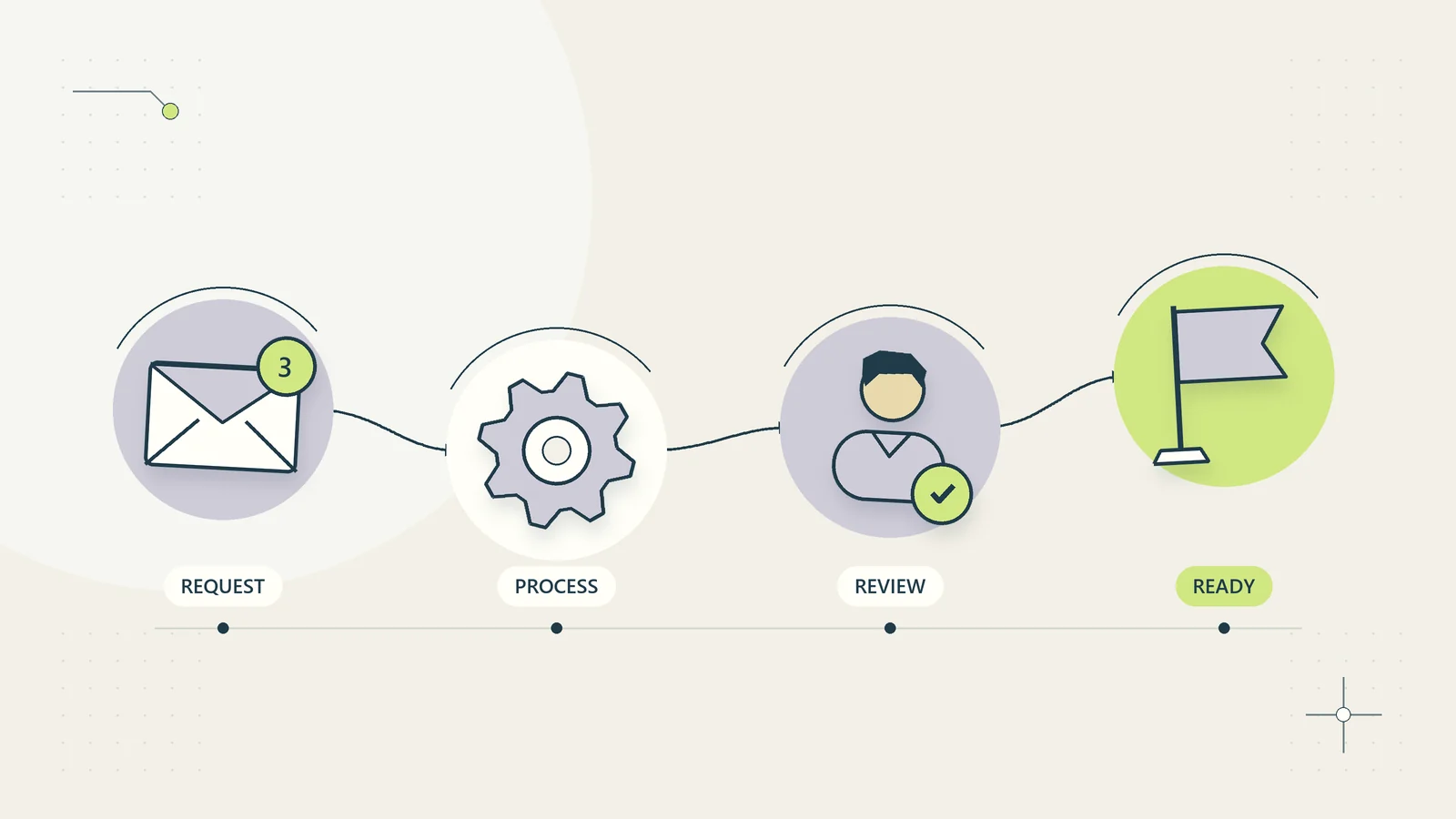
Start with the business process automation guide if you are moving from documentation into integration. The client onboarding blueprint shows how a recurring handoff can be broken into explicit stages. A documented process still needs suitable permissions, current vendor access, and acceptance testing before live automation.
A practical way to begin this week
Choose one procedure that repeatedly generates questions. Ask the current owner to demonstrate a normal case and one exception, then draft the purpose, boundary, steps, and completion evidence. Test the draft with someone else before deciding which software, if any, would make it easier to follow.
Keep the first release modest. One usable SOP with a clear owner is more valuable than fifty documents created to fill a folder. Expand when the team can show that the procedure reduces ambiguity and survives changes in staff or workload. For a broader review of operational gaps, use the readiness audit or the administrative workload guide.
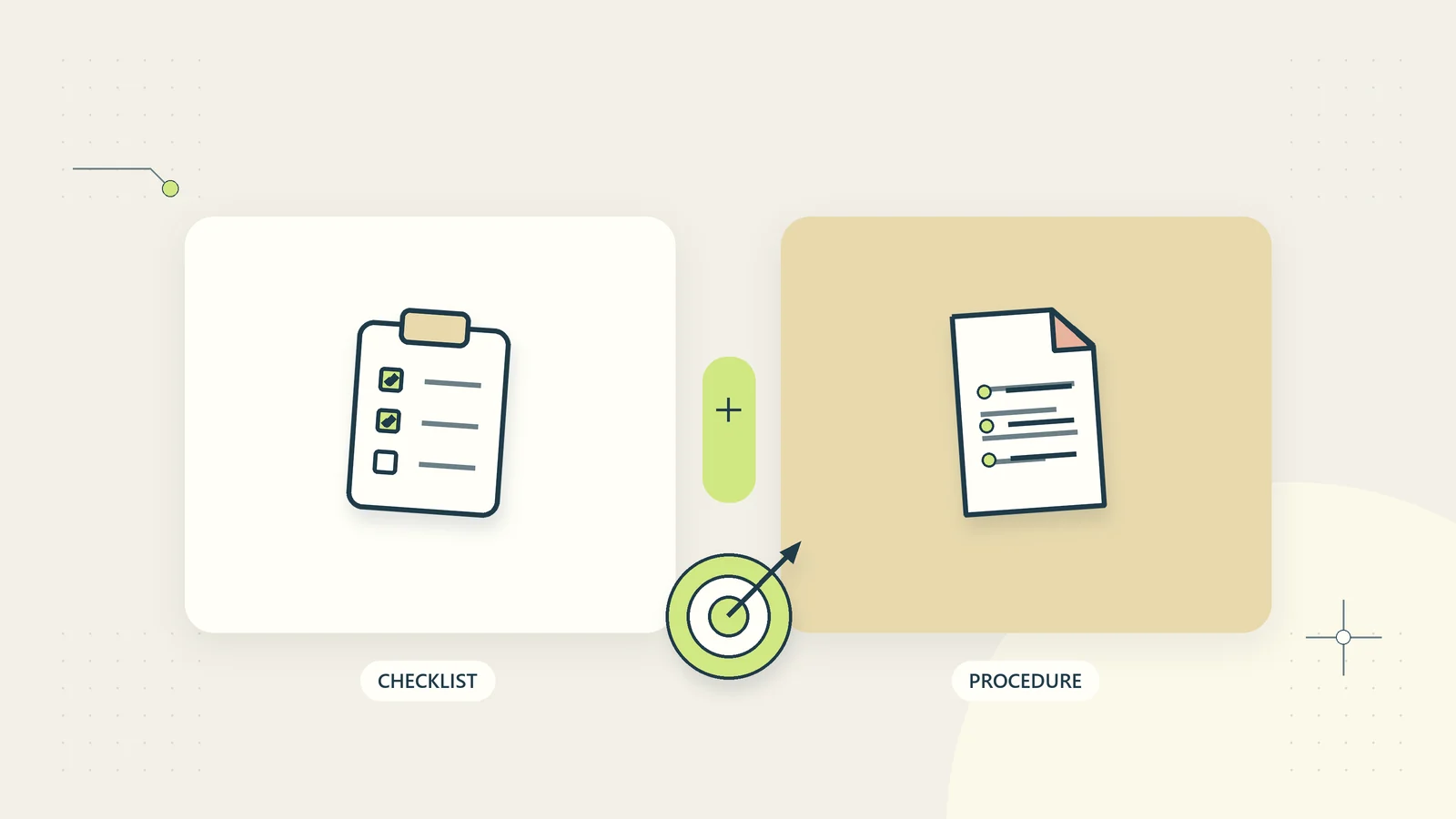
If the team already has a checklist, compare its purpose with the checklist versus SOP guide. A short checklist can support execution while a longer procedure explains exceptions and authority. Linking the two is usually easier to maintain than copying the same instructions into several places. Give the shared source an owner so a future change reaches every place where the procedure is used.
Sources and editorial method
Research checked October 15, 2026. The linked Atlassian resources provide context on process and internal documentation. The SOP template, design-studio example, and testing approach are original illustrative planning materials. Adapt them to actual responsibilities and local requirements; they are not a certification or a substitute for professional expertise.