Build a manufacturing quality issue log with clear ownership
Organize manufacturing issue evidence, containment, investigation, authorized disposition, corrective actions, and verification in one traceable record.
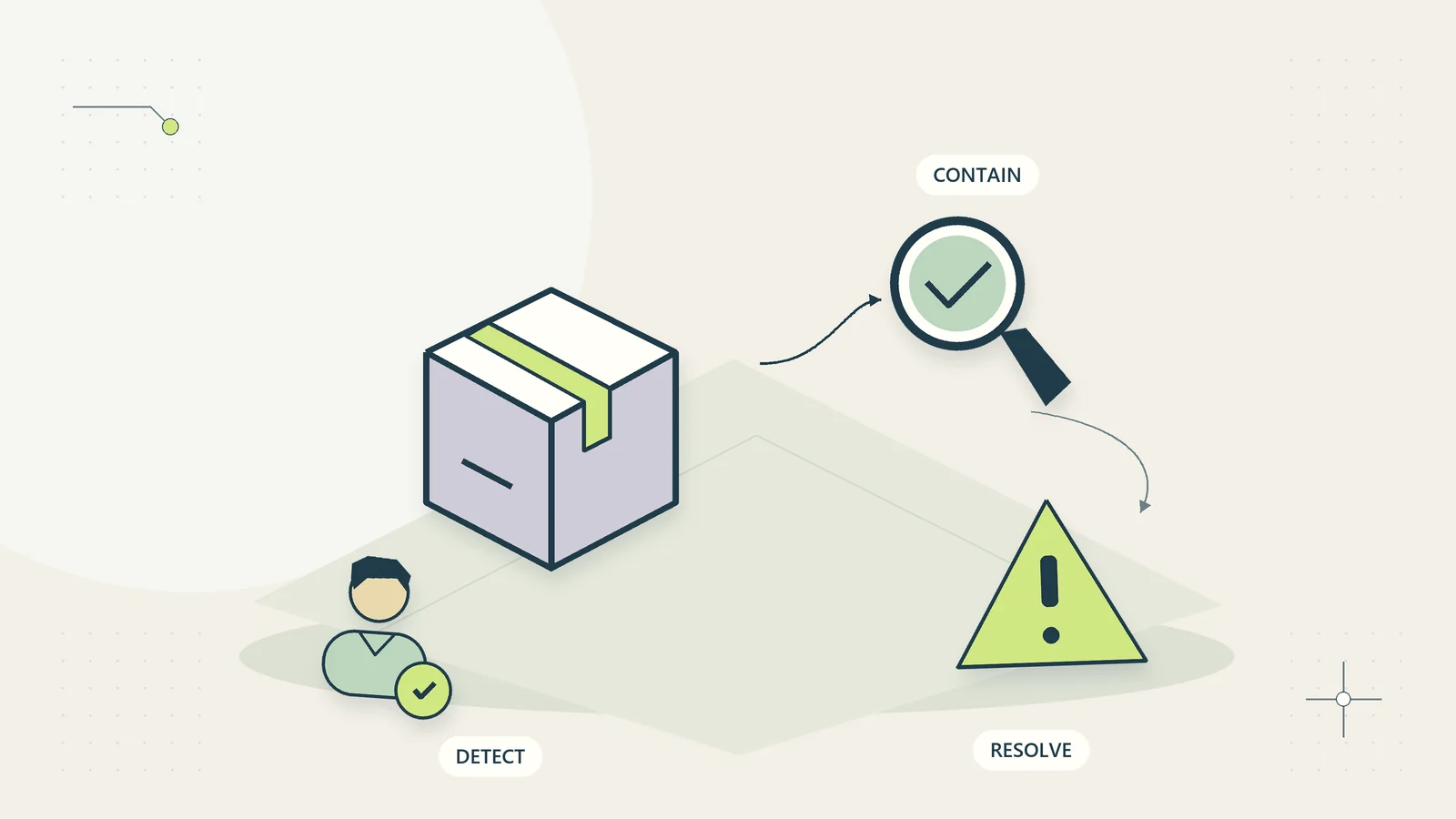
A manufacturing quality issue log should explain what happened, what material may be affected, what was done immediately, and who can authorize the next step. It should help the business contain uncertainty and learn from evidence. A list of red, amber, and green rows is not enough if nobody can tell whether a batch is safe to release.
The log is an administrative control connecting observation, containment, investigation, disposition, corrective work, and verification. It does not replace competent technical judgment, required quality procedures, product safety controls, or regulatory reporting. Those requirements depend on the product, industry, location, and customer agreements.
This guide offers a practical structure for a small manufacturer’s records. Its examples are hypothetical. The proposed fields and review routine are original operating recommendations, not an assertion that a business has achieved certification or met a particular quality standard.
Give every issue a stable identity
Assign an issue reference when a concern is first recorded. Connect it to the relevant product, drawing or specification revision, batch or lot, work order, process step, observation time, and reporting person where those references are applicable.
Do not rely on a photograph filename or a machine operator’s memory as the only connection to the affected work. A similar-looking defect may occur on different products, and a product may have several revisions in circulation.
Separate the issue reference from the affected material references. One issue can involve multiple lots, and one lot can be involved in several investigations. The record should support those relationships without forcing staff to duplicate the entire investigation.
Use the small-business data dictionary guide to define ambiguous fields. If one person uses batch to mean a production run and another means a delivery shipment, the issue log will not support reliable decisions.
Describe the observation before naming a cause
The first description should state the observable concern and the expected condition. Include the relevant specification reference and evidence location, when available. Distinguish a measured result from a customer’s report and both from an investigator’s hypothesis.
Avoid phrases such as operator error or bad material as the initial explanation. They can prematurely narrow the investigation and make later reviewers assume that a cause has already been established. A precise observation creates a better starting point.
For example, record that a stated dimension measured outside the approved range using an identified method, rather than writing that the machine made the part wrong. The relevant technical owner must determine whether the measurement, specification, setup, material, or another factor explains the finding.
Preserve the original report when adding clarification. Correcting an inaccurate detail is appropriate, but the record should show the correction rather than silently rewriting the evidence history to match a later conclusion.
Separate containment from final disposition
Containment is an immediate action intended to control the situation while the issue is understood. Final disposition is the authorized decision about affected material or work. These are separate stages with different evidence.
The log should show what is on hold, where it is located, who controls it, and how staff can identify its current status. An internal hold label should agree with inventory and production records so that material is not inadvertently moved through the normal route.
Do not assume that entering a hold in a spreadsheet physically controls the material. The business needs a defined procedure connecting the digital record to the actual stock, work in progress, or shipped product.
Release, rework, scrap, return, or other dispositions need authorization under the applicable quality system. The issue log can record the decision, its basis, and the responsible person. It should not let an administrator release material simply because all form fields are complete.
Assign roles for the decisions that matter
Identify the person responsible for immediate coordination, the technical investigation, the material disposition, customer communication, and verification. One small team member may cover several roles, but the record should make each responsibility visible.
Define backup cover and escalation when an owner is unavailable. A time-sensitive hold should not depend on one person’s private inbox. At the same time, lack of availability should not expand an administrator’s authority beyond their competence.
| Responsibility | Practical output | Boundary |
|---|---|---|
| Issue coordinator | Complete references and current next action | Does not determine technical acceptability |
| Containment owner | Confirmed hold and affected locations | Does not assume the investigation is complete |
| Technical reviewer | Evidence-based findings and proposed action | Distinguishes hypotheses from established results |
| Disposition authority | Recorded decision and required conditions | Follows applicable approval requirements |
| Verification owner | Evidence that the action was checked | Does not close solely because a task was marked done |
Record the authority used for a decision, especially when a customer approval or a specialist review is required. A name beside approved is less useful than a clear explanation of what was approved.
Build an evidence set people can inspect
Link the relevant inspection results, photographs, production records, instrument references, approved specifications, and communications. Keep files in a controlled location with appropriate access, rather than attaching different copies to several message threads.
Record the evidence date and its relationship to the issue. An image from a different production run should not become supporting evidence merely because it looks similar. If a source is uncertain, mark that uncertainty clearly.
ISO’s quality management overview describes a process approach and continual improvement. That broad context supports connecting observations to controlled follow-up; it does not tell you that a particular product can be released or that this log satisfies certification requirements.
The business audit trail guide can help structure changes to the record itself. A useful history explains who changed a decision field, when it changed, and which evidence supported the change.
Investigate causes without rushing to closure
The investigation should answer a defined question using evidence appropriate to the issue. It may need process observations, comparison of affected and unaffected work, equipment checks, supplier information, or specialist analysis. The necessary method depends on the problem.
Keep a hypothesis list when several explanations remain plausible. Record what would support or contradict each explanation. This is more transparent than writing a confident cause in the first hour and spending the rest of the investigation defending it.
Distinguish a correction to the affected work from an action addressing the cause of recurrence. Replacing a defective component may resolve one customer case without explaining why the defect occurred. Both actions can be necessary, but their purposes differ.
Do not force every small administrative discrepancy into a large investigation. Define proportionate escalation criteria based on potential impact, repetition, uncertainty, and applicable requirements. The objective is a useful investigation, not paperwork volume.
Connect actions to their intended effect
Each action should state what will change, who owns it, when it is due, which evidence will demonstrate completion, and how its effect will be reviewed. Avoid tasks such as improve quality that cannot be objectively checked.
If a procedure changes, identify the version, affected roles, training or communication required, and effective date. Updating a document does not establish that the new method is being followed on the shop floor.
ISO’s quality assurance overview describes ongoing monitoring, responsibility, and improvement as parts of a quality approach. Use that context to design a review loop rather than treating closure as the final administrative goal.
Keep temporary actions visible. An extra inspection step introduced during an investigation should have an owner and a review condition. Otherwise, it can become a permanent burden without anyone deciding whether it remains useful or whether the underlying issue has been resolved.
Make closure a verified decision
Closing an issue should require more than completed action checkboxes. Confirm that affected material has an authorized disposition, required communications are complete, evidence is retained appropriately, and the planned verification has been performed or explicitly scheduled under the approved procedure.
Write a short closure statement explaining the outcome. Include any remaining limitation or monitoring condition. An issue may be administratively complete while a longer-term effectiveness check remains open as a linked task; define how that relationship is controlled.
If verification shows that the problem persists, reopen or link a new issue according to the business’s procedure. Preserve the earlier conclusion and the new evidence. Reopening is useful information, not a reporting failure to conceal.
Avoid measuring quality solely by the number of closed issues. A team can improve that number by closing difficult cases prematurely. Review the age, impact, recurrence, and evidence quality of open and closed cases together.
Work through a hypothetical dimensional issue
Imagine a small manufacturer making brackets to an approved drawing. During a routine check, an inspector reports a dimension outside the stated range. Issue Q-047 records the part reference, drawing revision, lot, inspection record, and the point in production where the concern was observed.
The designated containment owner identifies and controls the potentially affected work under the established procedure. The team records the locations and quantities currently known, while marking the extent of the affected population as under investigation.
The technical reviewer checks the measurement evidence and relevant process records. Several explanations remain open initially. The log records them as hypotheses, rather than immediately blaming an operator or supplier. Any decision about additional inspection or material disposition follows the required authority.
After review, an authorized action changes a setup instruction and introduces a defined verification check. The document revision and responsible roles are recorded. The closure review confirms the disposition of the affected material and checks the evidence required by the approved action.
This example deliberately omits a technical diagnosis and acceptance threshold. Those details require competent product-specific judgment. The administrative lesson is that the evidence, physical controls, decisions, and follow-up stay connected.
Manage supplier and customer boundaries
An issue involving a supplier needs the purchase reference, supplied material identity, relevant specification, evidence, and the exact question or action requested. Do not send an unfiltered internal investigation folder containing unrelated customer or employee information.
If the supplier provides an explanation, record it as a source statement until the appropriate reviewer evaluates it. A supplier’s confident email is not automatically the final cause determination for your process.
Customer communication should use approved facts, a clear scope, and an accountable contact. Where there is uncertainty about impact, escalation, notification, or reporting, follow the applicable requirements and qualified review. A generic log should not attempt to make those determinations automatically.
Use the customer data sharing checklist to review recipients and minimum necessary information. The goal is to communicate useful evidence without exposing proprietary drawings, unrelated production records, or personal details unnecessarily.
Pilot the log on a defined product family
Choose a manageable area with clear existing procedures and accountable technical owners. Review recent issues to identify the information investigators repeatedly had to chase. Build the initial fields around those needs rather than copying a large enterprise form in full.
Test the log with several scenarios: a new concern, a duplicate report, an uncertain lot reference, an owner absence, a changed disposition, and a reopened issue. The test should show that the history remains understandable after a correction.
During the pilot, measure missing references, time to establish ownership, overdue containment reviews, and actions without verification evidence. Review actual cases behind each measure. Faster data entry is useful only if the next decision becomes better supported.
Stop expanding the system if hold status can be misunderstood, an unauthorized person can change disposition, or evidence links break when files move. Resolve those operating weaknesses before adding dashboards. A dependable issue log helps the business act on uncertainty and demonstrate what was actually decided.
Keep trend analysis tied to comparable evidence
Once the log is reliable, it can support a periodic review of repeated concerns. Group issues using definitions the team understands, such as process step, observed defect type, product family, or source of detection. Preserve a distinction between the observed category and the established cause.
Do not compare raw counts without context. A product with more reported issues may also have a much larger production volume or a more intensive inspection method. Where rates are useful, have the appropriate owner define the denominator and confirm that the records support the comparison. Label missing or uncertain data rather than presenting an apparently precise rate.
Review changes in reporting behavior as well. A team that begins recording small concerns consistently may show an increase in logged issues while gaining better visibility. Punishing that increase can encourage people to stop reporting. Ask what the examples reveal about detection, impact, and process performance before drawing a conclusion.
Use a short review pack containing the question being investigated, the relevant records, the limitations, and the decision required. A chart should lead to a specific investigation or improvement action, not merely decorate a monthly presentation.
For recurring concerns, check whether earlier actions were implemented and verified as intended. Similar symptoms do not automatically have the same cause, but the history can help investigators ask better questions. Link related issues without merging their evidence into one indistinguishable case.
Keep commercially sensitive and personal information out of broadly distributed trend summaries unless it is necessary for the audience. A process-level review often needs the category and action status, not an operator’s name or the complete customer complaint.
The purpose of analysis is to improve decisions about the work. Maintain enough detail to explain the pattern while keeping the issue log usable for the people who must record and resolve today’s concern.
Sources and editorial method
Sources checked on October 15, 2026. The fields, administrative distinctions, pilot method, and hypothetical bracket example are original recommendations. Official ISO material supports limited general points about quality management; no certification, conformity assessment, or product acceptance decision is claimed.
- ISO: Quality management — overview of process thinking and continual improvement.
- ISO: Quality assurance — overview of responsibilities, monitoring, and ongoing improvement.