Design automatic digital product delivery with recovery routes
Connect confirmed purchases, protected resource access, email notifications, versioned files, and safe recovery in an automatic digital product delivery process.
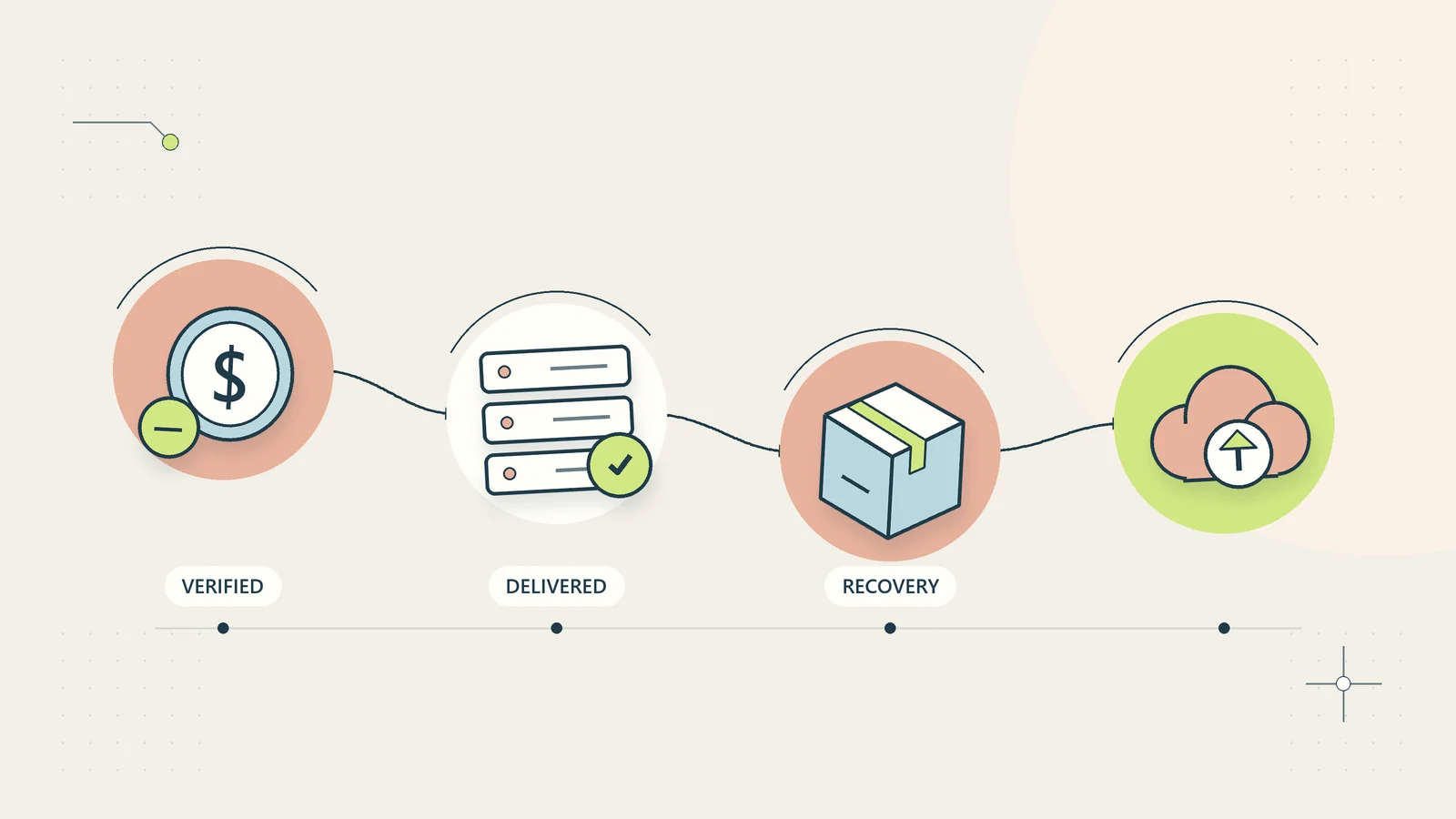
Automatic digital product delivery should do more than send an email after checkout. It needs to establish what the buyer purchased, confirm the event that authorizes access, provide the correct resource, and recover when a message or download fails. The customer should not have to understand the internal machinery to receive what was promised.
A first-party delivery model keeps the product, instructions, entitlement rules, and customer experience under the seller’s control. It can still use ordinary infrastructure such as hosting, payment processing, or email transport. The important distinction is that the product’s value does not depend on an affiliate approval, a sales call, or a customer opening an undisclosed software account.
This guide explains a platform-independent operating design. It is not a statement that a particular checkout or integration has been tested. The examples are hypothetical, and the security implementation should be reviewed and tested by someone competent in the chosen technology.
Define exactly what the customer receives
Create a product record identifying the deliverables, formats, version, license scope, prerequisites, support boundary, and any access period. A buyer should know whether the purchase contains a blank template, a worked example, instructions, software, or a combination.
Avoid selling an outcome the files cannot establish. A planning workbook can help organize a process; it does not automatically implement the process inside a buyer’s business. If optional tools are discussed, distinguish them from requirements clearly.
Prepare a resource manifest listing every file and its purpose. Include a start-here document that explains the sequence and how to preserve an original copy. Files should have meaningful names rather than internal production labels that make sense only to the author.
The workflow template selection guide explains how buyers can judge fit. Product pages should make that judgment possible before payment, reducing preventable delivery disputes caused by an unclear offer.
Separate the order from the entitlement
An order records a commercial transaction. An entitlement records the access the seller has granted under its rules. A delivery event records an attempt to make a resource available. These are connected records, but they should not share one vague complete flag.
Use stable references for the order, purchased item, entitlement, resource version, and delivery attempt. A customer email address is useful contact information, not a sufficient identifier for every relationship.
Define the event that creates an entitlement. For a paid product, this generally involves an authoritative confirmation meeting the seller’s payment rules, rather than a browser landing on a success page. Pending or failed payments need different states.
Also define what changes access later: cancellation, refund, a dispute, an approved replacement, or an expiry under the published terms. The rules should be clear before implementation so that a later technical message cannot accidentally grant access that the commercial state no longer supports.
Verify authorization on the server
The customer-facing browser is not the source of truth for payment or entitlement. A URL parameter saying paid should not authorize a download. Verify the relevant event through the authoritative server-side mechanism provided by the chosen payment system.
Check the expected account or environment, order reference, item, amount and currency where relevant, payment state, and event identity. Test mode and live mode should remain distinct. A test event must never create a live entitlement by accident.
The OWASP Authorization Cheat Sheet recommends denying access by default and validating permissions on every request. For digital delivery, that means the download route needs its own access decision; a customer reaching checkout once does not make every file public.
Keep protected product files outside ordinary public access or behind correctly enforced access controls. A difficult-to-guess filename is not an authorization system. The implementation must also prevent one buyer from changing an identifier to retrieve another buyer’s restricted resource.
Model delivery as a sequence of confirmed states
Clear states help customers and operators distinguish progress from completion. They also make failures recoverable without guessing what happened before the interruption.
| State | What has actually happened | Appropriate next step |
|---|---|---|
| Order created | A purchase attempt exists | Await the required confirmation |
| Confirmation pending | The authoritative outcome is incomplete | Check again through the approved process |
| Entitlement granted | The access rule has been satisfied | Prepare the approved resource route |
| Access ready | The customer can retrieve the intended resource | Present access and send the operational message |
| Message attempted | A delivery message was submitted | Track the provider response separately |
| Resource requested | An authorized download request occurred | Serve the permitted version |
| Recovery needed | A specific problem prevents the normal route | Offer an appropriate safe recovery action |
MDN’s 202 Accepted reference explains that acceptance for processing does not establish completed processing. Apply the same distinction to background delivery work. A queued task is not proof that the customer received a file.
Make repeated events safe
Background systems can receive the same notification more than once. A customer can reload a page, and a job can restart after a connection failure. The delivery process should recognize the underlying operation and avoid creating duplicate entitlements or sending uncontrolled repeated messages.
Use a stable event reference and a durable record of processing. Design the operation so that a retry can determine whether the intended work already occurred. A temporary in-memory flag is insufficient if the process can stop and restart.
Consider concurrency as well as repetition. Two workers might try to process the same event at nearly the same time. The implementation needs an appropriate database constraint or transaction mechanism rather than assuming jobs always run one after another.
Record ambiguous outcomes honestly. If a connection fails after a message provider may have accepted a send, blindly repeating the send can create duplicates. The system needs a defined reconciliation or review route for uncertainty rather than treating every timeout as proof that nothing happened.
Give the customer access beyond the inbox
Email is a useful notification channel, but it should not be the only evidence that a purchase exists. An on-site order or access page can provide a consistent route after the confirmed entitlement is established.
Keep recovery proportionate to the resource and the risk. A replacement access link should go through a verified process, not to any address entered alongside a guessable order number. Avoid disclosing whether a particular person bought a product through an unrestricted public lookup.
If links expire, explain the expiry clearly and provide a safe renewal route consistent with the customer’s entitlement. Link expiry and license expiry are different concepts. A short-lived link should not silently eliminate access that the published offer promises for longer.
Use the self-service knowledge base guide to answer predictable questions about opening files, locating orders, and recovering access. The answer should help the customer complete the task without revealing protected download paths publicly.
Keep transactional delivery separate from marketing
The operational message should explain the purchase, the access route, the resource version where useful, and what to do if something is wrong. Put delivery information before optional promotional content.
Do not make a buyer join a newsletter to receive a purchased resource. Marketing preferences should be recorded separately from messages necessary to deliver the order and handle the transaction, within the applicable local requirements.
Minimize personal information in logs and messages. Support may need an order reference and the error category, not a copy of payment credentials or every customer field. Never put secret access tokens into public analytics parameters or screenshots intended for general reporting.
If a message bounces, preserve the entitlement and create a delivery exception. The customer’s purchase does not cease to exist because an inbox rejected a notification. Recovery should reconnect the verified customer with the existing order rather than creating a second purchase.
Version the product and its instructions together
Keep a controlled release copy of each resource pack. Record a version, file manifest, and integrity check appropriate to the delivery system. Test the actual archive or file that customers will receive, not only the author’s working copy.
Confirm that internal notes, customer data, hidden sheets, document comments, and local file references have been removed or intentionally included. A professional resource needs complete instructions and usable examples, not a collection of unfinished production files.
Decide how updates affect earlier purchases. Some offers include access to a specific release, while others include a stated update period. State the rule truthfully and keep the entitlement relationship explicit so that a later upload does not unintentionally change the offer.
The document version control guide can help keep the blank template, worked example, and instruction file aligned. A corrected formula in one workbook should not leave its accompanying example explaining obsolete results.
Plan refund and dispute state changes
Define how the business handles access when a transaction is refunded, reversed, or disputed, subject to its published terms and applicable requirements. Do not let a generic old success notification override a more recent authoritative change.
Keep the commercial event history and current entitlement state separate. The history should show that access was originally granted and later changed, rather than deleting the order and leaving support unable to explain what happened.
A customer asking a refund question needs an appropriate response route. Automatic delivery does not remove the seller’s responsibility to review legitimate exceptions or correct mistakes. Avoid making an automated decision appear final when the facts are disputed or the applicable requirements need review.
The operational record should show who made any manual adjustment and why. A replacement download, goodwill exception, or corrected product assignment must remain traceable so that later automated checks do not undo an authorized resolution.
Work through a hypothetical workbook purchase
Imagine a business selling a downloadable operations workbook. Product P-008 includes a blank workbook, an illustrative completed example, and a start-here guide. The listing states the supported file formats and makes clear that it is a self-serve resource rather than a live implementation service.
Order O-341 is created when a buyer begins checkout. The browser returns to the website, but the access page initially shows that confirmation is pending. It does not grant a download merely because the buyer reached that page.
The server receives and verifies the authoritative payment confirmation. It grants one entitlement to release R-03 and makes an access route available. A duplicate notification arrives later, but the event and entitlement records prevent a second grant.
The operational email fails because the recipient’s mailbox is temporarily unavailable. The verified buyer can still use the on-site access route, and the system records a communication exception rather than creating another order. If a replacement link is needed later, it is issued through the approved recovery process.
This sequence demonstrates an operating design. It makes no claim that any particular implementation has passed security, payment, or delivery testing.
Test failures before accepting live orders
Build a test matrix covering ordinary purchases and interrupted paths. Include pending confirmation, failed payment, repeated events, concurrent processing, an unavailable file, expired links, a bounced message, unauthorized resource identifiers, refunds, and a processing restart.
Verify what the customer sees as well as what the database records. A technically correct refusal with an unexplained error page can still strand a legitimate buyer. Recovery language should identify a useful next step without exposing private information.
Use the automation failure queue guide to define ownership, retry limits, and evidence for unresolved cases. A retry should be bounded and tied to a reason; repeatedly sending the same failed action forever is not recovery.
Set release criteria in advance. Every paid test order should have a traceable entitlement decision, every protected request should enforce authorization, and every simulated failure should reach an understandable state. Do not treat a single successful download as evidence that all failure paths work.
Measure delivery quality rather than email volume
Track confirmed orders awaiting access, unavailable resources, failed recovery attempts, duplicate processing prevented, and the age of unresolved exceptions. Separate operational delivery from promotional engagement metrics.
A sent-message count cannot tell you whether a buyer opened the correct resource. An observed download request cannot prove that the workbook was useful. Choose measures that match the question and keep their limitations visible.
Review common support questions as product feedback. Repeated confusion about file formats may call for a clearer listing or a different resource format. Repeated access recovery may reveal an overly fragile link policy rather than a need for more reminder emails.
A sustainable automatic delivery process gives ordinary buyers a direct route from confirmed purchase to usable resources. It also preserves a safe, accountable recovery route for the cases that do not follow the ordinary path.
Keep an operational release checklist
Before publishing a new resource, confirm the product description, released files, entitlement mapping, protected access route, operational message, and recovery article together. A change to any one of these can affect the others. Renaming a resource, for example, may leave the email directing buyers to a label that no longer appears.
Have the person responsible for the release record the version and the verification outcome. Where a test fails, state whether release is blocked or which authorized correction is required. Do not allow an attractive sales page to outrun an unfinished resource pack.
Retain the previous approved release according to the business’s recordkeeping process. A controlled rollback can restore service more safely than hurriedly uploading an unreviewed working file during an incident. After recovery, confirm which buyers received which version so that any necessary correction reaches the relevant group.
Sources and editorial method
Sources checked on October 15, 2026. The operating model, delivery states, test suggestions, and hypothetical purchase example are original recommendations. Official technical references support limited points about authorization and asynchronous processing. No live checkout, security audit, or tested integration is claimed.
- OWASP: Authorization Cheat Sheet — access decisions and authorization checks.
- MDN: 202 Accepted — distinction between accepted processing and completed work.